
On 19 December 2025, the first release of the Jeffrey Epstein files hit the public record.
For years, the case had lived in fragments: a plea deal here, a lawsuit there, a flight log passed around online, a witness statement quoted in court. People expected the release to bring order to the chaos. They expected one document, one list, one moment that would explain how Jeffrey Epstein operated and who, exactly, had moved through his world.
That is not what arrived.
What came instead was a mountain of material from criminal cases tied to Epstein and his associates: court filings, contact books, emails, photos, videos, witness statements, travel records. It was not neat. It was not complete. And it did not settle the argument around the case. If anything, it made the picture larger and more disturbing.
A second, much bigger release followed on 30 January 2026. By then, about 3.5 million pages had been made public from roughly 6 million pages identified under the Epstein Files Transparency Act, which had passed in November 2025.
The promise behind the law was simple enough: open the archive and let the public see what had been hidden.
What the public found was something harder to absorb. Not a tidy conspiracy file, but a sprawling record of abuse allegations, legal battles, elite access and years of damage suffered by girls and young women.
What the Jeffrey Epstein files actually are
The phrase sounds singular, as if there is one official dossier called the Jeffrey Epstein files.
There is not.
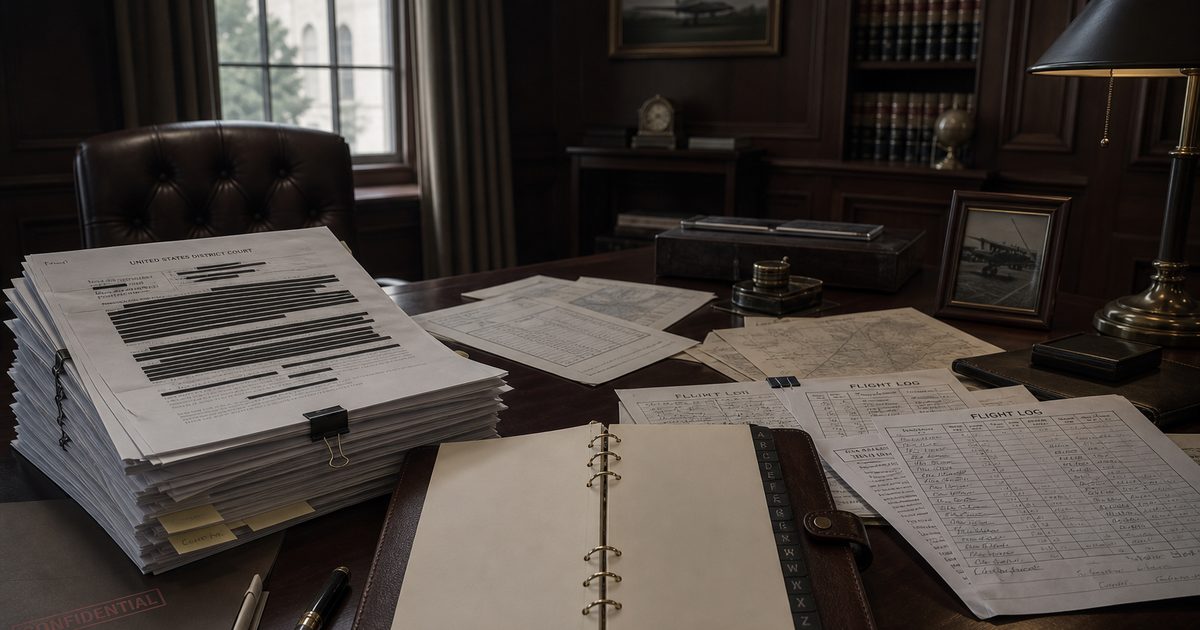
The released material comes from multiple criminal and civil matters involving Epstein and people around him. It includes address books, flight logs, court records, deposition transcripts, emails, photographs and other evidence gathered over years. Read straight through, it does not behave like a story. It behaves like an archive: repetitive in places, heavily legalistic in others, and often broken by redactions.
Still, a pattern emerges.
The files add weight to what had already been established in court and in prior reporting: Epstein sexually abused underage girls and young women, and he did so while moving through a world crowded with money, status and influence. The documents also show how many people orbited that world, whether as employees, social contacts, business associates, alleged victims, witnesses or famous acquaintances.
That last point matters, because it became one of the biggest sources of confusion after the release.
A name appearing in the Jeffrey Epstein files is not, by itself, proof of a crime. Some names appear in contact books. Some in flight records. Some in testimony. Some in allegations. Some in routine communications. Those are not all the same thing, and treating them as if they are only muddies the record.
The darkest truth was already known, but the files made it impossible to look away
The central fact of the Epstein case was never really in doubt: girls were abused.
What changed with the public release was the scale of the paper trail behind that fact. The documents did not create the case against Epstein. He had already been charged, sued, investigated and, in 2019, arrested again on federal sex trafficking charges before his death in custody that August. Ghislaine Maxwell was later convicted in 2021 of sex trafficking and related offenses for helping recruit and groom underage girls for Epstein.
What the files did was show how much documentation sat behind those headlines.
There were records of movement. Records of contact. Statements from women who said they had been exploited. Internal communications. Legal filings stretching across years. Piece by piece, the archive showed not just one offender, but a system around him: staff, schedules, properties, travel, introductions, damage control.
That is why the release landed so hard. It was not because every page contained a revelation. Most did not. It was because the accumulation itself was overwhelming.
The famous names drew attention, but the documents required caution
As soon as the files opened, attention swung to the high-profile names inside them.
Among those reported as appearing in various Epstein-related records over the years are Donald Trump, Bill Clinton, Prince Andrew, Ghislaine Maxwell, Jean-Luc Brunel, Lesley Groff, Richard Kahn, Larry Summers, Bill Gates and others. Some had already been publicly linked to Epstein through prior reporting, testimony or released records. Some have denied wrongdoing. Some were named in allegations but not charged. Some were simply documented as part of Epstein’s social or professional orbit.
That distinction is not a technicality. It is the difference between evidence of association and proof of criminal conduct.
The files show overlap with Epstein’s world. In some instances, they show repeated overlap. But a mention in a contact book, a place on a passenger manifest or an appearance in testimony does not automatically establish participation in abuse. The public conversation often blurred those lines. The documents themselves did not always do that.
The release exposed another problem: even transparency came with blacked-out pages
Almost as soon as the records were published, criticism followed.
Many documents were heavily redacted. Names disappeared behind black bars. Whole passages were obscured. In some places, the omissions made sense, especially where victims’ identities or sensitive personal details were involved. In other places, the redactions only deepened suspicion that the public was still being allowed to see only part of the story.
That frustration grew because the release was incomplete.
By early 2026, millions of pages had been made public, but millions more had not. Instead of closing the book on the case, the partial release opened a new fight over what remained hidden and why. Reports of redaction mistakes, missing files and inconsistent handling of records only added to the anger.
One of the most troubling complaints involved victims’ privacy. In some instances, identifying information was reportedly left insufficiently protected. In a case built around the exploitation of vulnerable girls and young women, that was not a side issue. It cut to the heart of whether the release process was serving the public without harming the people already harmed once before.
The “client list” many expected never clearly appeared
For years, one phrase had hovered over the case: client list.
It suggested a single definitive roster, a document that would name powerful men tied to a coordinated criminal enterprise run by Epstein for others. That expectation shaped how many people approached the release.
But the files did not produce one clean, authoritative list that settled the question.
If government agencies later state they found no evidence of a formal “client list” or no evidence supporting a broader trafficking operation for third parties, that would matter. But claims of that kind need to be tied to verifiable public statements and dates. Without that documentation, they should be treated cautiously rather than repeated as settled fact.
What can be said with confidence is narrower and more solid: the released records documented abuse allegations, a large network of associations and a long history of litigation and scrutiny. They did not hand the public one master key that unlocked every rumor.
That disappointed many readers. It also clarified something important. The real horror of the Epstein case never depended on one mythical list. It was already visible in the testimony, the charges, the victims’ accounts and the years of evidence showing how long he was able to operate.
Epstein’s death left the story permanently unfinished
Jeffrey Epstein was found dead in his jail cell in Manhattan on 10 August 2019, weeks after his federal arrest. New York City’s chief medical examiner ruled the death a suicide by hanging.
That ruling remains the official finding.
It also ensured that the case would never reach the kind of full public trial many people expected. There would be no complete courtroom accounting from Epstein himself, no cross-examination that tied every loose end together, no verdict on the full scope of what he knew and what others around him knew.
That absence hangs over every document release.
Each new page promises clarity. Each redaction reminds readers how much remains obscured. The result is a case that feels both heavily documented and fundamentally incomplete.
Why the Jeffrey Epstein files still matter
The importance of the Jeffrey Epstein files is not that they solved the case once and for all.
They matter because they preserve the record of what happened to the victims, and because they show how abuse can survive inside systems built on money, access and deference. They matter because they force a public reckoning with the scale of the evidence. And they matter because they reveal, even now, how difficult accountability becomes when powerful people, sealed records and institutional caution all collide.
The files also serve as a warning against easy conclusions.
Some readers came looking for one explosive answer. What they found was more complicated and, in some ways, more credible than that: a huge documentary trail showing abuse, influence, legal maneuvering and unanswered questions that still resist a clean ending.
That may be why the Jeffrey Epstein files continue to hold attention. Not because they delivered a final twist, but because they showed how much of the story was always hiding in plain sight.
FAQ
What are the Jeffrey Epstein files?
They are a large collection of records from Epstein-related criminal and civil cases, including court filings, flight logs, contact books, emails, photos and witness statements.
When were the Jeffrey Epstein files released?
The article refers to releases on 19 December 2025 and 30 January 2026 under the Epstein Files Transparency Act. Those dates should be verified against official release records.
What do the Jeffrey Epstein files reveal?
They reinforce the established record of sexual abuse and show the breadth of Epstein’s social, financial and logistical network.
Does a name in the files prove someone committed a crime?
No. A name may appear for many reasons, including contact records, travel logs, testimony or allegations. Presence in the files is not the same as proof of criminal conduct.
Was there a Jeffrey Epstein client list?
No single definitive “client list” has been publicly established by the released records described here.