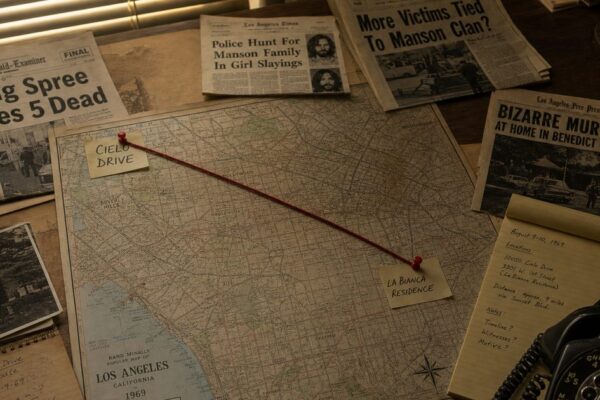
A word in blood on a front door turned one Los Angeles address into shorthand for fear. By the time the sun came up over Benedict Canyon on August 9, 1969, five people were dead at 10050 Cielo Drive. Before the city had even begun to understand what had happened there, another couple would be killed the following night across town.
What made the Manson Family murders so haunting was not only the violence itself. It was the pattern that emerged slowly, almost reluctantly. At first, the killings looked like separate horrors. Then the details began to line up: the blood-written messages, the strangers chosen as victims, the followers who did the killing, and the man prosecutors said stood behind it all without wielding the knife himself.
A house in Benedict Canyon
The victims at Cielo Drive were Sharon Tate, a 26-year-old actress who was heavily pregnant; celebrity hairstylist Jay Sebring; writer Wojciech Frykowski; coffee heiress Abigail Folger; and 18-year-old Steven Parent, who had been visiting the property’s caretaker and was shot in his car as he tried to leave.
The scene stunned investigators. Inside the house, Tate, Sebring, Frykowski, and Folger had been killed. On the front door, someone had written “PIG” in blood.
The shock spread quickly through Los Angeles, especially through Hollywood, where the address was instantly recognizable. But in those first hours, police did not yet see the full shape of the case. The Tate murders were initially treated as a possible drug-related crime. The idea that they were part of something larger had not yet taken hold.
That would change within a day.
The violence had already started
The story did not begin at Cielo Drive. In late July 1969, musician Gary Hinman was held captive and killed at his home in Topanga Canyon. Bobby Beausoleil was later convicted of the murder, and Susan Atkins and Mary Brunner were also implicated. Prosecutors said Charles Manson had sent people to Hinman’s house because he believed Hinman had money.
That killing mattered for two reasons. It showed that violence had already entered the inner life of the group around Manson. And when Beausoleil was arrested on August 6, pressure began to build inside that world.
Later, there would be debate over motive. Some believed the later murders were meant in part to mimic other crimes or somehow help Beausoleil. At trial, however, the prosecution focused on a broader theory: Manson’s apocalyptic vision of a race war he called “Helter Skelter,” which he believed the murders would help ignite.
August 8: an order is given
On the night of August 8, Charles “Tex” Watson was told to take Susan Atkins, Patricia Krenwinkel, and Linda Kasabian to Cielo Drive and kill everyone there. Testimony later described the instruction as explicit and chilling.
The house itself had a connection to someone Manson knew, but not to the people then living in it. Music producer Terry Melcher, whom Manson had met, had once lived there. Sharon Tate and the others were not chosen because of any personal conflict with Manson. That random, terrible disconnect became one of the defining facts of the case.
The victims were there because they were there.
The night at 10050 Cielo Drive
In the early hours of August 9, the group arrived at the Benedict Canyon property.
Steven Parent was the first to die, shot in his car in the driveway as he left after visiting the caretaker. Inside the main house, the others were rounded up and killed. Linda Kasabian later testified about what she saw and heard, and the physical evidence at the scene told the rest.
The murders at 10050 Cielo Drive were chaotic, personal, and meant to terrify. The blood on the door made that plain. Whoever had done this wanted the scene to speak after they were gone.
And still, the city did not know that another house had already been chosen.
The next night in Los Feliz
On August 10, Manson went out again with members of the group. This time, the destination was 3301 Waverly Drive in Los Feliz, home to Leno and Rosemary LaBianca.
Leno LaBianca, a supermarket executive, and his wife Rosemary had no meaningful connection to Manson. He had reportedly been in the neighborhood before, including at a party next door the previous year, but there was no personal link that explained why they were selected.
According to trial evidence, Manson entered the house with Watson, tied up the couple, then left. Watson, Patricia Krenwinkel, and Leslie Van Houten were found to have taken part in the killings.
The messages left behind made it impossible to ignore the resemblance to the Tate scene. “RISE,” “DEATH TO PIGS,” and the misspelled “HEALTER SKELTER” were written in blood. “WAR” was carved into Leno LaBianca’s abdomen.
Now there were two crime scenes, two nights, seven dead, and the unmistakable sense that the killers were trying to send a message through fear.
Spahn Ranch and another body
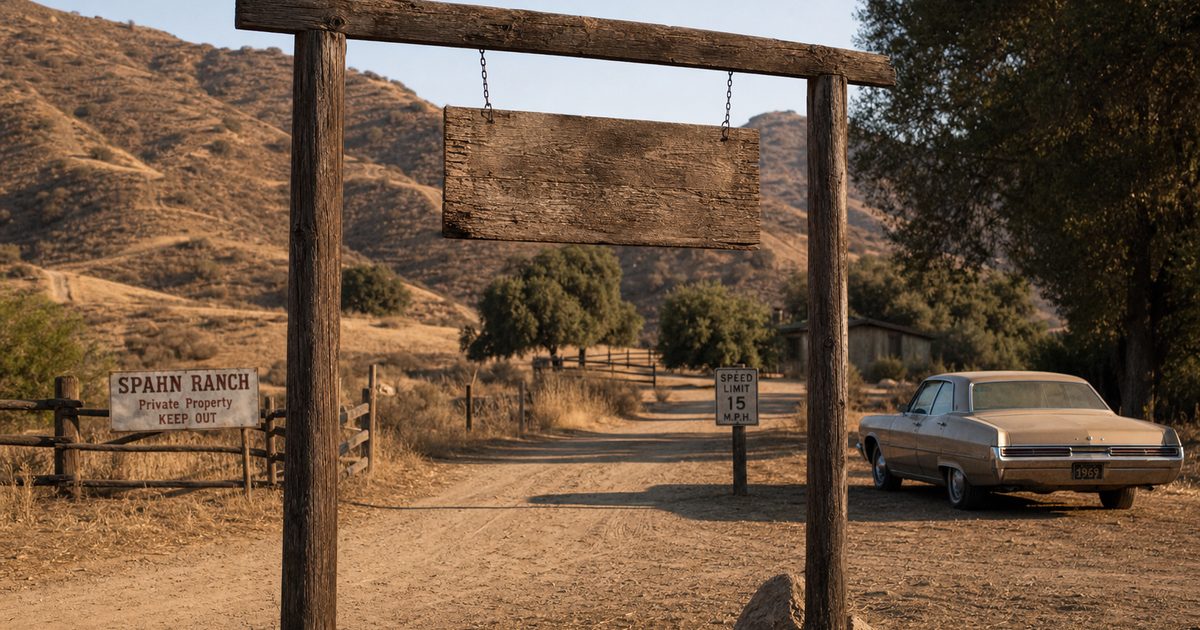
Much of the investigation circled around Spahn Ranch, where the Manson Family had been living.
On August 12, several members were arrested there on suspicion of auto theft, but they were released after authorities discovered an error in the warrant dates. It was one of several early breaks that did not hold.
Then, later that month, another man disappeared.
Donald “Shorty” Shea, a stuntman and ranch hand at Spahn Ranch, was killed on or about August 26, 1969. Prosecutors later argued that Manson suspected Shea of talking to law enforcement and ordered his murder. Manson was eventually convicted, in a separate trial, for both the Hinman and Shea killings.
By then, the body count tied to the group had grown beyond the better-known Tate-LaBianca murders.
The jailhouse confession
The breakthrough did not come from a dramatic raid or a single piece of forensic evidence. It came from a jail cell.
In October 1969, Susan Atkins was in custody for the Hinman case when she began talking to fellow inmates. She described the Tate-LaBianca murders in detail, including facts that had not been public. Those statements reached investigators and gave them what they had been missing: a direct line from the crime scenes to the people around Manson.
Another important witness was Danny DeCarlo, associated with the Straight Satans motorcycle club, who provided information about Manson and the group.
By December 1969, a grand jury had indicted Manson, Watson, Atkins, Krenwinkel, and Kasabian in the Tate-LaBianca case. Leslie Van Houten was later added in connection with the LaBianca murders.
The trial that made the pattern visible
The trial began in June 1970 in Los Angeles Superior Court, with prosecutor Vincent Bugliosi leading the state’s case. It quickly became one of the most closely watched murder trials in the country, not only because of the crimes but because of the theory behind them.
Charles Manson had not been convicted as the person who physically killed most of the victims. The prosecution’s case was that he orchestrated the murders, directed his followers, and used his control over them to turn his ideas into action.
That was the legal and moral center of the case.
Linda Kasabian, who had been present during both nights but did not take part in the killings, became the prosecution’s key witness after receiving immunity. Her testimony helped the jury understand how the nights unfolded and how Manson’s authority operated inside the group.
Bugliosi argued that “Helter Skelter” was the motive: Manson’s warped belief that the murders would spark a race war and allow his group to rise from the chaos. Not everyone has accepted that explanation as complete, and historians still debate whether it fully accounts for the crimes. But it was the theory the prosecution proved to the jury.
In January 1971, Manson, Atkins, Krenwinkel, and Van Houten were convicted of first-degree murder and conspiracy to commit murder. Watson, tried separately after extradition delays, was convicted later that year for his role in the Tate-LaBianca murders. Manson was also convicted in a separate proceeding for the murders of Gary Hinman and Donald Shea.
All were initially sentenced to death. In 1972, after the California Supreme Court’s decision in People v. Anderson temporarily invalidated the state’s death penalty, those sentences were reduced to life imprisonment.
The murders tied to Charles Manson and his followers
Nine killings are commonly tied to Charles Manson and his followers in this sequence of crimes:
- Gary Hinman, killed in late July 1969
- Steven Parent, Sharon Tate, Jay Sebring, Wojciech Frykowski, and Abigail Folger, killed at 10050 Cielo Drive in the early hours of August 9, 1969
- Leno and Rosemary LaBianca, killed at 3301 Waverly Drive in the early hours of August 10, 1969
- Donald “Shorty” Shea, killed later in August 1969
Together, these crimes became known as the Tate-LaBianca murders and, more broadly, the Manson Family murders. The names still carry a particular dread because the victims were not enemies in any ordinary sense. Most had never met the man who prosecutors said set the killings in motion.
Why the case still lingers
Some crimes fade once the verdicts are in. This one never really did.
Part of that is because the case seemed to expose something larger than murder: how charisma, isolation, and obedience can turn a group inward until ordinary moral boundaries disappear. Part of it is because the victims were turned into symbols almost immediately, their names attached forever to two addresses and two nights.
But the record itself is clear enough. The killings at Cielo Drive and Waverly Drive were not random acts by disconnected people. They were linked crimes, carried out by followers and tied by prosecutors to the direction of Charles Manson. The fear they created in Los Angeles was immediate. The pattern behind them took longer to see.
Once it came into focus, it never really left.
FAQ
How many people were killed in the Manson Family murders?
Nine victims are commonly included: Gary Hinman; Steven Parent, Sharon Tate, Jay Sebring, Wojciech Frykowski, and Abigail Folger; Leno and Rosemary LaBianca; and Donald “Shorty” Shea.
Did Charles Manson personally kill Sharon Tate or the LaBiancas?
Prosecutors did not prove that Manson personally killed most of the victims in the Tate-LaBianca murders. He was convicted on the theory that he directed and orchestrated the crimes.
Where did the Tate-LaBianca murders happen?
The Tate murders took place at 10050 Cielo Drive in Benedict Canyon. The LaBianca murders happened at 3301 Waverly Drive in Los Feliz.
What was “Helter Skelter” in the Charles Manson case?
It was the name Manson used for an apocalyptic race war he believed was coming. Prosecutors argued that this belief was the motive behind the murders.
Were the death sentences in the Manson murders carried out?
No. The defendants were sentenced to death, but those sentences were commuted to life imprisonment after California’s death penalty was invalidated in 1972.