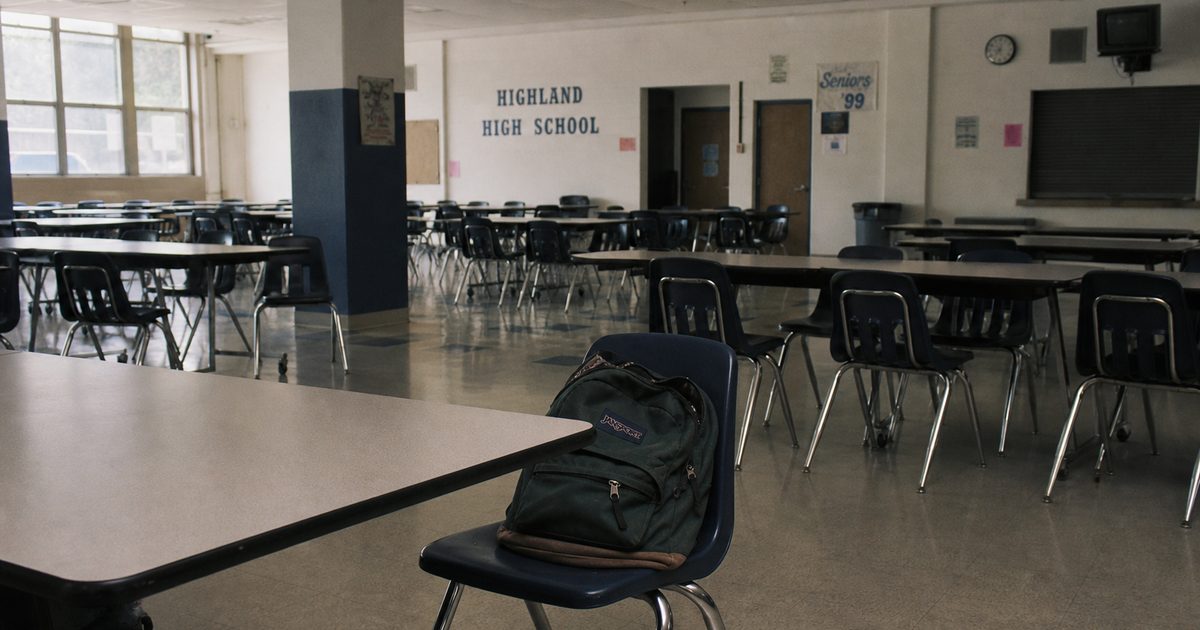
Just before lunchtime on April 20, 1999, students at Columbine High School were doing ordinary things. They were heading to class, talking with friends, eating in the cafeteria, thinking about the rest of the school day.
Outside, Eric Harris and Dylan Klebold were putting the final pieces of a plan into motion.
For years, the Columbine massacre was remembered mainly as a school shooting. That is true, but it is not the whole truth. Investigators later concluded that what Harris and Klebold wanted first was not a shooting at all. It was a bombing. The homemade propane bombs they placed in the cafeteria were meant to explode while the room was crowded. When they failed, the attack changed shape in real time. The bombs did not produce the mass killing they had planned, so the two teenagers moved to gunfire.
By the time it ended, 12 students and one teacher were dead. Twenty-one others were injured by gunfire, and several more were hurt while trying to escape, for a total of 24 injured. Harris and Klebold then died by suicide in the school library. The names of the victims, the survivors, and the place itself would remain fixed in American memory.
The months before Columbine
Nothing about April 20 was spontaneous.
Eric David Harris, born April 9, 1981, and Dylan Bennet Klebold, born September 11, 1981, were students at Columbine High School in Littleton, Colorado. Harris was 18 on the day of the attack. Klebold was 17. They had met as teenagers, shared friends and interests, and worked together at Blackjack Pizza.
In January 1998, both were arrested after breaking into a van and stealing items from it. They later entered a juvenile diversion program. On paper, it looked like the kind of trouble some teenagers get into and then leave behind. But behind that official process, something darker was already taking shape.
Investigators later found evidence that planning for the Columbine High School attack had begun by the spring of 1998, roughly a year before the massacre. Over those months, Harris and Klebold gathered bomb-making materials, tested devices, wrote about violence, and acquired guns. What they were building was deliberate, patient, and far larger than many people first understood.
The plan was bigger than the shooting
One of the most important facts in the case is also one of the most misunderstood: Columbine was intended to begin as a mass-casualty bombing.
The pair placed two large propane bombs in the school cafeteria, timed to detonate during a busy lunch period. Investigators believed the explosions were meant to kill many people at once and drive survivors into the line of fire outside. Additional bombs were planted elsewhere, including in their cars, apparently intended to explode later and target first responders or people fleeing the school.
The bombs did not detonate as planned.
That failure changed the history of the day. It did not reduce the violence, but it did alter its form. Instead of a single catastrophic blast becoming the center of the attack, Harris and Klebold began shooting outside the school and then moved inside, carrying firearms and additional explosive devices.
That matters because it strips away one of the myths that grew around the case. This was not simply two angry students lashing out in a moment. The evidence showed a coordinated assault that had been prepared over many months.
April 20, 1999
The attack began shortly after 11:19 a.m.
Witnesses saw gunfire outside the west entrance of the school. Students were hit on the lawn and sidewalk before many inside fully understood what was happening. In the first minutes, panic spread faster than information. Some thought it was a prank. Others ran immediately. Teachers tried to pull students to safety. Calls to 911 began pouring in.
Inside the building, the confusion deepened. Harris and Klebold moved through hallways and toward the library, firing weapons and throwing explosive devices. The school, so loud and ordinary only moments earlier, became a place of alarms, smoke, shattered glass, and terrified silence behind locked doors.
The dead included 12 students and one teacher, Dave Sanders, who was shot while helping students get to safety and later died of his injuries. The wounded were left with injuries that would shape the rest of their lives. Many others escaped physically unharmed but carried the trauma for years.
The violence ended in the library at about 12:08 p.m., where Harris and Klebold died by suicide.
How Harris and Klebold got their weapons
The path to Columbine ran through a series of choices, purchases, and missed chances to stop them.
Because they were underage, Harris and Klebold could not legally buy some of the guns themselves. Robyn Anderson, a friend, purchased two firearms for them at a gun show in December 1998. Another weapon, a TEC-9 pistol, was sold to Klebold by Mark Manes in January 1999. A third person, Philip Duran, introduced Klebold to Manes.
Those details later became part of the documented chain showing how the Columbine killers armed themselves. Manes and Duran both faced criminal consequences. Anderson was not charged.
The firearms were only part of the preparation. Investigators also recovered evidence of extensive bomb-making. The number of explosive devices found at the school, in the cars, and elsewhere made clear that the shooting was only one part of a larger plan.
Motive, myth, and what the evidence actually showed
Few crimes have attracted as much argument, projection, and myth as Columbine.
In the years after the massacre, public discussion often settled on simple explanations: bullying, trench coats, violent video games, outsider rage. Some of those ideas were repeated so often they hardened into folklore. But the evidence was more complicated, and in some cases it contradicted the popular story.
For example, the attackers were not members of the “Trench Coat Mafia,” despite the image becoming attached to the case. And while both had grievances and wrote about hatred and violence, there is no single explanation that neatly accounts for what they did.
What is better supported by the record is this: Harris and Klebold planned the attack for months; they wanted a high death toll; and they expected, or hoped, that the crime would be remembered. Later analysis and reporting often described Harris as showing traits consistent with psychopathy and Klebold as struggling with depression, but those are interpretations, not a complete answer. Motive in the Columbine massacre remains debated. The planning does not.
The aftermath in Littleton and beyond
When the shooting stopped, the story did not.
Families waited for news that came too slowly. Survivors were interviewed again and again, trying to describe scenes that barely made sense even to them. The school became a crime scene, then a symbol, then a reference point for nearly every school shooting that followed.
The Columbine effect is the name often given to that grim legacy: the way later attackers studied, referenced, or tried to imitate the 1999 massacre. That is one reason the case still draws attention decades later. People still search for Eric Harris and Dylan Klebold, for what happened at Columbine, and for why. But the most important facts are the simplest and the hardest to sit with.
Two students spent about a year preparing an attack on their own school. They built bombs, gathered weapons, and planned for mass casualties. On April 20, 1999, when their cafeteria bombs failed, they carried out a shooting instead. Thirteen people were killed. Twenty-four were injured. Then the attackers killed themselves.
The shadow of Columbine has lasted because the crime was not only deadly. It was studied, planned, and designed to echo long after that spring morning in Littleton was over.
FAQ
Who were the Columbine killers?
They were Eric Harris, 18, and Dylan Klebold, 17, both students at Columbine High School in Littleton, Colorado.
What happened at Columbine on April 20, 1999?
Harris and Klebold carried out an attack at Columbine High School, killing 12 students and one teacher before dying by suicide in the school library. A total of 24 other people were injured.
Was Columbine planned as a bombing?
Yes. Investigators concluded that the original plan centered on bombs placed in the school cafeteria. When those devices failed to explode, the attack became a shooting.
How long did Eric Harris and Dylan Klebold plan the attack?
Evidence suggests the planning began in the spring of 1998, about a year before April 20, 1999.
How did Harris and Klebold get their guns?
Robyn Anderson bought two guns for them at a gun show in December 1998, and Mark Manes sold Klebold a TEC-9 pistol in January 1999.