A mother out walking with her small daughter stopped at a vacant lot in Leimert Park and thought, for a moment, she was looking at a discarded mannequin.
It was the morning of January 15, 1947. The woman, Betty Bersinger, had been heading to a shoe repair shop when she noticed a body on Norton Avenue. Then she looked closer. The figure in the grass was a young woman, carefully posed, cut in two at the waist and left in plain view.
That was how Los Angeles first met the victim the newspapers would soon rename the Black Dahlia.
Her real name was Elizabeth Short. She was 22. And nearly everything that happened after her death helped turn a murder into a myth.
The morning the case began
The scene told detectives two things at once: the killing had been savage, and the lot was almost certainly not where it happened.
There was little blood at the scene. The body appeared to have been washed. The positioning looked deliberate. Investigators concluded that Elizabeth Short had been killed elsewhere and transported to the lot sometime before dawn. The Los Angeles County coroner, Frederick Newbarr, performed the autopsy on January 16. The cause of death was listed as hemorrhage and shock from blows to the head and lacerations to the face.
From the start, rumor rushed in to fill the gaps.
Some details became fixed in public memory because they were true: the body had been severed at the waist, the face had been cut from the corners of the mouth, and the remains had been displayed in a way that suggested control and staging. Other claims grew larger with retelling. The case attracted speculation almost immediately, and over the decades that speculation often blurred the line between what investigators documented and what later writers added.
Even so, the central facts were grim enough. A young woman had been murdered, moved, and left where she would be found.
Who Elizabeth Short was before the headlines
Long before she became a nickname, Elizabeth Short was a daughter, a sister, and a young woman trying to make a life in a city built on reinvention.
She was born on July 29, 1924, in Boston, Massachusetts. Her family later spent time in Medford, and as a young woman she moved between Massachusetts, Florida, and California. Like many others drawn west, she arrived in Southern California with hopes that were bigger than her circumstances. She worked odd jobs, including waitressing, and talked about breaking into films, though she had no known acting credits.
That part of her life matters because the legend that followed often flattened her into a type: the doomed aspiring actress, the mysterious drifter, the dark-haired femme fatale. The real picture was less theatrical and more ordinary. She was young, often short of money, moving between places to stay, and trying to find stability.
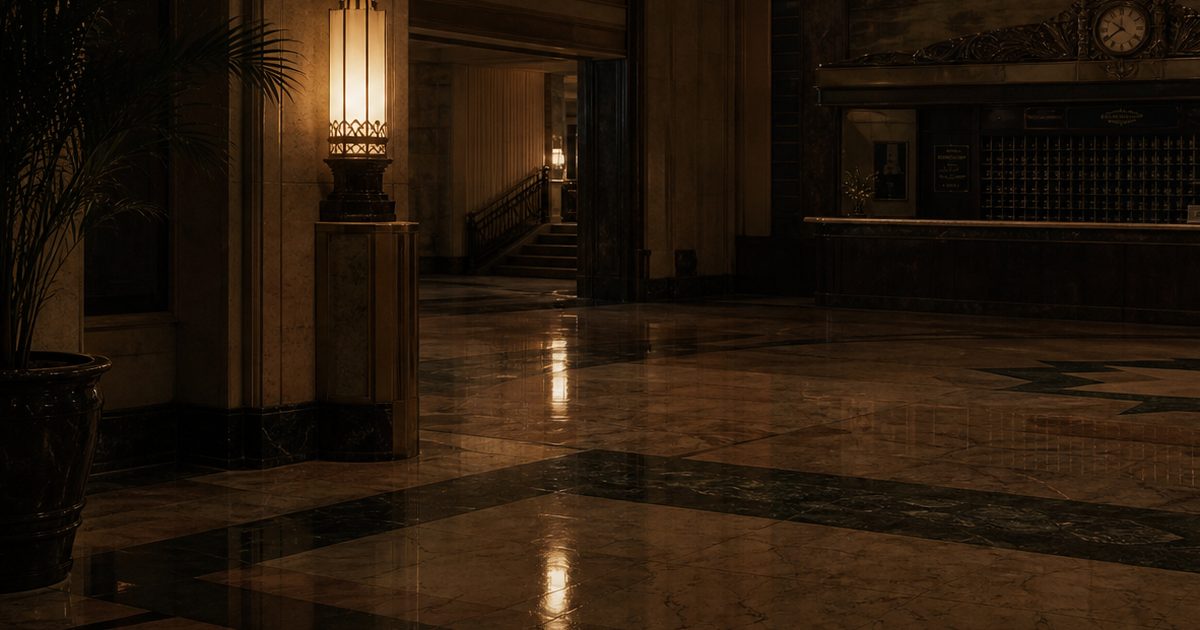
Her last confirmed movements are still among the most important points in the Black Dahlia case. On January 9, 1947, she was seen at the Biltmore Hotel in downtown Los Angeles after having been dropped off there by Robert “Red” Manley, a married salesman who later became one of the first people questioned. After that, her trail disappears.
Sometime between the evening of January 9 and the early hours of January 15, she was killed.
How the press created the Black Dahlia
The name most people remember was not one she carried in life in any formal way.
After the murder, reporters began calling her the “Black Dahlia,” likely drawing on her dark hair, her taste for black clothing, and the popularity of the 1946 film The Blue Dahlia. It was a perfect tabloid nickname: stylish, ominous, impossible to forget.
It also changed the story.
Once Elizabeth Short became the Black Dahlia, the case stopped being only a homicide investigation. It became a media spectacle. Reporters crowded the story. Photographers swarmed the lot. The public followed every rumor, every supposed sighting, every new suspect. In that frenzy, a real woman was turned into an image the city could project things onto.
That is one reason people still search for the “Dahlia murders,” as if there were several linked crimes. There were not. The famous case is the unsolved murder of one victim: Elizabeth Short, sometimes called Betty Short by people who knew her.
A city drowns the investigation in noise
The Los Angeles Police Department opened a massive investigation, but from the beginning it was fighting more than a killer. It was fighting contamination, publicity, and false leads.
The crime scene drew crowds. Evidence handling in that era was far looser than it would be later. Over time, authorities acknowledged that much of the physical evidence had been lost. That alone would haunt the case for decades.
Then came the confessions.
Dozens of people claimed responsibility. Many were ruled out quickly. Some appeared to be seeking attention. Others were mentally unstable. None gave investigators what they needed: a confession supported by verifiable facts and evidence.
Robert “Red” Manley, the last known person to see Elizabeth Short alive, was arrested on January 19, 1947, and released the next day after questioning and a polygraph examination. He was not charged.
Then, on January 24, the case took a darker turn. A manila envelope arrived at the offices of the Los Angeles Examiner and other newspapers. Inside were personal items belonging to Short, including her birth certificate, business cards, photographs, and an address book. The materials had reportedly been cleaned with gasoline, apparently to remove fingerprints.
Whoever mailed them wanted the press involved. Whether it was the killer or a hoaxer has been debated, but investigators treated the mailing seriously. It suggested someone close enough to the crime to possess her belongings and bold enough to taunt the city.
Four days later, on January 28, Army veteran Daniel Voorhees falsely confessed. He would not be the last.
The suspects who never became defendants
No one was ever charged in the Elizabeth Short case, but several names kept resurfacing.
Mark Hansen, a nightclub owner who knew Short, drew attention partly because one of his address books was among the items sent to the press. Leslie Dillon, a former mortician’s assistant, later became a focus because he discussed aspects of the crime in ways that alarmed investigators, though the case against him never held.
And then there was Dr. George Hodel, the suspect whose name became almost inseparable from the case in later years.
Hodel, a Los Angeles physician, came under scrutiny in 1949 and 1950. His notoriety was tied partly to separate criminal allegations involving his daughter; he was tried for incest and acquitted. During that period, a joint district attorney-LAPD operation secretly bugged his home between February 15 and March 27, 1950.
That surveillance has fueled endless debate. Some later writers treated it as near-proof. It was not. It showed that investigators considered him a serious suspect, not that they could prove he killed Elizabeth Short. Decades later, retired LAPD detective Steve Hodel argued in books that his father, George Hodel, was the killer. The theory attracted wide attention, but it remains a theory, not a solved case.
That distinction matters. The Black Dahlia murder has survived partly because it invites certainty where none exists. Many suspects looked plausible for a while. None could be tied to the crime strongly enough to support charges.
The cruelty beyond the killing
One of the ugliest parts of the story came after the body was identified.
A reporter, trying to get the story first, contacted Short’s mother and initially led her to believe her daughter had won a beauty contest before revealing the truth. It was a cruel trick, and it captured something rotten in the atmosphere around the case. The murder of Elizabeth Short had become a commodity before her family had even had time to absorb what happened.
That same appetite for drama helped bury the woman beneath the legend. Stories about her private life were exaggerated. Claims about promiscuity, secrets, and hidden worlds were often repeated with little proof. The case became famous not only because it was brutal, but because it arrived in a city and an era eager to turn tragedy into copy.
Why the case never let go
In September 1949, a Los Angeles County grand jury reviewed police handling of the Short investigation and other unsolved cases. It did not produce an arrest. Its conclusion was that the murder remained unsolved because of lack of evidence, not because detectives had deliberately sabotaged the case.
That was cold comfort.
By then, the investigation had sprawled through hundreds of leads and a long list of suspects. The mailed items, the false confessions, the missing evidence, and the public staging of the body had all combined to make the Black Dahlia case feel larger than a single file in a police cabinet. It had become part of Los Angeles folklore.
But the truth is smaller, sadder, and harder to romanticize.
A 22-year-old woman vanished after being seen at the Biltmore Hotel on January 9, 1947. Six days later, her body was found in a vacant lot. Investigators believed she had been killed elsewhere and brought there. Despite enormous attention, no one was ever charged. The murder remains unsolved.
That is the whole shape of it. Everything else is theory, retelling, or myth.
The woman behind the myth
The confusion around the name still lingers. People search for Betty Short, Elizabeth Short, the Black Dahlia, or the Dahlia murders, sometimes assuming they are different people or different crimes. They are not.
They all lead back to the same young woman and the same January morning in Los Angeles.
What keeps the case alive is not just its notoriety. It is the unfinished feeling at its center. The person who killed Elizabeth Short was never publicly identified in court, never convicted, never forced to answer for what was done. The city moved on. The legend did not.
And so the story keeps returning to that lot on Norton Avenue, to the woman who first mistook a body for a mannequin, and to the life that was swallowed by a nickname.
FAQ
Was the Black Dahlia the same person as Elizabeth Short?
Yes. Elizabeth Short was the victim, and “Black Dahlia” was the nickname newspapers gave her after her death.
Why do people say “Dahlia murders”?
Usually by mistake. The famous case refers to one unsolved homicide: the murder of Elizabeth Short.
When was Elizabeth Short last seen?
Her last widely accepted confirmed sighting was on January 9, 1947, when she was seen at the Biltmore Hotel in Los Angeles after being dropped off there by Robert “Red” Manley.
Was anyone ever arrested for the Black Dahlia murder?
Robert “Red” Manley was arrested on January 19, 1947, and released the next day. No one was ever charged with the murder.
Is the Black Dahlia case still unsolved?
Yes. The murder of Elizabeth Short remains officially unsolved.