On a hot afternoon in Moab, Utah, Gabby Petito stood beside a white van and cried while police tried to piece together what had happened.
It was August 12, 2021. A 911 caller had reported seeing Brian Laundrie hit her. By the time officers Eric Pratt and Daniel Robbins switched on their body cameras, the scene looked messy but survivable: a young couple on a cross-country trip, upset, tired, arguing. Petito, 22, was emotional. Laundrie, 23, spoke calmly. The officers separated them for the night. No one was arrested.
At the time, it seemed like one more roadside incident on a long summer trip.
Later, after the nation learned Gabby Petito was dead, that stop would be replayed over and over. Not because it explained everything, but because it captured a moment when the story might still have turned.
An independent review later found Moab police made “unintentional mistakes.” The report said officers treated the encounter more like a mental health crisis than a domestic violence investigation, did not contact the original 911 caller, and failed to fully apply Utah law. Those findings did not answer the question people kept asking afterward, whether anything that day could have changed what came next, but they made the stop impossible to forget.
A road trip that began like a dream
Just weeks earlier, on July 2, 2021, Gabby Petito and Brian Laundrie had left New York in a converted Ford Transit van and headed west. On social media, the trip looked like the kind of life many people daydream about: national parks, coffee stops, desert sunsets, a young couple building a future on the road.
Petito was trying to grow her online presence as a van-life creator. The photos were bright, carefully framed, easy to envy. But the polished images hid the strain underneath.
After Moab, the trip continued. That, too, is part of what makes the Gabby Petito case so haunting. There was no obvious ending visible yet. They kept driving. They kept posting. From the outside, the road still looked open.
Then the timeline began to narrow.
On August 25, Petito had her last known FaceTime call with her mother, Nichole Schmidt. It was also the date of her last Instagram post. Two days later, on or about August 27, she was last known to have been seen with Laundrie near Jackson, Wyoming. Investigators later concluded she was killed around that time in the Spread Creek Dispersed Camping Area in Bridger-Teton National Forest.
On August 30, Schmidt received a text from Gabby’s phone. She later said she did not believe her daughter had sent it.
By then, the trip that had been shared in cheerful fragments online was already over in the worst possible way.
He came back without her
On September 1, 2021, Brian Laundrie arrived at his parents’ home in North Port, Florida.
He was alone.
He was driving Gabby Petito’s van.
That fact, more than any social media clue or internet theory, gave the case its first hard edge. Gabby was gone, her van was back in Florida, and the man who had traveled with her was not explaining where she was.
Ten days later, on September 11, Nichole Schmidt reported her daughter missing to police in Suffolk County, New York. On September 12, the FBI joined the investigation into Gabby Petito’s disappearance.
Public attention surged almost immediately. There was the van. The body camera footage. The carefully documented road trip that suddenly broke off. There was also the silence from Laundrie and his family in those early days, which only deepened suspicion and anger.
On September 15, Laundrie was named a person of interest.
Then the case twisted again. According to the timeline later established, he had already left his parents’ home on September 13. His parents did not report him missing until September 17. They initially said he had left on September 14, then later changed the date to September 13.
Now investigators were chasing two urgent questions at once: where was Gabby Petito, and where was Brian Laundrie?
The search in Wyoming
The answer to the first question came on September 19, 2021, in Wyoming.
Searchers found human remains consistent with Petito’s description in Bridger-Teton National Forest, near the Spread Creek camping area. Two days later, on September 21, the remains were confirmed to be hers.
The missing-person case became a homicide investigation.
Teton County Coroner Dr. Brent Blue later ruled Gabby Petito’s death a homicide. On October 12, he announced the cause of death: manual strangulation. He also said she had suffered blunt-force injuries to the head and neck. He estimated she had died three to four weeks before her body was found, placing her death in late August.
That timeline fit what investigators had already been building from phone records, witness accounts and the final known movements of the couple.
For Gabby’s family, the search ended there, in a patch of Wyoming wilderness that had become one of the most recognized crime scenes in America. For everyone following the case, the hope that she might still be found alive was gone.
The manhunt for Brian Laundrie
Even after Gabby Petito’s body was found, Brian Laundrie had not been charged with her murder. In fact, he never would be.
On September 23, federal authorities issued an arrest warrant for him on a separate allegation: unauthorized use of a debit card and PIN for charges made after Petito’s death. It was not a homicide charge, but it gave investigators a way to formally pursue him while the murder investigation continued.
By then, he had vanished.
Search teams focused on Florida’s Carlton Reserve and the nearby Myakkahatchee Creek Environmental Park, where Laundrie was believed to have gone. The search dragged on for weeks. News helicopters hovered. Reporters camped outside the family home. Online sleuths turned the Brian Laundrie investigation into a national obsession, tracking every rumor, every police movement, every possible sighting.
But the ending, when it came, was quiet.
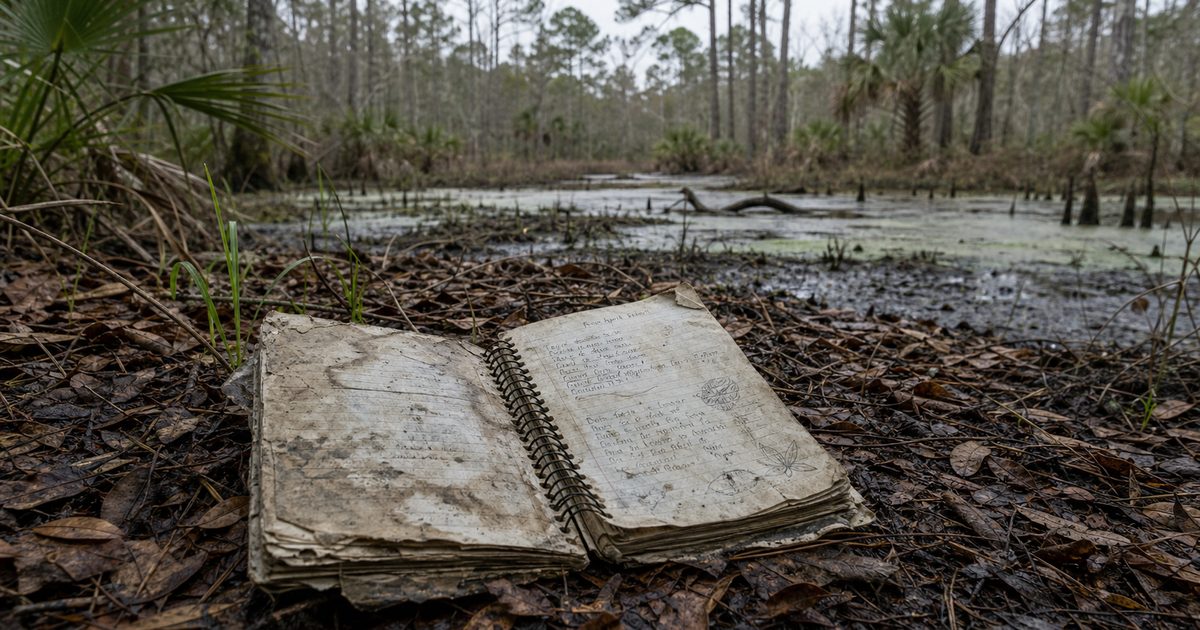
On October 20, 2021, authorities found skeletal remains in Myakkahatchee Creek Environmental Park, along with a backpack and a notebook. The remains were later identified as Brian Laundrie.
A month later, on November 23, an autopsy determined he had died from a self-inflicted gunshot wound to the head.
The notebook and the FBI’s conclusion
The notebook found near Laundrie’s remains became the final major piece of the case.
On January 21, 2022, the FBI announced that Laundrie had claimed responsibility for killing Gabby Petito in the notebook. The bureau said its investigation established that he was responsible for her death, and it closed the case.
That announcement mattered because there would be no trial, no cross-examination, no public testing of evidence in a courtroom. The case ended with the FBI’s findings, the physical evidence, and a written statement left behind by the only suspect.
In June 2022, the Laundrie family’s attorney, Steven Bertolino, released the full notebook entry. In it, Brian claimed he killed Gabby after she suffered an injury and was in pain, presenting the act as merciful. That account did not match the autopsy findings, which showed manual strangulation and blunt-force injuries to the head and neck.
So while the notebook contained an admission, it did not settle the story on his terms.
The proven facts remained the same. Gabby Petito was killed in Wyoming in late August 2021. Her death was ruled a homicide. Brian Laundrie returned to Florida alone in her van, disappeared days later, and died by suicide before he could face trial.
What came after Gabby Petito’s death
The criminal investigation ended without a murder prosecution, but the legal and personal aftermath did not.
On November 17, 2022, Gabby Petito’s family received a $3 million wrongful death settlement against Brian Laundrie’s estate. In February 2024, Petito’s parents also settled a civil lawsuit against Laundrie’s parents for an undisclosed amount.
Gabby’s family went on to create the Gabby Petito Foundation, focused on helping find missing people and supporting efforts around domestic violence awareness.
The Moab stop also continued to cast a long shadow. The independent review of that August 12 encounter did not claim police caused what happened later. But it did conclude the response fell short. That finding became part of the case’s legacy, not because it offered easy answers, but because it showed how a dangerous situation can be misread in real time.
That is one reason the Gabby Petito murder case stayed with so many people. It was not only the scale of the media coverage or the social media trail. It was the terrible clarity of the timeline once it was assembled: the argument in Utah, the last calls from Wyoming, the van returning to Florida, the missing-person report, the body found in the open country she had traveled to see.
By the end, the images that first drew people in, the road, the van, the smiling posts, looked less like a travel diary and more like the opening chapter of a story that was already heading somewhere dark.
FAQ
How did Gabby Petito die?
Teton County Coroner Dr. Brent Blue said Gabby Petito died from manual strangulation and had blunt-force injuries to the head and neck. Her death was ruled a homicide.
When was Gabby Petito reported missing?
She was reported missing on September 11, 2021, when her mother, Nichole Schmidt, filed a missing-person report in Suffolk County, New York.
Did Brian Laundrie confess to killing Gabby Petito?
The FBI said Laundrie admitted responsibility in a notebook found near his remains. He was never tried in court.
Where was Gabby Petito found?
Her remains were found on September 19, 2021, in the Spread Creek Dispersed Camping Area of Bridger-Teton National Forest in Wyoming.
What happened to Brian Laundrie?
He disappeared after leaving his parents’ Florida home on September 13, 2021. His remains were found on October 20, 2021, and his death was ruled a suicide by gunshot.