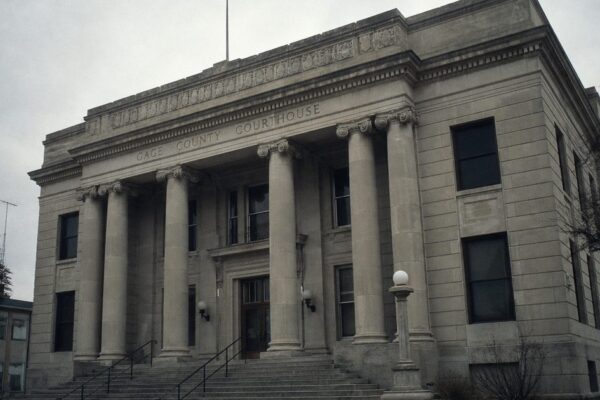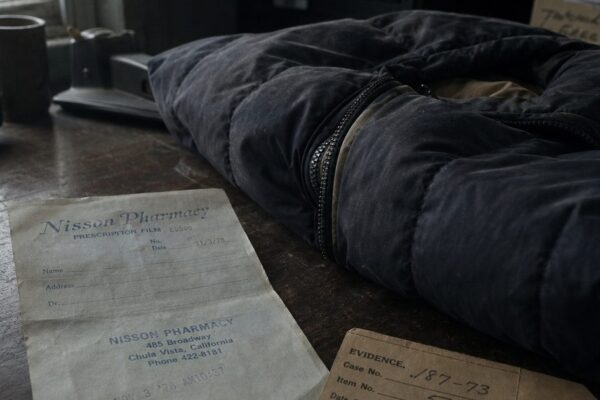
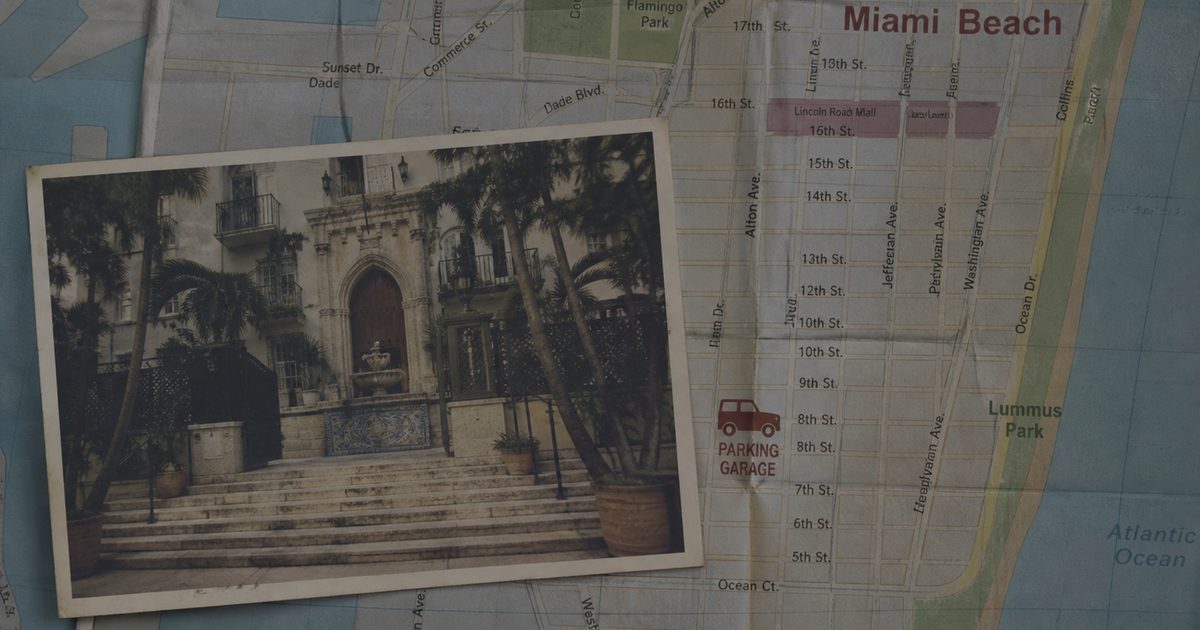
White stone steps. Morning heat. A newspaper tucked under one arm.
Just after 8:40 a.m. on July 15, 1997, Gianni Versace returned from a walk to the newsstand and approached the gates of Casa Casuarina, his Miami Beach mansion on Ocean Drive. Before he could get inside, a man came up behind him and fired twice at close range.
Versace was rushed to Jackson Memorial Hospital and pronounced dead at 9:21 a.m. He was 50 years old. Within hours, what first looked like the assassination of a world-famous designer was tied to something even larger: a fugitive already wanted in a string of killings stretching from Minnesota to New Jersey.
The man police named was Andrew Phillip Cunanan. He was 27, on the run, and by then the subject of a national manhunt. The murder of Gianni Versace was not the beginning of the story. It was the moment the whole country looked up.
Before the steps of Casa Casuarina
Long before Miami Beach, there had been warning signs, though not a clear path to what came next.
Andrew Cunanan was born on August 31, 1969, in National City, California. He was the youngest of four children. He attended The Bishop’s School in La Jolla and later enrolled at the University of California, San Diego, but did not graduate. People who knew him described someone bright, socially agile, and deeply invested in appearances. He moved through circles of older, wealthier men and built versions of himself that were not always true.
Some details about his earlier life have been repeated so often that they hardened into legend. Claims about a very high IQ, for example, are widely cited but not well documented. Other accounts, including family conflict and allegations of violence at home, come largely from later reporting rather than court findings. What is clear is that by the spring of 1997, his life had become unstable.
Then the killings began.
On April 27, 1997, Jeffrey Trail was killed in Minneapolis. Trail, a former U.S. Navy officer, had once been close to Cunanan. He was beaten to death with a hammer. Days later, on May 3, the body of David Madson, an architect and former boyfriend of Cunanan, was found near Rush City, Minnesota. He had been shot.
The spree continued almost immediately. On May 4, in Chicago, developer Lee Miglin was killed in his home. The details of that murder were especially brutal, but the essential fact is enough: Miglin was bound and killed, and his Lexus was stolen. On May 9, in Pennsville, New Jersey, cemetery caretaker William Reese was shot to death so his red pickup truck could be taken.
By then, four men were dead in four separate attacks linked by movement, theft, and escalating violence. Cunanan was heading south.
A manhunt full of missed chances
Three days after Reese was killed, on May 12, Cunanan checked into a cheap hotel in Miami Beach. He had reached the city where the search would eventually end, but police did not know exactly where he was.
On June 12, the FBI added him to its Ten Most Wanted Fugitives list. His face was now everywhere. Even so, he kept slipping through.
That failure still shadows the case. On July 7, he pawned gold coins taken from Lee Miglin in Miami Beach and reportedly used his real name. The information did not make it into police computers until July 15, the same day Versace was killed. On July 11, a fast-food worker recognized him and called police, but officers arrived too late.
There had been other mistakes too, including a raid on the wrong hotel room during the wider hunt. In hindsight, the pattern is hard to ignore: Cunanan was not hiding in some remote corner. He was moving through a crowded city while investigators closed in and missed.
Gianni Versace’s last morning
Giovanni Maria Versace was born on December 2, 1946, in Reggio Calabria, Italy. By the time he was killed, he had built one of the most recognizable names in fashion. He lived openly as a gay man and shared his life with his partner, Antonio D’Amico. His work was theatrical, glamorous, unmistakable. So was his public life.
That morning in Miami Beach began routinely. Versace walked to buy magazines, then returned home along Ocean Drive. At about 8:45 a.m., on the front steps of Casa Casuarina, he was shot before he could unlock the gate.
The attack happened in broad daylight, in one of the most visible places in South Florida, and against one of the most famous men in the world. Early on, detectives had to consider every possibility, including a murder-for-hire plot. Versace’s wealth, status, and business profile made that unavoidable.
But the case turned quickly.
The truck in the garage
Later that day, police found William Reese’s stolen red pickup truck in a nearby parking garage. Inside were personal items that pointed directly to Andrew Cunanan, including identification documents.
That discovery changed everything. The killing of Gianni Versace was no longer a mystery orbiting celebrity and wealth. It was now firmly tied to the fugitive already wanted for four murders.
Forensic evidence strengthened the link. The .40-caliber Taurus pistol used to kill Versace was the same gun connected to the murders of David Madson and William Reese. The weapon had originally been stolen from Jeffrey Trail. It would also be the gun found with Cunanan when the manhunt ended.
The evidence did not answer the biggest question, why Versace?, but it sharply narrowed the question of who.
Did Andrew Cunanan know Gianni Versace?
That question has lingered for decades because the motive was never fully established.
There is no confirmed evidence of a close relationship between the two men. Cunanan had claimed, in various settings, to know Versace. Some reports suggest they may have crossed paths briefly in the past, but those accounts remain disputed and were never firmly proved. What investigators could establish was far less dramatic and far more frustrating: Cunanan was in Miami Beach, armed, cornered, and fixated on status and image.
Theories about motive have ranged from obsession and resentment to a desire for notoriety. Some writers suggested he wanted proximity to fame or believed himself shut out from the world he admired. Another theory, widely repeated at the time, held that he thought he was HIV positive and was acting out in despair or rage. But the Miami-Dade medical examiner said after his death that Cunanan did not have HIV.
In the end, the Andrew Cunanan case offered a clear trail of evidence but no final explanation. There was no confession, no trial, and no tested account from the killer himself.
Eight days later, on the water
The chase ended as abruptly as the Versace murder had begun.
On July 23, 1997, a caretaker named Fernando Carreira reported hearing a gunshot from a houseboat in Miami Beach. Police surrounded the vessel and moved in carefully, unsure whether Cunanan was inside and alive.
When officers boarded, they found him dead from a self-inflicted gunshot wound. He was identified through fingerprint comparison. The pistol near his body was the same .40-caliber Taurus tied to the killings of Madson, Reese, and Versace.
There would be no arrest. No courtroom testimony. No cross-examination of the stories he had told about himself. Officially, the manhunt was over, and investigators considered the case solved in the sense that the killer had been identified. But some parts remained open-ended, especially the question of his precise movements in Miami Beach and the motive behind the murder of Gianni Versace.
The aftermath of the Gianni Versace murder
The loss rippled far beyond one crime scene.
Versace’s death hit the fashion world at its center. His sister, Donatella Versace, stepped into the role of creative leader. His brother Santo took on a larger business role. The company survived, but the man who defined its image was gone.
The case also took on a second life in books, documentaries, and dramatizations. Some of those accounts deepened public understanding; others stirred arguments over accuracy. That has been true especially around claims about Cunanan’s private life, his alleged connections, and whether he and Versace had ever truly known each other.
What remains beyond dispute is stark enough. A celebrated designer was killed on his own front steps. The man suspected of doing it had already crossed the country leaving four dead behind him. And in a city filled with tourists, police, and headlines, he stayed loose until the morning the manhunt became impossible to ignore.
FAQ
How did Gianni Versace die?
He was shot twice at close range on the steps of Casa Casuarina in Miami Beach on July 15, 1997. He died later that morning at Jackson Memorial Hospital.
Who killed Gianni Versace?
Investigators identified Andrew Phillip Cunanan as the killer. He was already wanted for four earlier murders in Minnesota, Illinois, and New Jersey.
Did Gianni Versace know Andrew Cunanan?
No close relationship was ever established. Reports that they may have met briefly have been disputed and were never conclusively proved.
How many people did Andrew Cunanan kill?
Police linked him to five murders: Jeffrey Trail, David Madson, Lee Miglin, William Reese, and Gianni Versace.
What was Andrew Cunanan’s motive?
No definitive motive was ever established. Investigators and later writers proposed theories including obsession, resentment, and a desire for notoriety, but Cunanan died before he could be questioned in court.