
A mother was waiting for her son to come home from work when an ordinary evening in suburban Illinois began to tilt into something far darker.
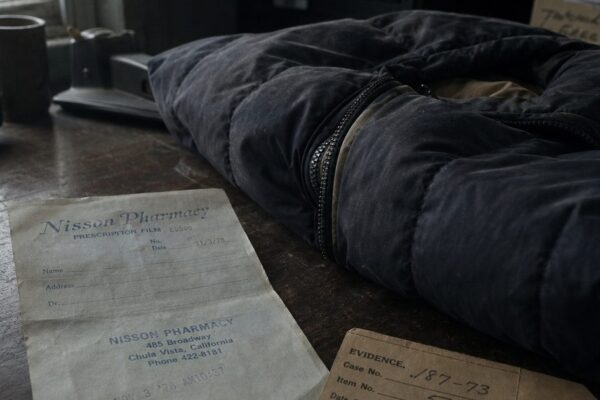
On December 11, 1978, 15-year-old Robert Jerome Piest was at Nisson Pharmacy in Des Plaines, where he worked part-time. He was bright, reliable, and the kind of teenager who did not simply vanish without explanation. That night, he told his mother, Elizabeth Piest, that he was going to speak with a contractor about a possible job. The contractor was John Wayne Gacy.
Robert never came home.
The last person seen with Robert Piest
The detail that gave the case its shape was brutally simple: Robert Piest was last seen speaking with Gacy inside the pharmacy at about 9 p.m. It was not rumor. It was not a hazy memory from weeks earlier. There was a place, a time, and a witness.
His family reported him missing almost immediately.
That mattered. In many missing-person cases from that era, especially when teenage boys disappeared, investigators were too quick to assume they had run off. But Robert’s disappearance did not fit that pattern. He had plans. He had responsibilities. And his mother pushed hard from the start.
The case landed with the Des Plaines Police Department, where Lieutenant Joseph Kozenczak began tracing Robert’s final movements. Very quickly, the path led back to Gacy.
At first, Gacy denied any involvement. He said Robert had never come to his house. But this time, unlike in earlier disappearances linked to him, police had something concrete to work with: a known last contact and a family insisting that something was badly wrong.
The man behind the respectable front
By then, Gacy had spent years building the kind of public image that makes neighbors doubt their own instincts.
He ran a contracting business, PDM Contractors. He moved easily through community life. He was active in local organizations. He also performed as “Pogo the Clown” at events, a detail that would later become inseparable from the John Wayne Gacy case, though the clown persona itself was never the heart of the crimes. The real story was not a costume. It was how long he managed to hide behind normalcy.
There had been warning signs before Robert disappeared.
In Iowa, Gacy had been convicted in 1968 on a sodomy charge involving a teenage boy. He was sentenced to 10 years, served about 18 months, and was released on parole in 1970. After returning to the Chicago area, he again drew police attention more than once. Young men connected to him had gone missing. In one separate case, a teenager accused him of assault, but no prosecution followed.
Those earlier failures now hang over the story. Some young men had been dismissed as runaways. Some allegations never became charges. Gacy had been questioned before and walked away.
Robert Piest would be the last boy to disappear before the case finally broke open.
A tiny piece of paper inside Gacy’s house
Two days after Robert vanished, on December 13, 1978, investigators searching Gacy’s home found something small enough to fit in a pocket and important enough to change the direction of the case: a film receipt linked to Robert’s circle.
It was not dramatic on its face. No confession. No body. No obvious smoking gun.
But it did what investigators needed it to do. It tied Robert’s world to Gacy’s home.
Police began round-the-clock surveillance. They watched Gacy closely as the pressure built. Kozenczak arranged to question him again, but Gacy failed to appear as expected. During that period, prosecutors later established, Robert’s body was disposed of.
Even then, the investigation was tightening. What had started as a missing-person case was turning into something else entirely. Detectives were no longer dealing with vague suspicion. They had a missing teenager, a last-known meeting, and physical evidence connecting that teenager’s orbit to the suspect’s house.
The search of the house on Summerdale
By December 21, police had enough to act.
When officers searched Gacy’s house in unincorporated Norwood Park Township, they found items that deepened their suspicions: handcuffs, syringes, pills, identification belonging to other young men, and signs that people had been in the house who were not supposed to be there. They also found a class ring and clothing that did not belong to Gacy.
Then there was the odor.
Investigators noticed a strong, foul smell coming from the crawl space beneath the house. Gacy had previously tried to explain it away as sewer trouble and moisture. But once officers were inside, that explanation began to collapse.
The search soon uncovered human remains.
What had begun with one missing 15-year-old now widened with terrible speed. Beneath the house, and later in other parts of the property, investigators found victim after victim. In the weeks and months that followed, 29 bodies were recovered from the crawl space and other areas of the property. More victims were later linked to Gacy after remains were found in the Des Plaines River.
The house on Summerdale had been hiding a mass murder case in the middle of suburbia.
Arrest, confession, and the scale of the crimes
Gacy was arrested on December 21, 1978, after the search began to expose what had been hidden on his property. By that point, the evidence was closing in from every direction.
The next day, December 22, he gave a lengthy statement to investigators and admitted to killing numerous young men and boys. He also drew a diagram showing burial locations around the property.
The number stunned even experienced investigators. Gacy would ultimately be charged with and convicted of 33 murders committed between 1972 and 1978. At the time, it was one of the largest murder cases ever prosecuted against a single defendant in the United States.
Still, for all the attention that later focused on him, the center of the story was elsewhere: the boys and young men whose disappearances had been overlooked, and the families left to wait, search, and wonder.
Why Robert Piest changed everything
Robert Piest was not the first victim. He was the one whose disappearance created a trail police could finally follow all the way to the door.
That is what makes his case so pivotal.
Earlier young men had vanished into uncertainty. Robert disappeared after a documented meeting with a specific man. His mother did not let the matter drift. Des Plaines police kept pulling at the facts. The evidence inside the house gave them leverage. The warrant opened the property. And once the crawl space was searched, the full scale of the crimes began to emerge.
In that sense, Robert Piest did not merely become one more victim in the John Wayne Gacy murders. His disappearance forced the investigation into the open.
The recovery of Robert Piest
Not all of Gacy’s victims were buried at the house. He had also disposed of bodies in the Des Plaines River.
Robert Piest’s body was recovered from the river in April 1979. He was one of several victims found there. His identity was confirmed through dental records and X-rays.
By then, the nation already knew the outlines of the case. But for Robert’s family, recovery meant the end of one kind of uncertainty and the beginning of another: the long, permanent reality of grief.
Trial and sentence
Gacy’s trial began in Chicago on February 6, 1980. His defense argued that he was legally insane, but prosecutors presented a case built on physical evidence, victim testimony from survivors of earlier attacks, and Gacy’s own statements.
On March 13, 1980, the jury found him guilty of 33 counts of murder. He was sentenced to death.
Years later, on May 10, 1994, John Wayne Gacy was executed by lethal injection at Stateville Correctional Center in Illinois.
The shadow that remained
The case did not end neatly with conviction and execution.
For years, some victims remained unidentified. Investigators and forensic specialists continued working to restore names to the dead, using dental records, DNA, and later genetic genealogy. That effort has continued long after the trial, a reminder that even in a case this famous, some families were left without answers for decades.
The broader failures around Gacy’s crimes also remain part of the story. Several young men disappeared before Robert Piest. Some warnings were missed. Some allegations did not lead to charges. Some victims were not treated with urgency when they first vanished.
That is part of what gives the case its lasting weight. It was not only the story of a serial killer in suburban Chicago. It was also the story of how many chances there were to stop him sooner, and how one family’s insistence finally broke through.
Robert Piest left a pharmacy expecting to talk about a job.
Within days, police were watching a contractor’s house. Within ten days, they were digging beneath it.
FAQ
How was John Wayne Gacy caught?
He came under intense suspicion after Robert Piest disappeared on December 11, 1978, after being seen with him at Nisson Pharmacy. The investigation led police to Gacy’s house, where they found evidence and human remains.
How many victims did John Wayne Gacy have?
Gacy was convicted of murdering 33 young men and boys. Investigators linked the killings to the period between 1972 and 1978.
Why is Robert Piest important in the Gacy case?
Robert Piest’s disappearance gave police a clear, traceable last-known contact with Gacy. That evidence trail helped investigators obtain a search warrant and uncover the murders.
Where were Gacy’s victims found?
Most were found buried on his property, especially in the crawl space beneath his house. Others, including Robert Piest, were recovered from the Des Plaines River.
When was John Wayne Gacy executed?
He was executed by lethal injection on May 10, 1994.