A smell in the house on West Summerdale Avenue had become impossible to ignore. By December 1978, investigators were moving through John Wayne Gacy’s home in unincorporated Norwood Park Township, just outside Chicago, trying to understand what had happened to 15-year-old Robert Piest, who had disappeared days earlier. What they found beneath the property would turn the John Wayne Gacy case into one of the most devastating murder investigations in modern American history.
Gacy was a contractor, a local Democratic precinct worker, and a man who sometimes performed as Pogo the Clown at community events. None of that public-facing life explained what police uncovered. Between 1972 and 1978, he murdered 33 young men and boys. For the families, the case was not about the later nickname or the headlines. It was about sons, brothers, and loved ones who vanished and, for too long, were not found.
Who John Wayne Gacy was
John Wayne Gacy Jr. was born in Chicago on March 17, 1942. Before the murders for which he was convicted, he had already been in trouble with the law. In 1968, while living in Iowa, he was convicted of sexually assaulting a teenage boy and sentenced to 10 years in prison. He served about 18 months before being released on parole in 1970. That earlier conviction matters because it shows the violence in his history did not begin in the late 1970s.
After returning to the Chicago area, Gacy built a new public life. He founded PDM Contractors in 1971 and presented himself as a successful businessman. He had been married to Marlynn Myers, with whom he had two children, and after that marriage ended, he married Carole Hoff in 1972. They divorced in 1976.
He also created the clown character Pogo in the mid-1970s and sometimes performed as “Patches” as well. Those appearances later shaped how the public remembered him, leading to the enduring “Killer Clown” label. But the crimes themselves were not committed while he was performing as a clown, and that image can distract from the reality of the case: dozens of young victims, many of them vulnerable, many lured with promises of work, money, or a place to stay.
The years of murder
Prosecutors ultimately tied Gacy to 33 murders committed between 1972 and 1978. Most of the victims were teenage boys or young men. Some were known by name quickly. Others remained unidentified for years, which added another layer of pain for families waiting for answers.
The pattern, as established at trial, was that Gacy would gain a victim’s trust, often by offering work through his contracting business or by picking up young men in areas where they were less likely to be quickly missed or effectively traced. He then restrained and murdered them.
It is important to be precise here. Gacy confessed after his arrest, and he was convicted of 33 murders. That is the proven core of the case. Over the years, there have been arguments about whether he acted entirely alone in every instance, but no broader conspiracy was established in court.
The house on Summerdale Avenue
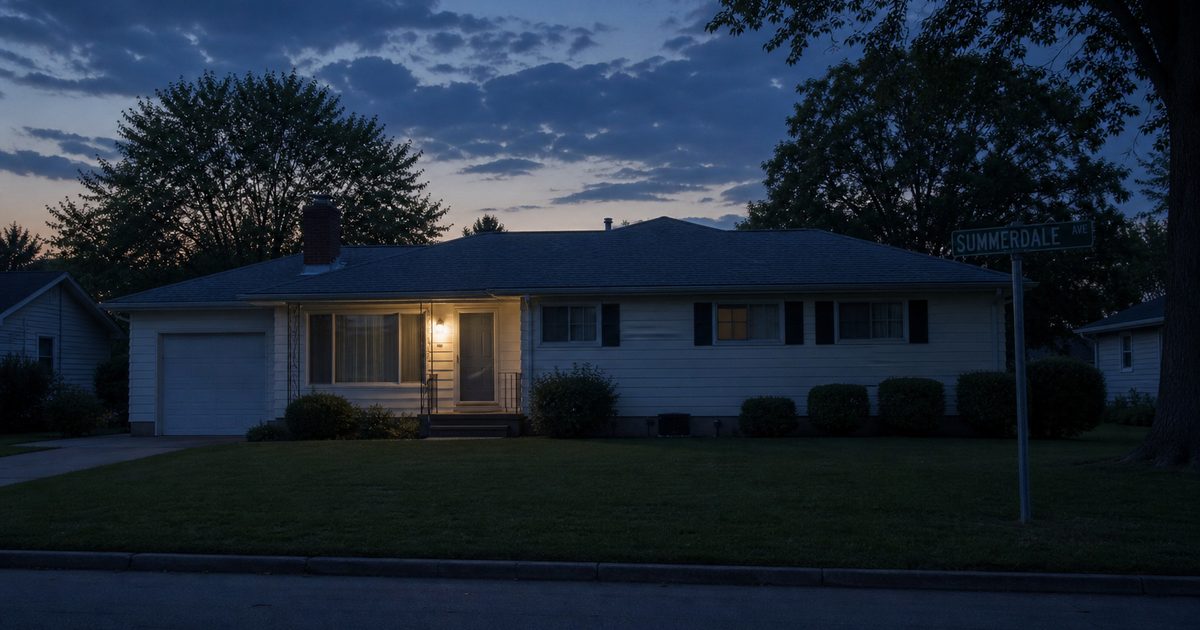
The address most closely linked to the john wayne gacy case is 8213 West Summerdale Avenue. Gacy bought the ranch house in 1972. From the street, it looked ordinary. Underneath it, investigators found a burial site.
In December 1978, after Robert Piest disappeared from a pharmacy in Des Plaines on December 11, police learned that Gacy had spoken with him about a possible job shortly before he vanished. That put Gacy under immediate scrutiny. Officers obtained search warrants for the house, and during those searches they noticed a strong odor and found suspicious items, including handcuffs and belongings linked to missing young men.
On December 21, 1978, as surveillance tightened and the evidence mounted, Gacy confessed. He told investigators that many victims were buried on his property. Excavation soon confirmed it.
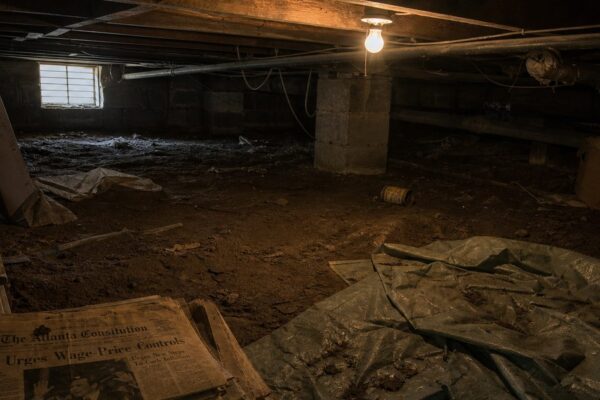
In total, 29 victims were recovered from the property. Twenty-six were found in the crawl space, three elsewhere on the grounds. Four more victims had been disposed of in the Des Plaines River. The scale of that discovery is one reason the case remains so widely discussed. It was not only the number of murders, but the fact that so many families had been searching while the bodies were hidden in and around a suburban home.
Robert Piest and the investigation that broke the case open
If there is a turning point in this story, it is the disappearance of Robert Piest. He was 15, working at a pharmacy, when he told his mother he was going to speak with a contractor about a job opportunity. He never came home.
That missing-person case gave investigators a fresh, urgent lead. By then, there had already been disappearances in the area, but they had not yet been tied together in a way that exposed the full pattern. Piest’s disappearance changed that. Once detectives focused on Gacy, they began connecting him to other missing young men.
The investigation moved quickly in late December 1978. Gacy was arrested on December 21 and charged in connection with Piest’s murder soon after. As bodies were recovered, the case widened dramatically.
For many readers searching for what really happened in the gacy clown killer investigation, this is the answer: it was not solved by the clown persona or by rumor, but by patient police work after one family refused to let a disappearance be brushed aside.
Trial, conviction, and sentence
John Wayne Gacy went on trial in February 1980 in Cook County. His defense did not deny that he had killed. Instead, the central legal fight was over his mental state and whether he could be held criminally responsible.
On March 13, 1980, the jury convicted him of 33 counts of murder. The next day, he was sentenced to death for 12 of those murders, which under Illinois law at the time made him eligible for execution. The conviction established him as one of the most prolific serial killers in U.S. history.
He spent 14 years on death row. During those years, he gave interviews, filed appeals, and painted, including clown self-portraits that kept the public image alive. But by then, the legal case itself was settled. The courts repeatedly upheld the conviction and sentence.
Gacy was executed by lethal injection at Stateville Correctional Center on May 10, 1994. He was 52.
The victims, including those identified later
One of the most painful parts of the John Wayne Gacy case is how long some families had to wait. Several victims were unidentified when the murders first came to light. Over time, investigators used dental records, forensic work, and later DNA testing to put names back to some of those remains.
That work continued decades after Gacy’s conviction. In recent years, authorities have identified additional victims through genetic genealogy and renewed case review. Even now, the case is remembered not only because of the number 33, but because each identification restored part of a life that had been reduced to evidence.
Centering the victims changes the story. It moves attention away from the mythology that grew around Gacy and back to the young people who were targeted.
What happened to the house
The house at 8213 West Summerdale Avenue was demolished in 1979, after the investigation. A new home was later built on the site in 1986.
Even so, the address remains fixed in public memory. People still search for the location because it became shorthand for the crimes themselves. But the structure is gone, and what remains is the history attached to the place.
Why the “Killer Clown” label stuck
The phrase came from Gacy’s volunteer clown performances, not from the circumstances of the murders. He performed as Pogo the Clown at parades, parties, and charitable events, and that contrast between public image and private violence was irresistible to the media.
It is also why terms like killer clown john wayne gacy still appear so often in books, documentaries, and online searches. The problem is that the nickname can flatten the case into something almost theatrical. In reality, this was a long pattern of predatory violence against young men and boys, many of whom were in precarious situations and easy for others to overlook.
The clown persona is part of the story, but it is not the heart of it.
Why the case still matters
The John Wayne Gacy case still draws attention because it exposed several failures at once: how vulnerable young people could disappear without immediate urgency, how a man with a prior sex-crime conviction could rebuild his image, and how long violence can remain hidden when victims are marginalized.
It also remains significant because the identifications did not end in 1980. The case kept unfolding as forensic science improved. For some families, answers came years or decades later.
That is the lasting shape of the story. Not the costume, not the nickname, and not the lurid retellings. A series of murders between 1972 and 1978. A 15-year-old boy’s disappearance that finally broke the case open in December 1978. A conviction in March 1980. An execution in 1994. And behind all of it, 33 lives cut short.
FAQ
How many people did John Wayne Gacy kill?
He was convicted of murdering 33 young men and boys between 1972 and 1978.
Why was John Wayne Gacy called the Killer Clown?
He sometimes performed as Pogo the Clown at public events. The nickname came from that persona, not from the way the crimes were committed.
When was John Wayne Gacy arrested?
He was arrested on December 21, 1978, during the investigation into the disappearance and murder of Robert Piest.
Where were the victims found in the John Wayne Gacy case?
Twenty-nine victims were recovered from Gacy’s property on West Summerdale Avenue, including 26 from the crawl space. Four others were recovered from the Des Plaines River.
What happened to John Wayne Gacy’s house?
The original house was demolished in 1979. A new house was built on the site in 1986.