
A woman answered her front door in Breaux Bridge, and lived.
That fact matters because, by the summer of 2002, south Louisiana was already on edge. Women had been attacked in their homes. Families were sleeping lighter. News reports moved from one parish to the next with the same grim rhythm: another woman, another house, another scene that suggested the killer had slipped in without forcing his way through a door.
Then, on July 9, 2002, Diane Alexander survived an attack and gave investigators something they had been missing for months: a witness who could describe the man who came for her.
That description helped produce a composite sketch. It did not solve the case overnight. But it changed the direction of an investigation that had already lost precious time.
Fear spreading across Baton Rouge and beyond
Long before the arrest, the Baton Rouge serial killer case had become more than a police investigation. It had settled into everyday life.
Women took self-defense classes. Friends checked in when someone got home. Families studied the news for patterns and warnings. The fear was sharpened by an awful truth: south Louisiana was also dealing with another serial murderer during roughly the same period, Sean Vincent Gillis. For residents, the distinction between cases often mattered less than the sense that women were being hunted.
The attacks linked to Derrick Todd Lee stretched across the Baton Rouge and Lafayette areas. Investigators noticed recurring details. Several victims were attacked at home. In some cases, phones were missing or had been removed from the scene. There was often no sign of forced entry. The pattern suggested someone who could talk his way close, exploit a moment of trust, or catch a victim off guard before she understood the danger.
Lee, born November 5, 1968, in St. Francisville, had a criminal history well before the murders that later made headlines. Court and police records show prior arrests and convictions involving burglary, prowling, peeping, and other offenses. In 1993, he was sentenced to prison for simple burglary and was later paroled. That history would become part of the criticism after his arrest: he had crossed law enforcement radar again and again.
The women at the center of the case
The story is often told through the man who was eventually caught. It should be told through the women whose lives were cut short, and through the families left to absorb what happened.
One of the earliest cases tied to Lee was the disappearance of Randi Mebruer, who vanished from her home in Zachary on April 18, 1998. Her body has never been found.
Then came a series of killings that deepened the panic.
On September 24, 2001, Gina Wilson Green, a nurse, was found dead in her Baton Rouge home.
On January 14, 2002, LSU student Geralyn Barr DeSoto was found killed in her home. Early suspicion fell heavily on her husband, a reminder of how often investigators begin with the people closest to a victim.
On May 31, 2002, Charlotte Murray Pace, a graduate student, was found murdered in her Baton Rouge apartment.
Days after Diane Alexander survived her attack, another woman disappeared. Pamela Piglia Kinamore was abducted from her Baton Rouge home on July 12, 2002. Her body was found four days later.
On November 21, 2002, Trineisha “Dene” Colomb was found dead near Scott, Louisiana.
Then, on March 3, 2003, LSU doctoral student Carrie Lynn Yoder disappeared from her apartment. Her body was found on March 13.
Authorities also considered Lee a suspect in the 1992 killing of Connie Warner in Zachary, though that case remained less certain in public reporting than the murders later linked through DNA and prosecution records.
These were not women moving in the same social circle. They did not know him. That made the fear worse. The attacks felt arbitrary to everyone watching.
The investigation went wrong before it went right
One of the hardest parts of the Derrick Todd Lee case is how close investigators came, and how long it still took.
Early in the Baton Rouge serial killer investigation, authorities publicly pursued the idea that the killer might be white, and attention also focused on reports involving a white pickup truck. That assumption shaped the search in a damaging way. It narrowed public imagination. It influenced tips. And it diverted attention from a man who was Black, local, and already known to police.
The criticism later was severe, and not without reason.
DNA evidence was steadily becoming the spine of the case, linking crime scenes that might otherwise have looked separate. But evidence only helps if investigators are willing to follow it without clinging to a theory that no longer fits. In Mebruer’s case, reporting later raised questions about delays in testing and investigative choices that, in hindsight, looked costly.
There were other clues: a footprint, recurring behavior at scenes, and the absence of forced entry in multiple attacks. But the case did not break on one dramatic discovery. It moved in pieces, and too many of those pieces were slow to click into place.
Diane Alexander changed the case
Survival can alter an investigation more than any lab report.
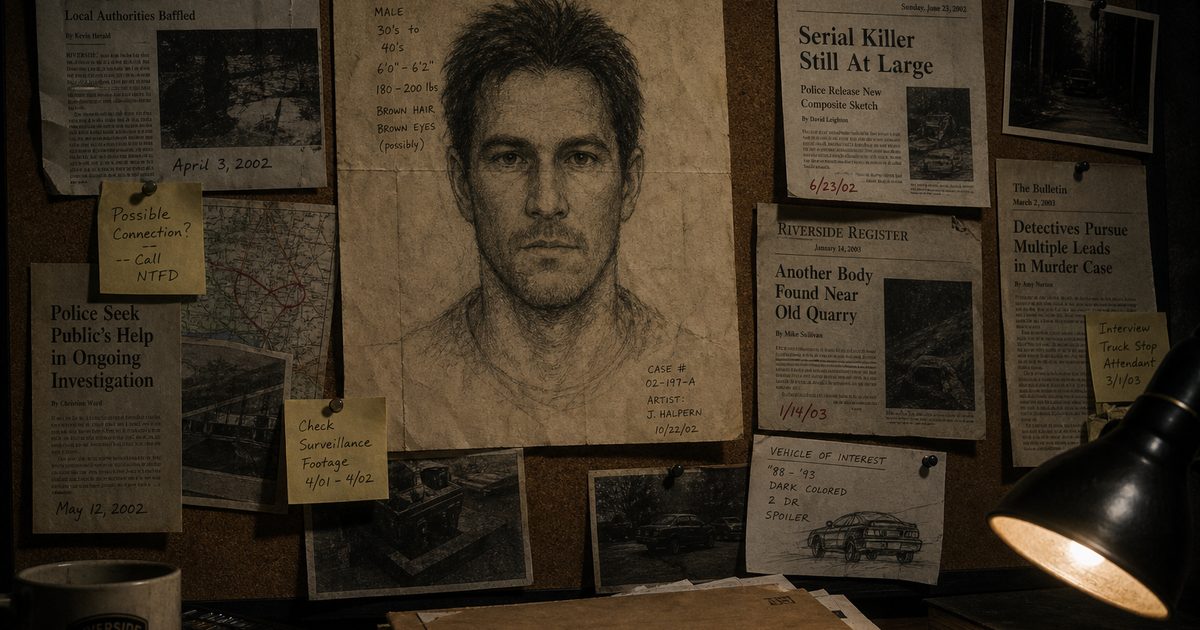
After the attack in Breaux Bridge, Diane Alexander was able to describe the man who assaulted her. Investigators used her account to create a composite sketch. In a case clouded by fear and by the mistaken focus on a white suspect, that sketch mattered. It offered something direct and human, not a theory but a witness.
Alexander also gave the investigation urgency. The attacks no longer looked like isolated horrors connected only in hindsight. They looked like part of an active hunt, one that could continue unless police moved faster and got it right.
Even then, the case did not end immediately. Months passed. Another woman was killed. The pressure mounted.
The DNA match that ended the hunt
The decisive break came in the spring of 2003.
Because of suspicion surrounding Randi Mebruer’s disappearance, investigators obtained a DNA sample from Lee on May 5, 2003. When the test results came back on May 25, they linked him to multiple victims. Reports at the time described the match as tying him to five of the killings.
At that point, the sprawling case narrowed with startling speed.
On May 26, 2003, authorities obtained an arrest warrant charging Lee in the murder of Carrie Yoder. By then he had fled Louisiana, traveling first to Chicago and then to Atlanta.
He did not stay free for long. On May 27, 2003, a joint team that included the FBI and Atlanta-area police arrested him in Atlanta. He was returned to Louisiana the next day.
After that, the case tightened further. On June 19, 2003, authorities said DNA connected him to Geralyn DeSoto’s murder. Days later, a grand jury indicted him in Charlotte Murray Pace’s killing, and prosecutors announced they would seek the death penalty.
For the public, the arrest brought relief. For the families, it was only the start of another long ordeal.
The trials and what was proven in court
Lee was charged in multiple murders, but the courtroom record matters here.
He was tried and convicted in the killing of Geralyn DeSoto. On August 10, 2004, a jury found him guilty of second-degree murder in West Baton Rouge Parish. He was sentenced to life in prison without parole.
A second major trial focused on Charlotte Murray Pace. On October 14, 2004, a jury convicted him of first-degree murder in her death. In December of that year, he was sentenced to death by lethal injection.
His lawyers argued that his low IQ should make him ineligible for execution. The courts ultimately allowed the sentence to stand. The Louisiana Supreme Court upheld the conviction and death sentence in 2008, and later appeals failed.
He was also charged in other killings and in the attack on Diane Alexander. But it is important to separate suspicion, charges, and convictions. Public memory often compresses them into one thing. The legal record does not.
What the Baton Rouge serial killer case exposed
The Derrick Todd Lee case is remembered not only because of the murders, but because of what the investigation revealed.
It showed the power of DNA to link crimes across years and jurisdictions. It also showed how badly an inquiry can drift when investigators become attached to the wrong profile. Once the idea of a white suspect took hold, it appears to have distorted the search even as forensic evidence pointed elsewhere.
The case also exposed the burden carried by victims’ families in long serial murder investigations. Arrest does not end that burden. Trials, appeals, and public retelling can stretch the pain for years.
Lee died on January 21, 2016, of heart disease while on death row.
That closed the legal chapter on him. It did not close everything else. Some questions around other unsolved cases remained. The criticism of early police mistakes remained too. So did the memory of how much fear one man spread across south Louisiana before he was stopped.
What finally broke the case was not a confession, and not a single stroke of luck. It was forensic evidence, patient case-building, and one woman who survived long enough to help police see what they had missed.
FAQ
Who was Derrick Todd Lee?
Derrick Todd Lee was a Louisiana serial killer later linked by DNA and other evidence to a series of attacks and murders in south Louisiana between 1998 and 2003.
How was Derrick Todd Lee caught?
Investigators obtained his DNA in May 2003 during the investigation into Randi Mebruer’s disappearance. The results matched evidence from multiple crime scenes, and he was arrested in Atlanta on May 27, 2003.
How many victims were linked to Derrick Todd Lee?
Authorities linked him to several murders, and he was charged in multiple cases. He was convicted in two murders: Geralyn DeSoto’s and Charlotte Murray Pace’s.
Why is Diane Alexander important in the case?
Diane Alexander survived an attack on July 9, 2002, in Breaux Bridge and gave investigators a description that led to a composite sketch, a major turning point in the investigation.
Did Derrick Todd Lee receive the death penalty?
Yes. He was sentenced to death in December 2004 after being convicted of the first-degree murder of Charlotte Murray Pace. He also received life without parole for the murder of Geralyn DeSoto.