A man in a dark jacket and baseball cap moved through Boston hotels with the ease of someone checking in for the night. He passed cameras, rode elevators, crossed lobbies, and disappeared back into the city. At first, those images meant very little. Then a woman was robbed at gunpoint. Days later, another was dead. By the time detectives stitched the footage together, Boston was chasing a suspect whose life on paper looked almost impossible to square with the violence they were investigating.
He was Philip Markoff, a second-year medical student at Boston University. He had no publicly known criminal record. He was engaged. Friends and classmates knew him as disciplined and ambitious, a man headed toward a respectable career. Yet in April 2009, police said that behind that polished surface was someone arranging meetings through Craigslist and targeting women in hotel rooms.
The nickname that followed him, the Craigslist Killer, spread fast. But the real story was less about a tabloid label than about three women caught in a brief, terrifying stretch of days.
A robbery at the Westin Copley Place
The first known attack came on April 10, 2009.
Inside the Westin Copley Place in Boston, 29-year-old Trisha Leffler had agreed to meet a client who contacted her through Craigslist. According to investigators, the meeting turned violent. She was bound, gagged, and robbed at gunpoint.
She survived, and that mattered. It meant detectives had a victim who could describe what had happened. At that point, though, the case did not yet have the shape it would soon take. It looked like a brutal hotel robbery arranged online, serious, frightening, but still one incident.
Four days later, that changed.
Julissa Brisman and the killing that changed the case
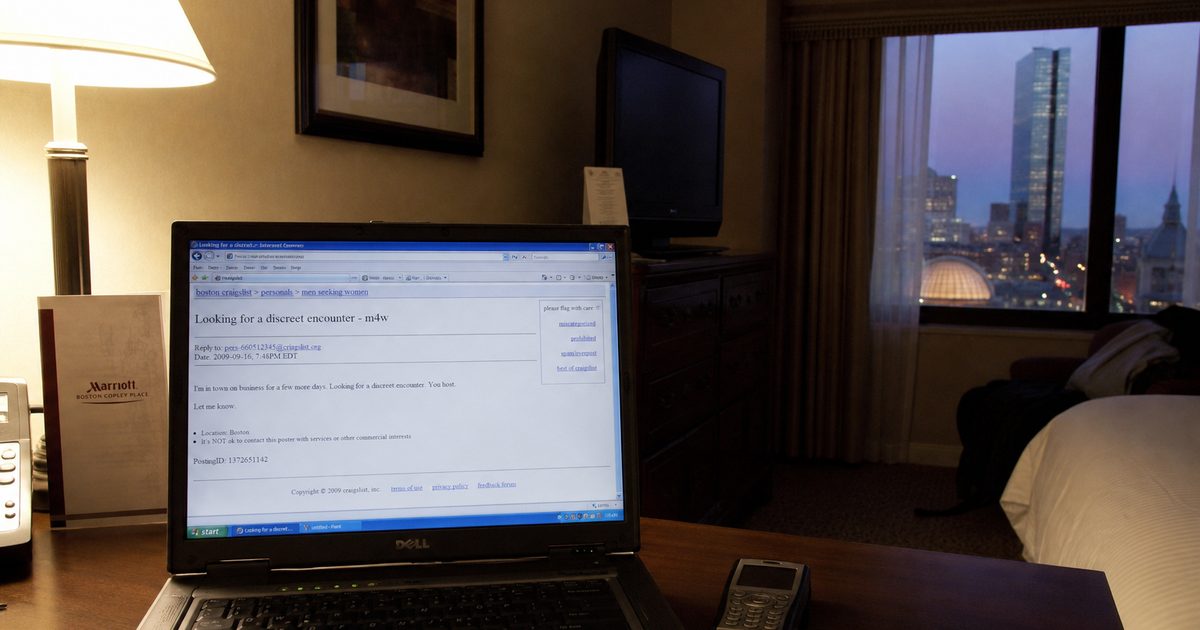
On April 14, 2009, 25-year-old Julissa Brisman was found shot to death at the Boston Marriott Copley Place, often referred to in coverage as the Copley Marriott. She had traveled from New York and advertised massage services online. Like Leffler, she had met the man through a Craigslist posting, according to authorities.
Her death turned a robbery investigation into a homicide case under intense public pressure.
Detectives moved quickly through the places where modern cases often break open: security footage, email accounts, phone records, hotel logs. There was no single dramatic clue that solved everything at once. Instead, the picture emerged piece by piece. A man seen entering and leaving hotels. Calls made through disposable phones. online messages that seemed disconnected until investigators laid them side by side.
What they were building was a timeline.
A third woman, and a pattern across state lines
Before police made an arrest, there was another attack.
On April 16, 2009, in Warwick, Rhode Island, Cynthia Melton reported that she had been targeted in an attempted robbery at a Holiday Inn Express after being contacted through Craigslist. Melton, an exotic dancer who offered private services, survived.
Now detectives were no longer looking at one robbery and one killing in Boston. They were looking at three women in less than a week, in two states, all linked by online ads and hotel meetings with a man they had not known before.
The pattern was becoming hard to ignore.
How investigators closed in on Philip Markoff
The break in the case came from surveillance and electronic records working together.
Hotel cameras captured a man whose appearance matched Philip Markoff. Investigators also traced cell phone activity, email communications, and internet records that, prosecutors said, linked him to the meetings with the victims. Disposable phones and account activity helped fill in the gaps.
Police then began watching him.
On April 20, 2009, Markoff was arrested during a traffic stop on Interstate 95 in Walpole, Massachusetts, while traveling to Foxwoods Resort Casino with his fiancée, Megan McAllister. The image of the arrest only deepened public fascination: a medical student on the way to a casino, suddenly surrounded by police, accused in a case that had already dominated headlines.
The next day, April 21, he was arraigned in connection with Julissa Brisman’s killing and pleaded not guilty. He was held without bail.
On May 4, 2009, Rhode Island authorities also issued a warrant charging him in the Warwick attack on Cynthia Melton.
The evidence prosecutors said they had
As the investigation widened, prosecutors laid out the evidence they believed tied Markoff to the crimes.
Authorities said they recovered a semi-automatic handgun, plastic zip ties and restraints, duct tape, a knife, bullet casings, and disposable cell phones. They also alleged that the gun had been hidden inside a hollowed-out medical textbook, one of the details that made the case especially memorable. Investigators further said they found emails and other digital evidence linking him to the victims’ ads and appointments.
One forensic finding stood out most sharply: prosecutors said blood found on Markoff’s shoes matched Julissa Brisman.
Ballistics testing, authorities said, also connected the gun recovered from his apartment to the weapon used in Brisman’s murder.
Taken together, the state’s case was built on surveillance footage, forensic testing, digital records, and items seized during the investigation. It was a substantial body of evidence, but it is also important to be precise here. Because Markoff died before trial, that evidence was never tested before a jury, and there was never a conviction.
The double life that drew so much attention
Part of what made the Philip Markoff case so unsettling was the contrast.
This was not a suspect who fit the public’s easy assumptions. He was studying medicine. He was planning a wedding. He appeared to be building a conventional future. The allegations suggested something else entirely: secret meetings, hotel rooms, a gun, and women selected through online ads.
That gap between public image and private accusation drove much of the case’s notoriety. It also fed speculation about motive.
Investigators and prosecutors explored whether robbery was connected to gambling. Markoff was known to visit casinos, and reports at the time focused heavily on the possibility of gambling debts. But motive remained less certain than the physical and digital evidence. Suffolk County District Attorney Daniel Conley later said investigators might never fully know why the crimes happened.
That uncertainty lingered over the case from beginning to end.
Charges, a coming trial, and a case that stopped cold
Markoff faced a long list of charges, including first-degree murder in Brisman’s death, armed robbery, kidnapping, weapons offenses, and charges related to the attacks on the surviving victims.
A trial was scheduled for March 2011.
It never began.
On August 15, 2010, Philip Markoff was found dead in his cell at Nashua Street Jail in Boston. His death was ruled a suicide. News reports said he had used improvised materials in the cell and had apparently taken steps to avoid being revived.
With that, the criminal case ended without the one thing the public usually expects: a verdict. There was no conviction. There was no acquittal. There was only the prosecution’s evidence, the defense’s not-guilty plea, and a defendant who died before the case could be heard in full at trial.
For Julissa Brisman’s family, and for the women who survived, that left an especially hard kind of unfinished ending.
What remained after Philip Markoff’s death
The aftermath stretched beyond the courtroom.
Brisman’s family sought access to evidence and explored legal action. Markoff’s death in custody also raised questions about jail suicide prevention and whether warning signs had been missed. In Boston, officials examined the safeguards in place for inmates considered at risk.
The case also became part of a broader public conversation about crimes arranged through online classifieds. Craigslist itself was not the cause of the violence, but it was the route investigators said the suspect used to reach the women. That connection helped turn the story into national news and fixed the label Craigslist Killer in the public mind.
Still, the most striking fact about the case may be its speed.
From the robbery of Trisha Leffler on April 10, to Julissa Brisman’s murder on April 14, to the Rhode Island attack on April 16, and the arrest on April 20, the known sequence unfolded in just ten days. Detectives had almost no room to waste time. The same was true for the women whose lives were thrown into it.
That is what gives the story its lasting weight. Not the nickname. Not the contrast between a medical student and the charges against him. But the compressed, frightening pace of it all, and the reality that one woman was killed, two others survived violent encounters, and the full case never reached a jury.
FAQ
Who was Philip Markoff?
Philip Markoff was a Boston University medical student accused of killing Julissa Brisman and attacking two other women after arranging meetings through Craigslist.
Why was he called the Craigslist Killer?
The media used that name because investigators said he contacted the victims through Craigslist ads. It became the label most associated with the case.
What happened to Julissa Brisman?
Julissa Brisman was shot and killed at the Boston Marriott Copley Place on April 14, 2009, after meeting a man authorities said had contacted her through Craigslist.
What evidence linked Markoff to the case?
Prosecutors cited hotel surveillance footage, phone and internet records, emails, disposable phones, a gun allegedly tied to the murder, and blood on his shoes that authorities said matched Brisman.
Was Philip Markoff ever convicted?
No. He pleaded not guilty, but died by suicide in jail on August 15, 2010, before his case went to trial.