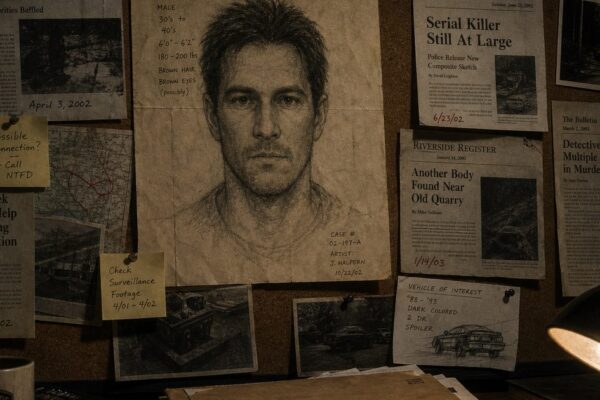
A parking lot in Maryland. A gas station in Virginia. A bench in Silver Spring. In the space of a few days, ordinary places turned into scenes people would remember for the rest of their lives. No arguments. No warning. Just a single shot, then confusion, then fear spreading faster than facts.
That was the terror of the Beltway Snipers case, better known to many as the D.C. sniper attacks. In October 2002, someone was shooting strangers across Maryland, Virginia, and Washington, D.C. The victims had nothing obvious in common. They were mowing grass, pumping gas, walking, waiting, reading, cleaning out a car. The randomness was the point. It made everyone feel exposed.
The first shots
The attacks that gripped the Washington region began on October 2, 2002.
At about 5:20 p.m., a bullet smashed through the window of a Michaels craft store in Aspen Hill, Maryland, narrowly missing a cashier. At first, it looked like a frightening but isolated incident.
Less than an hour later, that illusion was gone. James D. Martin, 55, was shot and killed in a parking lot in Wheaton, Maryland.
The next morning, the violence accelerated with terrifying speed.
At 7:41 a.m. on October 3, James L. “Sonny” Buchanan Jr., 39, was shot while mowing grass in North Bethesda. At 8:10 a.m., Premkumar A. Walekar, 54, a cab driver, was shot while pumping gas in Aspen Hill. At 8:37 a.m., Sarah Ramos, 34, was killed while sitting on a bench outside a bus stop in Silver Spring. At 9:58 a.m., Lori Ann Lewis-Rivera, 25, was shot while vacuuming her car in Kensington.
That night, the violence reached Washington, D.C. At about 9:20 p.m., Pascal Charlot, 72, was shot and killed while walking on Georgia Avenue.
By then, the pattern was impossible to ignore. These were not connected victims in any ordinary sense. They were strangers, chosen in public, from a distance.
A region changes its habits overnight
Fear settled in quickly because there was no safe routine left to trust.
People began zigzagging through parking lots. Drivers crouched behind car doors while filling their tanks. Parents rushed children from school entrances to building doors. Every open space felt dangerous because the attacker was nowhere to be seen.
On October 7, the shootings hit a place that made the panic even worse: a school. A 13-year-old boy was shot and seriously wounded outside Benjamin Tasker Middle School in Bowie, Maryland. Near the scene, investigators found a tarot card with the words “Call me God” written on it.
Two days later, on October 9, Dean Harold Meyers, 53, was shot and killed while fueling his car in Prince William County, Virginia.
On October 11, Kenneth H. Bridges, 53, was killed at a gas station in Spotsylvania County, Virginia.
On October 14, Linda Franklin, 47, an FBI intelligence analyst, was shot and killed outside a Home Depot in Fairfax County, Virginia. Her death landed especially hard in a region filled with federal workers and law enforcement families. By then, the attacks no longer felt like a string of shootings. They felt like a siege.
On October 19, Jeffrey Hopper, 37, was shot and critically wounded in a restaurant parking lot in Ashland, Virginia. Near that scene, authorities recovered a letter demanding $10 million and threatening more violence.
The killer, or killers, were not just shooting. They were trying to control the investigation.
The manhunt grows, but the picture stays blurry
The response was enormous. Montgomery County Police Chief Charles Moose became the public face of the investigation, while the FBI, ATF, state police, local departments, and federal agencies worked the case from multiple directions.
But a large manhunt does not guarantee clarity.
Witness descriptions conflicted. Early reports sent police toward the wrong vehicles and the wrong type of suspect. Some accounts focused attention on a white box truck or a lone white man, details that turned out to be misleading. Media coverage amplified rumors. Tips flooded in. Most went nowhere.
What investigators did have was science.
Ballistics linked several of the shootings to the same .223-caliber rifle. That mattered. It meant the attacks were connected even when the crime scenes looked random.
The public did not know much about that evidence yet. What people knew was simpler and more frightening: the shooter could strike in broad daylight, from far enough away to vanish before anyone understood where the shot had come from.
A clue from outside Washington
The break that changed the case did not come neatly from one of the Washington-area scenes.
As investigators worked through the sniper shootings, they also began looking more closely at earlier crimes in other states that might be connected. Those incidents included the killing of Keenya Nicole Cook, 21, in Tacoma, Washington, on February 16, 2002; the fatal shooting of Jerry Taylor, 60, in Tucson, Arizona, on March 19; the shooting of John Gaeta, 51, during a robbery in Hammond, Louisiana, on August 1; the shooting of Paul LaRuffa, 55, during a robbery in Clinton, Maryland, on September 5; and the September 21 robbery and shooting at a liquor store in Montgomery, Alabama, where Claudine Parker, 52, was killed and Kellie Adams, 24, was critically wounded.
That Alabama case became crucial.
The sniper had contacted authorities and pointed them toward the Montgomery shooting. Once investigators dug deeper, they found evidence tying Lee Boyd Malvo to that crime scene. Public reporting at the time centered on a fingerprint match. That identification led investigators to Malvo, and from Malvo to John Allen Muhammad.
Now the case had names.
Muhammad was a former U.S. Army soldier. Malvo was 17. Their connection would become one of the most disturbing parts of the story, not because it made the crimes less confusing, but because it suggested planning, control, and a relationship in which the older man held enormous influence.
The final killing before the arrests
Even after investigators identified suspects, the shootings did not stop immediately.
On October 22, Conrad Johnson, 35, a bus driver, was shot and killed in Aspen Hill, Maryland, while standing on the steps of his bus. It was the final fatal shooting in the Washington-area spree.
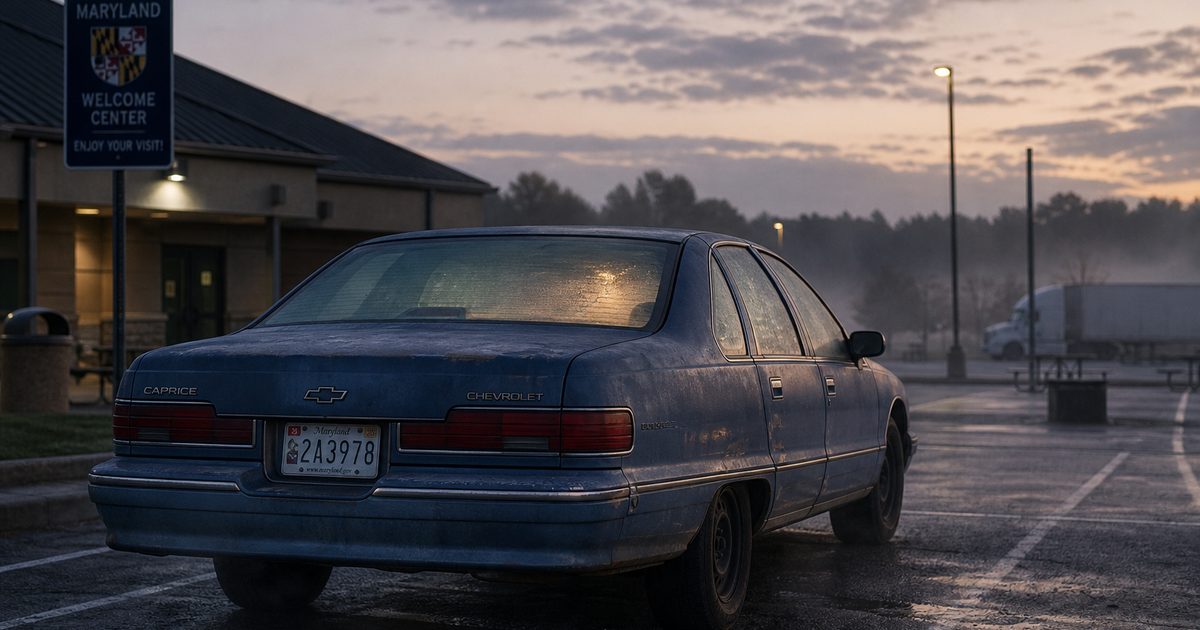
By then, police were searching for a dark blue 1990 Chevrolet Caprice linked to Muhammad. The car sounded ordinary enough to disappear in traffic, which was part of what made it so effective.
Late on October 24, a motorist at a rest stop off Interstate 70 near Myersville, Maryland, spotted the Caprice and called police. Officers moved in carefully, knowing they might be approaching the people who had kept an entire region on edge for three weeks.
At 3:19 a.m. on October 24, police arrested John Allen Muhammad and Lee Boyd Malvo while they slept inside the car.
Inside the Caprice, investigators found the Bushmaster XM-15 .223-caliber rifle that ballistics linked to the shootings. Authorities also said the car had been modified so shots could be fired from the trunk area, turning an aging sedan into a concealed firing platform.
After weeks of fear, the Beltway Snipers manhunt was over in a highway rest area.
Trials, convictions, and what was proven
The legal cases that followed were long and closely watched.
In November 2003, a Virginia jury convicted Muhammad in the killing of Dean Meyers. He was sentenced to death. He was later also convicted in Maryland. Muhammad was executed in Virginia on November 10, 2009.
Malvo was also tried in Virginia in 2003 and convicted. In later proceedings in Maryland, he was convicted in additional killings tied to the spree.
Some of the most debated parts of the case involved motive and who pulled the trigger in specific shootings. Prosecutors argued that Muhammad was the mastermind. Malvo at times made statements taking greater responsibility, but later described Muhammad as the controlling force behind the attacks. Courts ultimately held both men responsible for multiple murders.
Because Malvo had been 17 at the time of the crimes, his sentences later became the subject of major legal challenges. Supreme Court rulings on juvenile sentencing changed the legal landscape for life-without-parole terms imposed on minors. As a result, some of Malvo’s sentences were revisited. He remains imprisoned.
Why they did it remains partly unsettled
The D.C. sniper attacks were solved, but motive has never been as clean as a courtroom timeline.
Prosecutors alleged that Muhammad had several aims. One theory was that he planned to murder his ex-wife, Mildred Muhammad, and disguise that killing within a wave of apparently random shootings. Authorities also pointed to the $10 million demand and to evidence suggesting a broader campaign of intimidation and control.
Some of those claims were argued forcefully by prosecutors, but not every detail can be reduced to a single proven motive. What is certain is the damage left behind: families shattered, survivors carrying trauma, and a region that learned how quickly ordinary life can be bent by invisible danger.
The investigation also exposed how hard it can be for agencies to share information quickly when crimes cross city, county, and state lines. In the years that followed, the case was often cited in discussions about coordination, communication, and emergency response.
But those institutional lessons are only part of the story. The human part came first. A man mowing a lawn. A woman on a bench. A driver at a gas pump. People who never knew they had been drawn into one of the most frightening murder sprees in modern American history.
FAQ
How many people were killed in the Beltway Sniper attacks?
Ten people were killed in the Washington-area shootings between October 2 and October 22, 2002, and several others were wounded. Authorities also linked Muhammad and Malvo to earlier shootings in other states.
Who were the Beltway Snipers?
Investigators identified the shooters as John Allen Muhammad and Lee Boyd Malvo. Muhammad was an adult former soldier; Malvo was 17 at the time of the attacks.
How were the D.C. snipers caught?
Ballistics linked the shootings, and evidence from an earlier crime in Montgomery, Alabama helped identify Malvo and then Muhammad. A tip about their blue Chevrolet Caprice led police to arrest both men at a Maryland rest stop on October 24, 2002.
What kind of weapon did they use?
Authorities said the shootings were carried out with a Bushmaster XM-15 .223-caliber rifle recovered after the arrests.
What was the motive in the Beltway Snipers case?
Prosecutors alleged several motives, including a $10 million extortion demand and a plan by Muhammad to hide a personal killing within the larger spree. Not every aspect of motive was resolved with complete certainty.