
At 3:19 in the morning, the hunt ended in near silence.
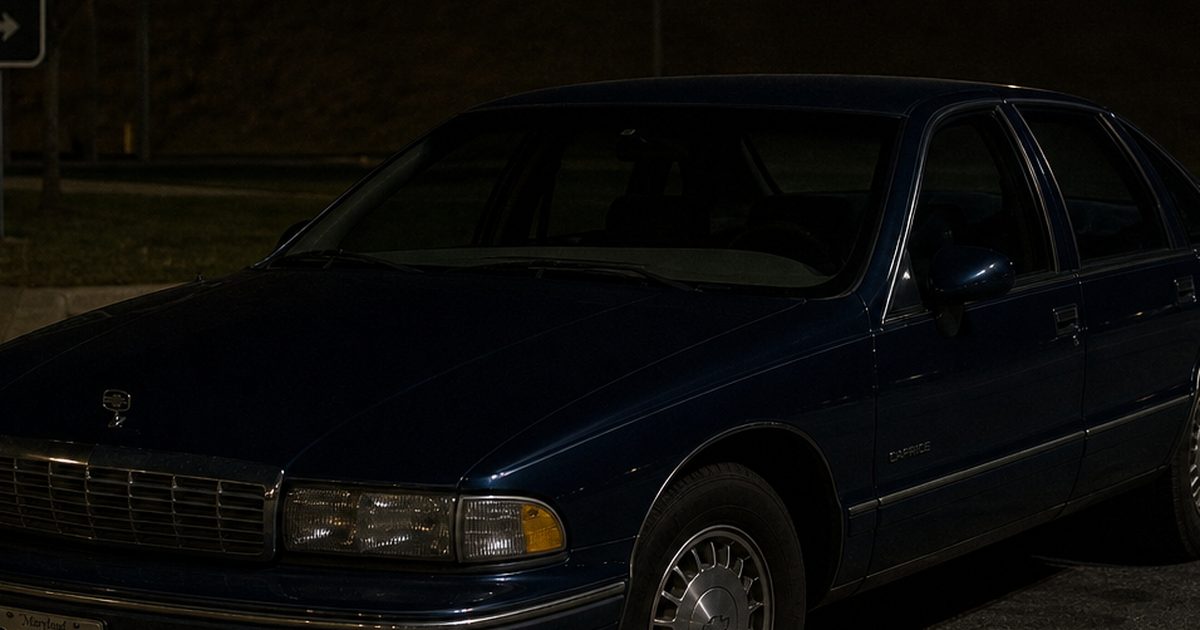
A blue Chevrolet Caprice sat in the dark at a Maryland rest stop off Interstate 70. Inside, John Allen Muhammad and Lee Boyd Malvo were asleep. For three weeks, the Washington region had lived with a fear that felt impossible to manage: a trip to the gas station could turn deadly, a school sidewalk could become a crime scene, a parking lot could feel as exposed as an open field. Then, after one motorist noticed the car and called police late on October 24, 2002, heavily armed officers moved in and made the arrest that had eluded one of the largest manhunts in the country.
By then, 10 people had been killed in the D.C.-area shootings and three others had been wounded. Investigators would also tie the pair to earlier shootings in other states, bringing the broader death toll to 17, with several more injured. What the public had come to know as the Beltway Sniper attacks had not been a single burst of violence. It was a moving, taunting campaign of shootings, notes, phone calls, and misdirection.
The first shots did not look like a pattern
Long before the region was on edge, there were killings that did not yet seem connected.
On February 16, 2002, Keenya Cook was shot and killed in Tacoma, Washington. On March 19, Jerry Taylor was killed in Tucson, Arizona. On August 1, John Gaeta was wounded in Hammond, Louisiana. On September 5, pizza shop owner P. Kenneth Bridges? No-that was later in Virginia. In Clinton, Maryland, on that September date, businessman Paul LaRuffa was shot and critically wounded after closing his restaurant. His laptop was taken.
At the time, those cases were not publicly understood as one chain. Only later, through ballistics and evidence recovered after the arrest, did investigators connect them to Muhammad and Malvo.
The Washington-area terror began almost quietly. On October 2, a bullet shattered the window of a Michaels craft store in Aspen Hill, Maryland, narrowly missing an employee. Hours later, 55-year-old James Martin was shot and killed in a grocery store parking lot in Wheaton.
The next day, the pattern announced itself with brutal clarity. On October 3, five people were killed in a span of hours across Montgomery County, Maryland, and the District of Columbia area: James Buchanan in Rockville, taxi driver Prem Kumar Walekar in Aspen Hill, Sarah Ramos in Kensington, Loretta Brown in Silver Spring, and Montgomery County bus driver Pascal Charlot in Washington, D.C.
There was no obvious connection among them. Different ages. Different backgrounds. Different locations. That was part of what made the sniper attacks so destabilizing. People could not tell themselves they were safe if they avoided one neighborhood, one routine, one kind of place.
A region learns to move differently
The fear changed ordinary behavior almost overnight.
Parents rushed children from cars to school doors. Drivers crouched beside their vehicles while pumping gas. Some zigzagged through parking lots, hoping motion might make them harder to hit. In the weeks after September 11, the Washington area already carried a heightened sense of vulnerability. The shootings deepened it.
On October 7, the violence reached a child. Thirteen-year-old Iran Brown was shot and seriously wounded outside Benjamin Tasker Middle School in Bowie, Maryland. Beside the scene, investigators found a tarot card with a message: “Dear Policeman, I am God. Do not release to the press.” It was one of the first clear signs that the killer-or killers-wanted not just to murder, but to control the investigation and the public mood.
Two days later, on October 9, Dean Harold Meyers was shot dead while pumping gas in Manassas, Virginia. On October 11, 53-year-old Kenneth Bridges was killed at another gas station near Fredericksburg. On October 14, Linda Franklin, an FBI intelligence analyst, was shot and killed in a Home Depot parking lot in Falls Church, Virginia, while loading purchases into her car with her husband.
The scenes kept changing. The method did not. A single shot. A victim in public. No warning.
The investigation grew fast, but not cleanly
Montgomery County Police Chief Charles Moose became the public face of the case, standing before cameras as local, state, and federal agencies tried to coordinate a sprawling investigation. The FBI joined. So did departments across Maryland, Virginia, and Washington, D.C. Tips flooded in.
But scale did not mean clarity.
Early witness reports often mentioned a white box truck or white van, vehicles that drew enormous police attention but did not lead to the shooters. Profilers initially leaned toward the idea of a lone white man. That assumption was wrong. Communication between agencies was also strained at points, a problem that mattered in a case crossing so many jurisdictions so quickly.
Meanwhile, the shootings continued.
On October 17, 43-year-old William Sullivan was killed outside a store in Ashland, Virginia. Around the same time, a caller claiming to be involved told authorities to “look at Montgomery, Alabama.” It sounded cryptic, but it would become one of the most important breaks in the case.
Then, on October 19, Jeffrey Hopper was shot and critically wounded in a restaurant parking lot in Ashland. At that scene, police found a note demanding $10 million. The message made clear that the case involved extortion as well as murder.
That did not mean motive was suddenly simple. Prosecutors later alleged that Muhammad had several motives, including extortion and a plan to kill his ex-wife, Mildred Muhammad, in a way that would make her death appear random. Prosecutors also presented evidence of racial animus. Some of the broader psychological claims around motive have remained debated, but those allegations formed a central part of the prosecution’s theory. Malvo’s lawyers, for their part, argued that the teenager had been manipulated and dominated by Muhammad.
The final killing in Maryland
The last Washington-area victim was killed on October 22.
Conrad Johnson, a 35-year-old bus driver, was standing on the steps of a bus in Aspen Hill, Maryland, when he was shot. By then, the region had spent weeks living inside the rhythm of the attacks: a shot, a search, a press conference, another day of waiting.
The next day, investigators released a description that finally gave the public something concrete to watch for: a blue 1990 Chevrolet Caprice. It was not the white truck people had been picturing. It was a sedan, ordinary enough to disappear into traffic.
That detail mattered because the car was not just transportation. It was part of the method. Investigators would later find that a small hole had been cut near the trunk area, allowing shots to be fired from inside the vehicle while keeping the shooter concealed. The design helped explain one of the most unnerving features of the Beltway Sniper case: witnesses often saw almost nothing.
The clue from Alabama
The call about Montgomery turned out not to be a bluff.
Investigators linked the sniper’s message to the September 21, 2002, killing of 45-year-old Kellie Adams at a liquor store in Montgomery, Alabama. A fingerprint belonging to Lee Boyd Malvo was found there. That connection was crucial. It tied Malvo directly to a violent crime outside the Washington area and helped investigators understand that they were looking at a broader series, not an isolated local spree.
When police finally searched the Caprice after the arrest, the rest of the structure came into view. They recovered a .223-caliber Bushmaster XM-15 rifle. Ballistics linked it to the shootings. They found maps, walkie-talkies, and other items that helped show planning and movement. Investigators also connected the pair to the earlier shooting of Paul LaRuffa, whose stolen laptop contained information useful to the crimes.
In Tacoma, authorities found shell casings and evidence from a target practice site that also helped tie the rifle to the broader chain of attacks.
What had looked random from the outside was, in fact, organized.
Arrest, trials, and what was proven
The arrest came just hours after the Caprice was spotted. Late on October 24, a motorist saw the car at the rest stop near Myersville, Maryland, and alerted authorities. In the early hours of October 25, police surrounded the vehicle and took both suspects into custody without a shootout.
The legal cases that followed were complex and spread across multiple jurisdictions, but the central outcomes were clear.
In November 2003, John Allen Muhammad was convicted in Virginia for the murder of Dean Meyers, along with conspiracy and firearms charges. He was sentenced to death. After appeals failed, he was executed by lethal injection on November 10, 2009.
Lee Boyd Malvo was also convicted in Virginia in December 2003, including for capital murder in the killing of Linda Franklin. He received life sentences in Virginia and Maryland. Because he had been 17 at the time of the crimes, his sentencing later became part of larger legal battles over juvenile punishment. A federal judge vacated his Virginia life-without-parole sentences in 2017 under Supreme Court rulings affecting juvenile offenders, but that did not mean his release; he remained imprisoned under other sentences, including in Maryland.
The broad facts of the case are not in doubt. Muhammad and Malvo carried out the shootings. What remained more contested, especially in court and in later analysis, was the exact balance of influence, control, and intent between the older man and the teenager beside him.
Why the Beltway Sniper attacks still haunt people
Some cases are remembered for one house, one victim, one night.
The Beltway Sniper attacks are remembered for what they did to a whole landscape. Gas stations, parking lots, sidewalks, school entrances-places people move through without thinking-became charged with dread. The victims did not know one another. Most were simply going about their day when they were killed.
That is why the case still stands apart in the history of American true crime. Not because it was mysterious forever; it was solved within weeks. Not because the killers were never identified; they were. It endures because of the atmosphere it created and the way it exposed how fragile ordinary routines can feel when violence arrives without warning.
FAQ
How many people died in the Beltway Sniper attacks?
Ten people were killed in the Washington-area shootings in October 2002. Investigators later linked Muhammad and Malvo to additional shootings in other states, bringing the broader total to 17 dead.
Who were the Beltway Snipers?
The two men responsible were John Allen Muhammad and Lee Boyd Malvo.
When did the Beltway Sniper attacks happen?
The main D.C.-area shootings ran from October 2 to October 24, 2002. Related crimes tied to the pair began earlier that year.
What car did the Beltway Snipers use?
Police identified a blue 1990 Chevrolet Caprice, the car where Muhammad and Malvo were arrested.
What was the motive in the Beltway Sniper case?
Prosecutors alleged multiple motives, including extortion and Muhammad’s plan to kill his ex-wife in a way that looked random. Not every aspect of motive was equally provable, but those claims were central to the case presented at trial.