
A teenage boy left work expecting to be back soon. He never made it home.
On December 11, 1978, 15-year-old Robert Piest disappeared after telling his mother he was going to speak with a contractor about a possible job. The contractor was John Wayne Gacy. That simple last sighting, a boy, a promise of work, a man who seemed respectable, cracked open one of the darkest murder cases in American history.
If you want the short answer to when John Wayne Gacy was caught, it came ten days later. Police arrested him on December 21, 1978. But the date only makes sense once you see how carefully he had hidden in plain sight, and how Robert Piest’s disappearance finally brought everything to the surface.
The man people thought they knew
By the time investigators focused on Gacy, he had spent years building a public image that worked in his favor.
He ran PDM Contractors, a suburban construction business. He was active in local Democratic politics. He volunteered. He sometimes performed as Pogo the Clown or Patches the Clown at community events and parties. To neighbors and acquaintances, he could look like a busy, sociable businessman with deep ties to the area around Norwood Park Township, near Chicago.
That image mattered. It helped explain why suspicion did not settle on him sooner.
It was not as if there had been no warning signs. Gacy had a serious criminal record before the murders tied to his Chicago home. In Iowa, he was convicted in December 1968 on a sodomy charge involving a teenage boy and sentenced to 10 years. He was released on parole in June 1970 after serving about 18 months. After returning to Illinois, he was accused again in later sexual assault cases, but those charges were dismissed.
None of that stopped him from rebuilding his life in public.
Behind that respectable front, prosecutors later proved, Gacy was killing young men and boys.
The years before anyone stopped him
The first known victim was Timothy McCoy, a 16-year-old killed on January 3, 1972. Over the next several years, more young men and teenage boys vanished into Gacy’s orbit.
Some were lured with offers of work. Some were vulnerable. Some simply crossed paths with the wrong man at the wrong time.
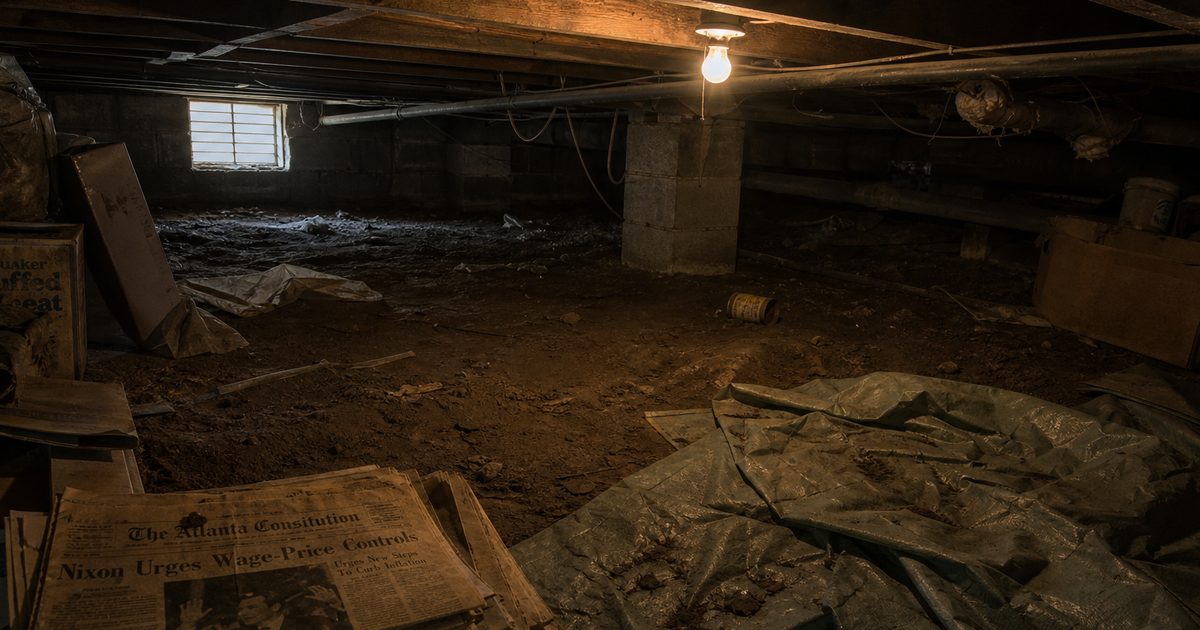
Between 1972 and 1978, Gacy murdered at least 33 victims, the number for which he was ultimately convicted. Most were teenagers or young men. Many were buried on his property, in the crawl space beneath his house, under the garage, or elsewhere on the lot. Others were disposed of in the Des Plaines River.
For a while, the house itself seemed to whisper that something was wrong. There was a bad odor. Gacy explained it away as sewer or moisture problems. Earlier police attention in the mid-1970s did not produce charges that exposed the killings. The missing young men did not, at first, form a pattern strong enough to break through the ordinary explanations of suburban life.
Then Robert Piest disappeared, and the case changed overnight.
Robert Piest and the mistake that ended it
Robert Piest worked at a pharmacy in Des Plaines. On the evening of December 11, he told his mother he was going to talk to a contractor about a part-time job. He was last seen leaving to meet Gacy.
He did not come back.
That detail gave investigators something concrete: a missing teenager and the last known adult seen with him. Police began looking closely at Gacy almost at once. What started as a missing-person investigation quickly widened into surveillance, interviews, and a growing sense that they were dealing with something much larger.
As officers watched him, Gacy kept trying to act normal. But the pressure was building. Investigators learned more about his background. They gathered enough information to seek a search warrant.
On December 21, 1978, police searched his house.
Inside, they found items that deepened suspicion immediately: handcuffs, syringes, pills, and identification belonging to young men other than Gacy. There was also the odor, the same one neighbors had noticed before, now impossible to ignore in the context of a missing boy.
That same day, police arrested him.
So for anyone asking when was John Wayne Gacy caught, the answer is December 21, 1978, after the investigation into Robert Piest’s disappearance led straight to his door.
The confession that opened the ground
The arrest was only the beginning.
On December 22, 1978, after hours of questioning and under intense pressure from the evidence gathering around him, Gacy confessed. He admitted to killing numerous young men and boys, a total that would become 33 in the case against him.
The confession did not close the story. It opened the earth.
Investigators began digging on the property almost immediately. What they found turned the house into a crime scene known across the country. Bodies were recovered from the crawl space and other parts of the lot. More remains were later recovered from the Des Plaines River.
In all, investigators found 29 victims on the property and four in the river.
The scale of it stunned even seasoned law enforcement. This was not a single hidden crime. It was years of murder concealed beneath the home of a man who had attended community events, run a business, and moved easily through public life.
In April 1979, the house was demolished. By then, it had already become a symbol of the case: ordinary on the outside, unspeakable underneath.
Indictment and trial
The legal process moved quickly once the bodies were found.
On January 8, 1979, a Cook County grand jury indicted Gacy on multiple charges, including 33 counts of murder. His trial began on February 6, 1980, in Chicago.
The central fight at trial was not whether the killings had happened. The physical evidence was overwhelming, and so was the recovery of the victims. The defense argued that Gacy was legally insane. Prosecutors argued that he knew exactly what he was doing and had taken deliberate steps to lure victims, conceal the crimes, and preserve his normal public image.
On March 12, 1980, the jury found him guilty of 33 murders.
That is the answer to another common question: when was John Wayne Gacy convicted? He was convicted on March 12, 1980.
The next day, March 13, he was sentenced to death.
Execution and what never fully ended
After years of appeals, Gacy was executed by lethal injection at Stateville Correctional Center on May 10, 1994.
Even then, the case did not become neatly finished.
Not all of the victims were identified. For years, some families had no answer about what happened to missing sons, brothers, or friends. The Cook County Sheriff’s Office later reopened work on the unidentified victims, using newer forensic methods including DNA testing and dental comparisons. In October 2021, one victim long known only as a John Doe was identified as Francis Wayne Alexander.
Five victims remain unidentified.
There are also questions that have lingered for decades. Investigators suspected there may have been more victims than the 33 murders for which Gacy was convicted. He made varying claims over time, but claims beyond the proven case remain unconfirmed. There has also long been debate about whether he had help in any part of the crimes or disposal of bodies. No one else was convicted in connection with the murders.
What is proven is grim enough on its own.
Why the case still holds people
Part of the lasting shock is the contrast. Gacy did not look, from the outside, like someone living a secret life of predation and murder. He was not hidden from the community. He was inside it.
Another reason is Robert Piest.
So many of the earlier victims disappeared without the one break investigators needed. Robert’s case gave police a final, crucial thread: a specific meeting, a known last sighting, a name that could not be brushed aside. Once detectives pulled on that thread, the whole false life Gacy had built began to collapse.
That is why the question when was John Wayne Gacy caught is really also a question about how he was finally stopped. He was caught because one missing boy’s disappearance was investigated hard and fast enough to expose what had been buried for years.
And at the center of the story are the victims, the young lives cut short, the families left searching, and the names investigators fought to recover from beneath a house that had hidden too much for too long.
FAQ
When was John Wayne Gacy caught?
John Wayne Gacy was arrested on December 21, 1978, after police investigating Robert Piest’s disappearance searched his home.
When was John Wayne Gacy convicted?
He was found guilty on March 12, 1980, of 33 murders.
How many people did John Wayne Gacy kill?
He was convicted of murdering 33 young men and boys between 1972 and 1978.
Where were the victims found?
Most were recovered from Gacy’s property, including the crawl space. Four victims were recovered from the Des Plaines River.
Are all of John Wayne Gacy’s victims identified?
No. Five victims remain unidentified, though investigators have continued using DNA and other forensic methods to try to name them.