The road along Ocean Parkway can feel almost unreal at night. On one side, scrub and marsh. On the other, the dark edge of the water. Drivers pass through without stopping. In late 2010, that lonely stretch near Gilgo Beach began to give up a secret it had held for years.
What police found there turned into one of the most haunting murder investigations in New York history. For a long time, the case seemed to move in fragments: missing women, scattered remains, false starts, public anger, and years of wondering whether the person known only as the Gilgo Beach killer would ever be identified.
When an arrest finally came in July 2023, it did not arrive with a dramatic confession or a last-minute eyewitness. It came through patient review, a new task force, phone records, surveillance, and DNA taken from something as ordinary as a discarded pizza box. The man charged was Rex Heuermann, a Long Island architect from Massapequa Park who had lived for years in plain sight.
What made the case endure, though, was never the mystery alone. It was the women at the center of it.
The search that changed everything
The break in the case began with a search for one missing woman.
On May 1, 2010, 24-year-old Shannan Gilbert disappeared after running from a client’s home in Oak Beach. In December that year, a police officer and cadaver dog searching the area discovered human remains near Ocean Parkway. But they were not Gilbert’s.
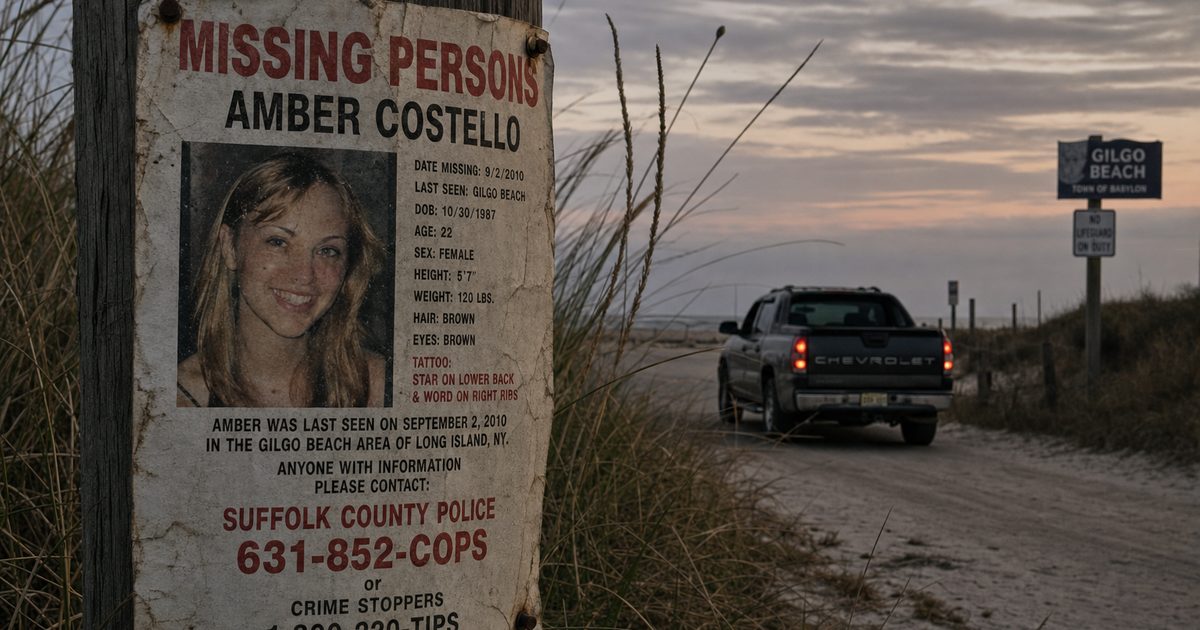
Instead, the search uncovered the remains of Melissa Barthelemy. Days later, police found three more sets of remains nearby: Maureen Brainard-Barnes, Megan Waterman, and Amber Lynn Costello. All four women had worked as escorts and had disappeared between 2007 and 2010. Bound by geography and circumstance, they became known as the Gilgo Four.
Their discovery changed the scale of the investigation overnight. This was no longer a single missing-person case. It was a pattern.
In the months that followed, more remains were found along Ocean Parkway and in nearby areas, exposing a far larger and more complicated series of killings than the public had first understood. Some of those cases were linked by investigators; others remained uncertain. That distinction mattered. For years, the Gilgo Beach murders were discussed as one story, but the evidence did not always support a single, simple explanation for every victim found in the area.
The women who should never have been reduced to a label
The shorthand of the case often threatened to flatten the lives involved. “Gilgo Four” was useful to reporters and investigators, but it could also make the women sound like part of a file instead of people.
Maureen Brainard-Barnes was 25, a mother of two. Melissa Barthelemy was 24. Megan Waterman was 22 and also a mother. Amber Costello was 27. Their families spent years waiting through rumors, headlines, and long stretches when the case seemed stalled.
Public discussion often fixated on the fact that several victims had advertised sex work online. That detail was relevant to how investigators believed the killer contacted some of them. But it also shaped the way the women were treated in public, as if their vulnerability somehow made the case less urgent. Their families never saw it that way. For them, the story was brutally simple: their daughters were gone, and for years no one could tell them why.
A case that drifted for years
The early investigation produced clues, but not enough to name a suspect.
Phone evidence showed that after Melissa Barthelemy disappeared in July 2009, a man used her phone to make taunting calls to her family. Investigators traced some of those calls to locations in Manhattan, including areas near Madison Square Garden and midtown. Witnesses in Amber Costello’s circle described a large man connected to the last known encounter before she vanished in September 2010. A Chevrolet Avalanche was also noted as part of the lead-up to her disappearance.
Still, the case dragged.
The Suffolk County investigation drew criticism over the years, including questions about leadership, missed opportunities, and whether the murders of women involved in sex work had been pursued with enough urgency. The FBI had assisted early on, but cooperation between agencies was uneven. The result was a case that stayed famous without truly moving.
That changed in 2022, when Suffolk County Police Commissioner Rodney Harrison announced a new multi-agency task force with the FBI, New York State Police, and the Suffolk County Sheriff’s Office. Investigators went back through old evidence with fresh eyes. They re-read witness statements. They re-examined phone data. They looked again at the Avalanche.
This time, the pieces began to line up.
How investigators zeroed in on Rex Heuermann
The witness description in Amber Costello’s case led detectives toward a first important detail: a first-generation Chevrolet Avalanche registered to a man in Massapequa Park.
That man was Rex Heuermann.
He was not a transient and not someone living on the margins. He was a licensed architect who ran a Manhattan-based firm, RH Consultants & Associates, and lived with his family in a cluttered house in Massapequa Park. To neighbors and clients, he appeared to be another working Long Island commuter.
Investigators began digging into his movements, his vehicles, his burner-phone activity, and his habits. According to prosecutors, they found that a burner phone linked to contacts with several victims traveled with him between Manhattan and Massapequa Park. They also concluded that he fit the physical description given by a witness in Costello’s case.
Then came the DNA.
In January 2023, investigators recovered a pizza box that Heuermann had discarded in Manhattan. Testing later found that DNA from the crust matched male DNA found on a hair associated with one of the victims, according to prosecutors. Other hairs recovered from the victims or their bindings were also said to be consistent with DNA from members of Heuermann’s household, a point prosecutors used to argue that the victims had been in contact with his environment. Defense lawyers challenged parts of that interpretation, but the DNA evidence became a central pillar of the case.
By July 13, 2023, authorities were ready to move. Heuermann was arrested in Manhattan and charged in connection with the murders of Melissa Barthelemy, Megan Waterman, and Amber Costello. He was initially named as the prime suspect in Maureen Brainard-Barnes’s death as well, and later charged in that case too.
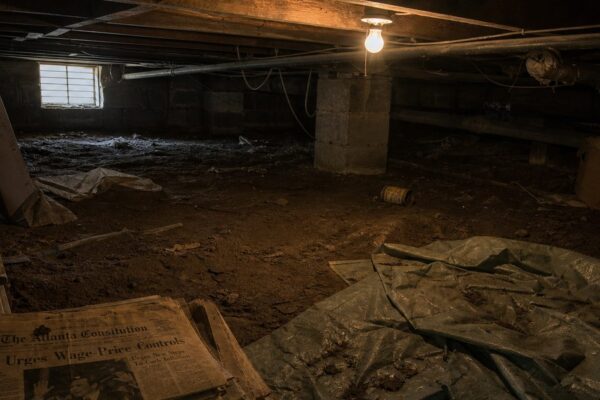
The house in Massapequa Park
After the arrest, attention turned quickly to the home where Heuermann had lived with his wife, Asa Ellerup, and their children.
From the outside, it looked like the kind of house people pass every day without a second glance. That was part of what unsettled so many people about the case. The allegations did not point to some hidden drifter moving through the region. They pointed to a man with a job, a family, and a routine.
Prosecutors later said that some of the killings appeared to have happened when Ellerup and the children were away. That was presented as part of the timeline, not proof on its own, but it helped investigators explain how the crimes could have been concealed for so long.
The search of the house and property was extensive. Investigators removed computers, documents, and physical evidence. They also examined his online activity. Court filings described violent pornography and searches related to the victims, their families, and the Gilgo Beach murders. As with any digital evidence, prosecutors had to do more than show that searches existed; they had to persuade a jury that the pattern supported the murder charges. They argued that it did.
Charges widened as the timeline grew
At first, the public story centered on the Gilgo Four. But prosecutors eventually expanded the case.
Over time, Heuermann was charged in additional killings, including those of Jessica Taylor, Sandra Costilla, and Valerie Mack. Prosecutors alleged a murder timeline stretching from 1993 to 2010. He pleaded not guilty.
That timeline is important because it shows how the case evolved. In 2023, authorities had not “solved” every death associated with the broader Gilgo area. What they had done was build a prosecutable case, piece by piece, around specific murders supported by phone evidence, witness statements, vehicle information, DNA, and digital records.
That is often how long-unsolved cases finally break. Not with one perfect clue, but with a stack of ordinary facts that, together, become hard to explain away.
From mystery to verdict
The arrest ended one chapter of the story, but not the case itself. That still had to be fought out in court.
As of mid-2026, however, the factual record does not support the claim that Heuermann had already been convicted in April 2026 and sentenced in June 2026. Publicly available reporting through that period indicated that the prosecution was still ongoing, with charges expanded but no final conviction yet entered. Any article stating otherwise risks presenting an unresolved legal process as finished fact.
What is established is this: on July 13, 2023, Rex Heuermann was arrested and charged. Prosecutors later added more murder counts. He has denied the allegations. The case became one of the most closely watched serial-killing prosecutions in the country because it appeared to answer a question that had hung over Long Island for more than a decade: who had been leaving women along Ocean Parkway?
For the families, even that answer came late.
The case Gilgo Beach will always be remembered for
The landscape near Gilgo Beach has not changed much. It is still open, still windswept, still easy to pass without thinking about what happened there. But the names found along that road changed Long Island.
For years, the public knew the case through a faceless title, the Gilgo Beach killer, and through the frustration of watching an investigation stall. The 2022 task force gave it momentum. The 2023 arrest gave it a defendant. But the emotional center of the story never belonged to the suspect. It belonged to the women whose disappearances were, for too long, treated as background noise.
Maureen Brainard-Barnes. Melissa Barthelemy. Megan Waterman. Amber Costello. And the others whose cases widened the investigation and deepened the grief.
The mystery was what drew public attention. Their lives are why the case mattered.
FAQ
Who is Rex Heuermann?
Rex Heuermann is a Long Island architect from Massapequa Park who was arrested on July 13, 2023, and charged in several killings connected to the Gilgo Beach case.
Who were the Gilgo Four?
The Gilgo Four were Maureen Brainard-Barnes, Melissa Barthelemy, Megan Waterman, and Amber Costello, whose remains were found near Gilgo Beach in December 2010.
How was the Gilgo Beach killer case cracked?
Investigators reopened the case through a 2022 task force, re-examined phone and witness evidence, linked a suspect vehicle to Rex Heuermann, and used DNA from a discarded pizza box as part of the case.
Was Rex Heuermann convicted in 2026?
No confirmed public record supports that claim as of mid-2026. He was charged in 2023 and has pleaded not guilty, but the prosecution was still ongoing.
Why did the Gilgo Beach murders take so long to solve?
The case involved multiple jurisdictions, older evidence, burner phones, and years of investigative drift before a new task force in 2022 brought fresh coordination and focus.