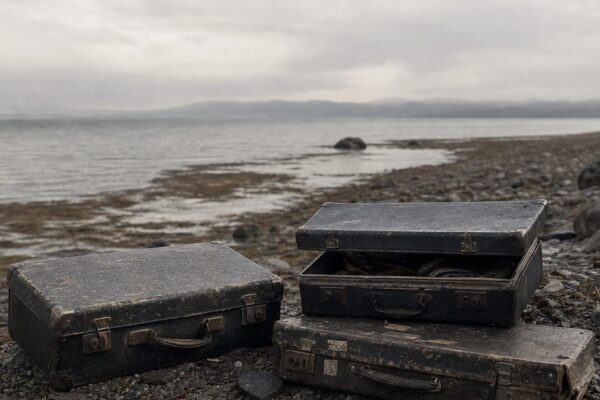
A police dog moved through the scrub beside Ocean Parkway, nose low, handler close behind. It was bitterly cold on Long Island that December morning, and the search was supposed to be about one missing woman, Shannan Gilbert. Then the dog stopped.
What officers found near Gilgo Beach on December 11, 2010 was not Gilbert. It was the remains of 24-year-old Melissa Barthelemy. Two days later, searchers found three more women nearby: Maureen Brainard-Barnes, Megan Waterman, and Amber Lynn Costello. In a matter of hours, a missing-person search became one of the most notorious murder investigations in New York.
That was the moment the Gilgo Beach murders entered public view. But the violence stretched much further back. Long before the name Gilgo Beach serial killings became familiar, women had been disappearing, their cases scattered across years and counties, their families left with fragments instead of answers.
Before the shoreline search, there were women who vanished
The story did not begin in 2010.
In November 1993, hunters found the body of Sandra Costilla, 28, in North Sea on eastern Long Island. She had been living in New York City. For years, her case stood on its own, one more unsolved killing with no clear path forward.
Then came Karen Vergata. She was 34 when she disappeared after last contacting her family on February 14, 1996. On April 20 of that year, partial remains were found on Fire Island. More of her remains would later be recovered near Ocean Parkway, linking her to the broader Long Island serial killings investigation.
In July 2003, Jessica Taylor, 20, disappeared from Manhattan. Some of her remains were found in Manorville that same month. At the time, there was no public reason to think her case belonged in the same story as Sandra Costilla’s or Karen Vergata’s. The map looked too scattered. The years between them seemed too wide.
But the pattern was already there. It just had not been assembled yet.
The four women whose cases changed everything
The late 2000s brought a cluster of disappearances that would later define the case.
Maureen Brainard-Barnes, 25, was last seen in New York City on July 9, 2007. She was a mother. Her family waited for news that did not come.
Melissa Barthelemy disappeared in July 2009. She was 24, a hairdresser, and she had also done sex work. After she vanished, her family received taunting phone calls from someone using her cell phone, a detail that would haunt the case for years. Investigators later traced activity from a burner phone to Massapequa Park.
Shannan Gilbert went missing in Oak Beach in the early hours of May 1, 2010, after fleeing a client’s home and calling 911. Her disappearance would set the search in motion, even though her death was never charged against Rex Heuermann.
Megan Waterman, 22, disappeared in June 2010.
Amber Lynn Costello, 27, vanished in September 2010.
By the end of that year, several women were gone. Their loved ones knew the fear intimately. The public, for the most part, did not.
December 2010: Gilgo Beach breaks open
The first discovery came on December 11, 2010. The next came fast.
On December 13, police found the remains of Maureen Brainard-Barnes, Megan Waterman, and Amber Lynn Costello near the same stretch of brush off Ocean Parkway. The four women became known as the Gilgo Four.
That phrase made the case sound neat. It was anything but.
What investigators saw was a pattern: four women, all involved in sex work, all found in close proximity along a desolate strip of shoreline. The location suggested planning. The grouping suggested a killer who had returned to the same dumping ground more than once.
For families, the discoveries brought the worst kind of certainty. For police, they raised a larger and more frightening question: how many more were there?
The shoreline kept giving up its dead
In the spring of 2011, the search widened, and so did the case.
Between late March and early April, investigators found additional human remains along Ocean Parkway and nearby areas. Among those eventually identified were Jessica Taylor and Valerie Mack. Mack, who had been missing since the early 2000s, was identified years later through advances in forensic testing.
The new discoveries shattered any hope that this was limited to the four women found in December. The investigation now stretched across different years, different disposal sites, and different stages of decomposition. It was no longer one cluster. It was a landscape of unresolved violence.
Then, on December 13, 2011, searchers found Shannan Gilbert’s remains in a marsh near Oak Beach.
Her case has always stood slightly apart. The Suffolk County medical examiner concluded that her death was consistent with accidental drowning. Her family disputed that finding, and debate around her death continued for years. What is clear is this: the search for Gilbert led police to the remains of other women, but her death was not among the murders later charged against Heuermann.
Why the case seemed frozen
For a long time, the Gilgo Beach murders looked like a case that might never close.
Families criticized law enforcement for delays and missed opportunities. So did outside observers. Some investigators believed early missteps slowed the work badly. There was also a painful truth beneath the public response: many of the victims were sex workers, and critics argued that their disappearances were not treated with the urgency they deserved.
That mattered. Cases involving vulnerable women often drift when they should be pressed. Leads cool. Witnesses disappear. Evidence sits.
Years passed. The names remained. The answers did not.
The task force that started over
The break came not from one dramatic confession or one lucky tip, but from a decision to go back and do the work again.
In early 2022, Suffolk County District Attorney Ray Tierney and Suffolk County Police Commissioner Rodney Harrison announced a renewed Gilgo Beach task force. Investigators reexamined old files, old phones, old witness statements, old assumptions.
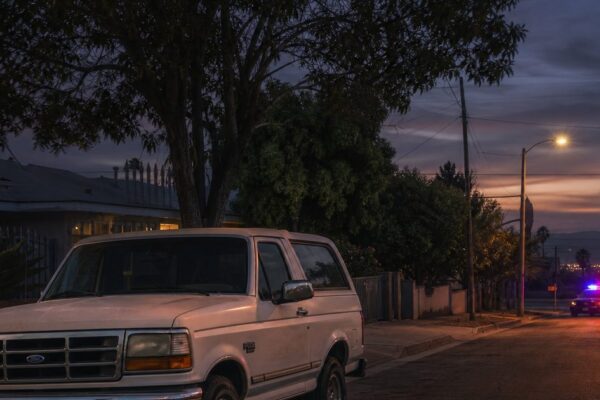
One detail stood out: a witness had described seeing a large man connected to Amber Lynn Costello’s disappearance and a first-generation Chevrolet Avalanche. That vehicle became a crucial thread.
So did the burner phones used to contact several victims. Records and cell-site data pointed repeatedly to Massapequa Park, where Rex Heuermann lived, and to Midtown Manhattan, where he worked as an architect and consultant.
The case that had once seemed impossibly broad began to narrow.
The pizza box, the hair, and the arrest of Rex Heuermann
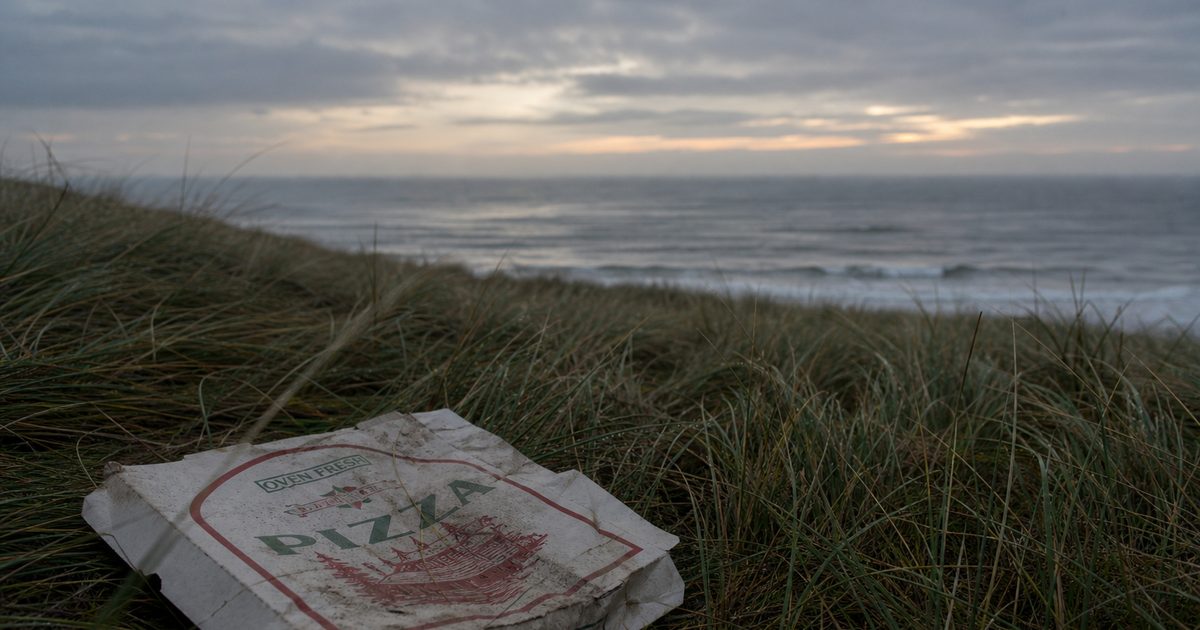
Surveillance teams watched Heuermann in Manhattan. In January 2023, investigators recovered a discarded pizza box he had thrown away. It was an ordinary object, the kind that usually vanishes into city trash without a second thought.
This time it did not.
Authorities compared DNA from the crust to male hair recovered from evidence connected to the victims. Prosecutors later said the results helped tie Heuermann to the murders. Other evidence, according to charging documents, included cellphone records, burner phone usage, internet searches, and hairs linked through mitochondrial DNA analysis. Investigators also cited a hair associated with Heuermann’s wife, Asa Ellerup, found on or near some of the victims; prosecutors have not alleged that she was involved in the crimes.
On July 13, 2023, police arrested Rex Heuermann in Manhattan.
At that point, he was charged in the deaths of Melissa Barthelemy, Megan Waterman, and Amber Lynn Costello. He later faced charges in the killing of Maureen Brainard-Barnes as well. As the investigation continued, prosecutors expanded the case to include Jessica Taylor, Sandra Costilla, Valerie Mack, and Karen Vergata.
The contrast drew immediate attention: a suburban husband and father, an architect who commuted into the city, now accused in a string of killings that had haunted Long Island for years. But the real center of the story was never his image. It was the women whose lives had been reduced, for too long, to case files and roadside searches.
The plea that finally gave families an answer
For years, the Gilgo Beach serial killings had been defined by uncertainty. Then the legal case reached its turning point.
According to the article’s timeline, on April 8, 2026, Heuermann pleaded guilty to seven murders and admitted to an eighth, Karen Vergata. The women named were Melissa Barthelemy, Maureen Brainard-Barnes, Amber Lynn Costello, Megan Waterman, Jessica Taylor, Valerie Mack, and Sandra Costilla, with Vergata admitted separately.
If that plea stands as the final resolution, it answers the question that had hung over the case from the start: when did the murders happen? The admitted killings spanned from 1993 to 2010. The public discovery began in December 2010. The arrest came in July 2023. The courtroom reckoning arrived years later.
The article also states that on June 17, 2026, a judge sentenced Heuermann to consecutive life terms without parole.
For the families, no sentence could restore what had been taken. But after decades of waiting, the case finally moved from suspicion to accountability.
More than a timeline
It is tempting to remember this case only through its evidence trail: Ocean Parkway, the Chevrolet Avalanche, burner phones, cell towers, a pizza box, DNA.
But that is not the full story.
Sandra Costilla was not a clue. Neither was Karen Vergata. Neither were Jessica Taylor, Valerie Mack, Maureen Brainard-Barnes, Melissa Barthelemy, Megan Waterman, or Amber Lynn Costello. They were women with families, histories, and people who kept looking for them long after public attention faded.
The Gilgo Beach murders became famous because of where the remains were found and how long the mystery lasted. What makes the case endure is something simpler and harder: for years, these women were missing in plain sight, and it took far too long to bring their names into one line.
FAQ
When were the Gilgo Beach murders discovered?
The case broke open on December 11, 2010, when police searching for Shannan Gilbert found Melissa Barthelemy’s remains near Gilgo Beach. Three more victims were found on December 13.
Who was charged in the Gilgo Beach murders?
Rex Heuermann was arrested on July 13, 2023, and prosecutors later expanded the charges to include multiple victims found across the wider investigation.
How was Rex Heuermann identified?
Investigators relied on a combination of cellphone and burner phone records, witness information about a Chevrolet Avalanche, and DNA evidence recovered after surveillance, including from a discarded pizza box.
Was Shannan Gilbert a victim in the same murder case?
Her disappearance led to the search that uncovered the other victims, but her death was not charged against Heuermann. The medical examiner ruled her death an accidental drowning, a finding her family disputed.
How many victims were tied to Heuermann in this article?
This article states that Heuermann pleaded guilty to seven murders and admitted to an eighth, Karen Vergata, for a total of eight women.