
Chains clinked against Cynthia Vigil’s legs as she ran barefoot through Elephant Butte, looking for a door that would open before the people behind her caught up.
It was March 22, 1999. For three days, Vigil had been held inside a trailer near Truth or Consequences, New Mexico, after being abducted from Albuquerque. Now, with an iron collar still around her neck, she reached a neighbor’s house and begged for help. That desperate sprint did more than save her life. It cracked open one of the most notorious criminal cases in the state.
The escape that exposed the trailer
Three days earlier, on March 19, Vigil had been in Albuquerque when David Parker Ray approached her using a fake police badge and posing as an undercover officer. With him was his girlfriend, Cindy Hendy. Vigil was forced into a vehicle and taken about 150 miles south to Ray’s property in Elephant Butte.
What happened there would later become central to the case against him.
According to Vigil, she was restrained and assaulted inside a soundproof semi-trailer that investigators would later seize as evidence. The trailer was not an ordinary outbuilding. It had been prepared for captivity. Restraints hung inside. Devices for inflicting pain and control were laid out with chilling order. A mirror was fixed to the ceiling above a gynecologist-style chair.
Then, on March 22, a mistake.
Hendy left a set of keys on a table. Vigil grabbed her chance. During the struggle that followed, she stabbed Hendy with an ice pick and ran. A neighbor called police. Officers responded quickly, and that same day they arrested David Parker Ray and Cindy Hendy.
Without that escape, the trailer might have stayed hidden much longer.
Inside the so-called Toy Box
When investigators entered the trailer, they found physical evidence that gave weight to Vigil’s account almost immediately.
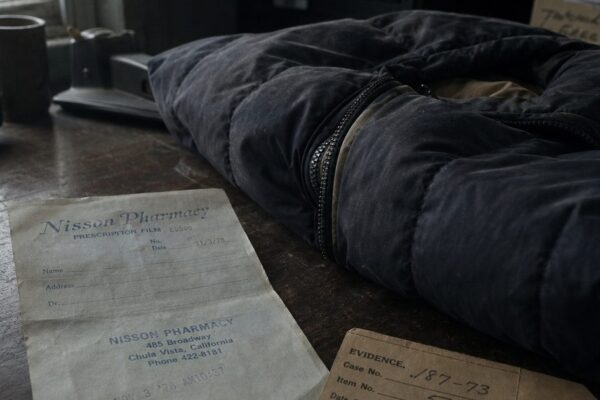
The space was soundproofed. Inside were chains, straps, whips, clamps, leg spreader bars, surgical instruments, and other tools used to restrain and terrorize. Police also found audio recordings in which Ray described what captives should expect. There were journals, women’s clothing, and pieces of jewelry. The FBI would later ask the public for help identifying some of those items.
This was the detail that changed the case from one woman’s report into something much larger. The trailer suggested planning, repetition, and a method built over time.
That is part of why the name “Toy Box Killer” spread so widely. But the phrase can flatten what really mattered: women were taken there, held there, and brutalized there. The trailer was not a legend. It was a crime scene.
David Parker Ray before the arrest
Ray was born on November 6, 1939, in Belen, New Mexico. He served in the U.S. Army and later worked as a mechanic. By the time of his arrest, he had lived much of his life without drawing the kind of attention that would reveal what prosecutors later said he had been doing in private.
After Vigil escaped, investigators began digging into his past and the people around him. Hendy was quickly identified as an accomplice. Ray’s daughter, Glenda Jean “Jesse” Ray, was later implicated in some crimes tied to the case. Another associate, Dennis Roy Yancy, would eventually be convicted in a separate but related case involving the death of Marie Parker.
As the investigation widened, law enforcement came to suspect there had been many more victims. Some estimates ran as high as 60. But suspicion is not proof. No bodies were found on Ray’s property, and despite years of speculation, David Parker Ray was never convicted of murder.
That distinction matters in any accurate account of the case.
Other women came forward
Once Vigil got out, other stories followed.
Angelica Montano came forward and said Ray had abducted and assaulted her as well. Her account was especially painful because she had reported being attacked earlier, but her complaint had not been fully pursued at the time. After Vigil’s escape, investigators took a fresh look.
Kelli Garrett also became a key witness and victim in the criminal case. Her testimony would be crucial in court, though not without difficulty.
This was one of the hardest parts of the prosecution. Cases involving sexual violence often turn on credibility in the eyes of jurors, and Ray’s defense attacked the women’s accounts. Some evidence prosecutors wanted to use was excluded in certain trials. The legal process did not unfold in a straight line.
The courtroom fights
The cases involving Vigil, Montano, and Garrett were severed, meaning they would not all be tried together. Prosecutors argued that this hurt their ability to show a broader pattern.
In Garrett’s first trial, jurors did not convict, and the case ended in a mistrial. But at retrial in 2001, Ray was convicted on 12 counts related to crimes against her.
That same year, during proceedings tied to what had been done to Cynthia Vigil, Ray accepted a plea agreement rather than continue through a full trial on all charges. He was ultimately sentenced in 2001 to 224 years in prison for crimes against three women: Vigil, Montano, and Garrett.
Cindy Hendy was also sentenced in 2001. She received 36 years for her role in the kidnappings and assaults. Glenda Jean Ray was sentenced to prison as well for crimes connected to the case.
Dennis Roy Yancy, in a separate prosecution, was convicted of kidnapping and second-degree murder in the killing of Marie Parker and received two consecutive 15-year sentences.
What was proven, and what never was
Few cases have produced as much rumor as this one. The story of David Parker Ray has long lived in the space where documented crimes and darker suspicions overlap.
What was proven in court was already horrifying enough: kidnapping, repeated sexual violence, torture, and the use of a specially equipped trailer to carry out those crimes.
What was never proven is just as important to say clearly. Ray was often described as a suspected serial killer, and investigators believed there may have been additional victims over many years. But no definitive evidence tied him to multiple murders, and no murder conviction was ever secured against him.
That unresolved gap has haunted the case from the beginning.
The FBI has continued at times to seek help identifying personal items recovered during the investigation, including clothing and jewelry. For families of missing women, those objects represented possibility, but not certainty.
The end of the case, and the part that never ended
On May 28, 2002, David Parker Ray died of a heart attack at Lea County Correctional Facility in Hobbs, New Mexico.
He died after sentencing, but before any fuller accounting could be forced from him. There would be no long interrogation that answered every question. No confession that neatly matched the fears investigators had carried. No final explanation for the women’s belongings found in the trailer.
So the case closed in one sense and stayed open in another.
The man at the center of it was convicted and imprisoned. Yet the larger mystery around possible additional victims remained unresolved.
Cynthia Vigil’s run did not end at that doorstep
The image most people remember is the one that deserves to be remembered: a woman escaping in chains and refusing to give up before she reached safety.
Vigil’s account gave police the opening they needed. Her survival exposed the trailer, the recordings, the restraints, and the people involved. It also forced attention onto how vulnerable women can be dismissed, overlooked, or doubted until overwhelming evidence appears.
Later, Vigil co-founded Street Safe New Mexico with Christine Barber, a harm-reduction nonprofit that supports sex workers and other vulnerable people.
That does not soften what happened in Elephant Butte. Nothing could. But it does place the story where it belongs, not in the mythology around a predator, but in the courage of the women who lived through him and made sure the truth did not stay buried.
FAQ
Who was David Parker Ray?
David Parker Ray was a New Mexico man convicted of kidnapping, torture, and sexual assaults against multiple women. He became widely known because of the soundproof trailer on his property, often called the Toy Box.
How did Cynthia Vigil escape?
On March 22, 1999, Cynthia Vigil used keys left out by Cindy Hendy, fought back during a struggle, stabbed Hendy with an ice pick, and ran to a neighbor’s house for help.
What was found in the trailer?
Investigators found a soundproof trailer containing restraints, torture devices, sexual assault equipment, recordings, journals, and women’s personal items including clothing and jewelry.
Was David Parker Ray convicted of murder?
No. Although he was suspected in other disappearances and deaths, he was never convicted of murder, and no bodies were found that proved multiple killings.
What happened to Cindy Hendy?
Cindy Hendy was convicted for her role in the crimes and sentenced to 36 years in prison. She was later released on parole.