At 9 p.m., the pharmacy was still lit.
Customers were coming and going at Nisson Pharmacy in Des Plaines when 15-year-old Robert Jerome Piest told his mother he was stepping outside for a moment. A contractor, he said, wanted to talk to him about a possible summer job. It sounded ordinary, even promising. Robert was an honor student, a sophomore, and the kind of teenager adults trusted.
He walked out into the December cold on December 11, 1978.
He never came back.
The last sighting outside Nisson Pharmacy
Robert Piest had been working that evening at the pharmacy where his mother, Elizabeth Piest, was also employed. Before he left, he mentioned the job opportunity to both his mother and coworker Kim Byers. The man he was going to meet was later identified as John Wayne Gacy, a local contractor.
That detail mattered almost immediately.
When Robert did not return, his mother reported him missing that same night. In many missing-person cases of that era, families were told to wait, to assume a teenager had run off and would be back by morning. Elizabeth Piest did not accept that. She pushed. Police listened.
That urgency changed everything.
Why investigators zeroed in on John Wayne Gacy
The name came quickly. Kim Byers identified Gacy as the contractor Robert had gone to meet outside the store. That made him the last known person seen with the boy.
Gacy, however, denied meeting Robert at all.
The denial did not sit well with investigators. Des Plaines police, led by Lt. Joseph Kozenczak, began looking closely at him. There was already reason for concern. Gacy had a prior conviction in Iowa from 1968 for sodomy involving a teenage boy. In Illinois, he had also faced criminal charges in the early 1970s, though those had not led to the kind of scrutiny that might have stopped him sooner.
Now a 15-year-old was missing, and the man last linked to him was lying.
Police placed Gacy under surveillance. Officers watched him closely as he moved around the Chicago area, trying to stay one step ahead of the investigation. Meanwhile, another detail kept surfacing in reports from those who had been near his property in Norwood Park Township: a foul odor around the house.
On December 13, 1978, two days after Robert vanished, police obtained the first search warrant.
The small clue that broke the case open
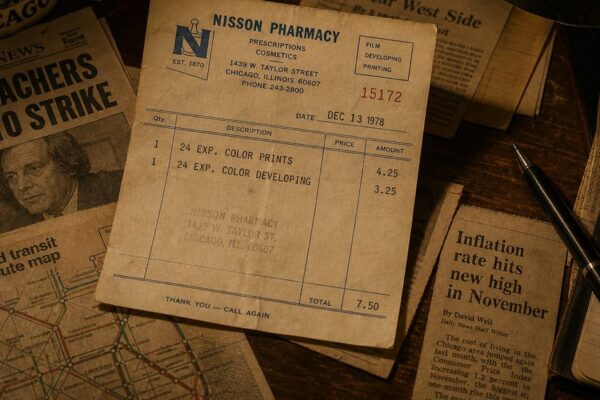
The first major break was not dramatic. It was a receipt.
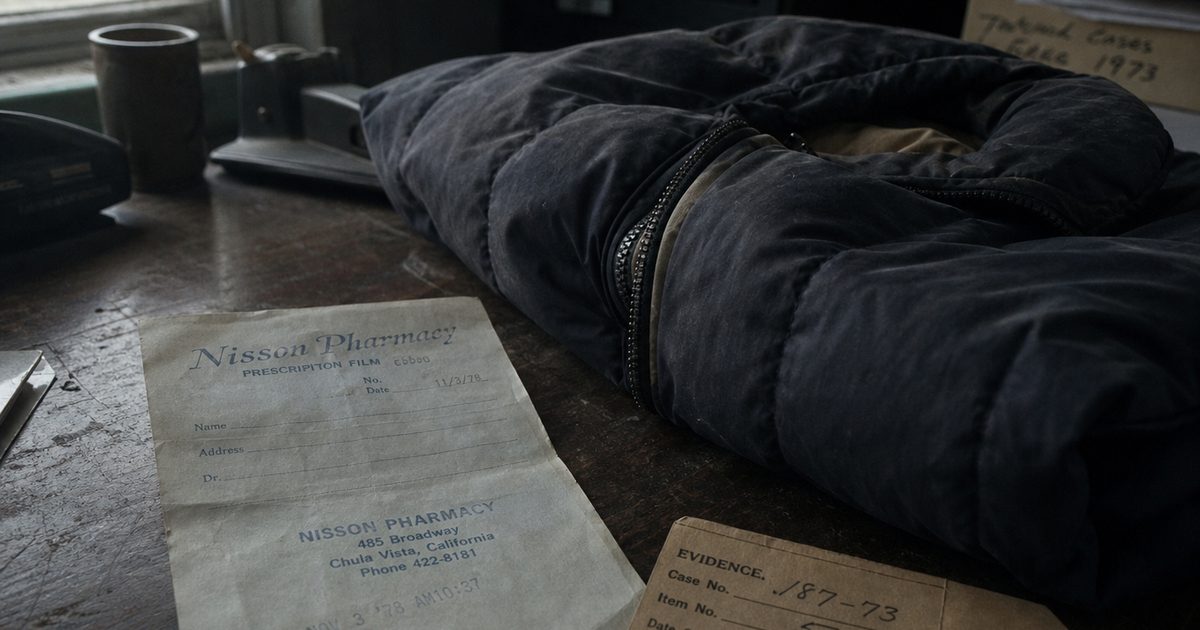
Inside Gacy’s home, investigators found a film receipt from Nisson Pharmacy, an item that had been in Robert Piest’s jacket earlier that night. They also found Robert’s down-filled jacket in the laundry room.
Those were not loose coincidences. They were physical links between a missing boy and a man who had just denied seeing him.
The case was no longer just about a teenager who had disappeared after work. It had become a tightly focused investigation centered on one house and one suspect.
Police kept the pressure on. On December 21, 1978, Gacy was arrested on a drug charge involving possession of cannabis, a move that helped investigators keep him contained while they pursued more evidence. That same day, authorities obtained another search warrant for the property.
Then the ground beneath the house began to give up its secrets.
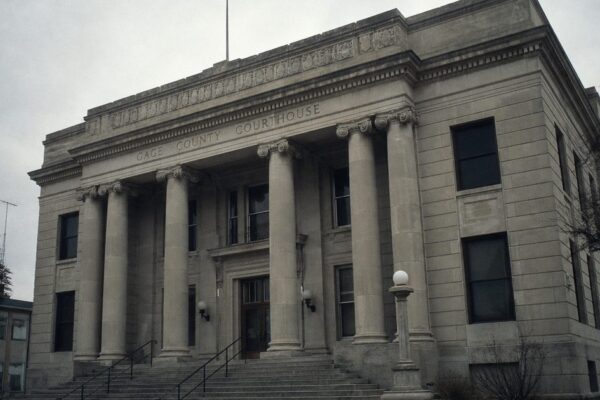
The crawl space in Norwood Park Township
Investigators searching the home discovered human remains in the crawl space.
What began as a search for Robert Piest suddenly widened into something much larger and far more devastating. Over time, authorities recovered the remains of 29 victims from the crawl space and other areas of the property, including beneath the garage. More victims were later linked to Gacy through bodies recovered from waterways.
During questioning in December 1978, Gacy made a series of incriminating statements and confessed to numerous killings. Some details of his accounts shifted, as confessions in serial murder cases often do, but the broad outline was confirmed by what investigators were finding: young men and boys had been lured, assaulted, killed, and hidden.
Robert Piest was the final known victim.
That is one reason his disappearance remains so important in the history of the case. The search for one missing teenager stopped a murderer who had been operating for years.
Was Robert Piest ever found?
Yes. For those asking was Robert Piest ever found, the answer came months later, and it came from the river.
On April 9, 1979, Robert Piest’s body was recovered from the Des Plaines River in Grundy County, Illinois. He was identified the same day through dental records and X-rays.
His recovery confirmed what investigators had already pieced together from witness statements, evidence inside Gacy’s home, and Gacy’s own admissions that some victims had been disposed of in rivers.
For the Piest family, it ended the uncertainty, though not the grief.
Some reports described material found in Robert’s throat at autopsy, and contemporary coverage discussed it as part of the suspected cause of death. Because those details have been reported in varying ways over time, it is enough to say that authorities concluded he had been murdered and that Gacy was responsible.
How the evidence tied Robert Piest to Gacy
The case against Gacy did not rest on one dramatic revelation. It was built piece by piece.
First came the witness timeline. Robert told his mother and coworker he was going outside to speak with a contractor about a job. Kim Byers identified that contractor as Gacy.
Then came the physical evidence: the pharmacy receipt and Robert’s jacket inside Gacy’s home. Those findings directly contradicted Gacy’s denials.
After that came the broader forensic evidence from the property itself. The discovery of multiple victims in the crawl space transformed the investigation from a missing-person case into one of the largest serial murder investigations in Illinois history.
Finally, Robert’s body was found in the Des Plaines River, exactly the kind of location Gacy had described when speaking to investigators about victims he had not buried at home.
Each step reinforced the last. By the time the case reached court, the chain was strong.
The trial that followed
John Wayne Gacy was charged with 33 murders, including the murder of Robert Piest.
His trial began in Cook County in February 1980. On March 13, 1980, the jury found him guilty of all 33 counts. He was sentenced to death for 12 of the murders and received natural life sentences for the others.
He was executed by lethal injection on May 10, 1994.
Even after conviction, Gacy continued at times to deny full responsibility, despite the evidence recovered from his home and the remains found on his property and in the river. The verdict, however, was not built on his words alone. It rested on witness testimony, forensic recovery, identified victims, and the painstaking work of investigators who followed the evidence back to Robert Piest.
Why Robert Piest’s case mattered so much
Long before the public fully understood who Gacy was, other young men connected to him had gone missing. Some disappearances were not treated with the urgency they deserved. In that sense, the Robert Piest case exposed more than one failure.
It showed what can happen when a family is heard immediately.
Elizabeth Piest reported her son missing without delay and insisted that police take the disappearance seriously. Des Plaines investigators did. That quick response helped uncover the truth before more lives were lost.
The case also left painful unfinished business. Several of Gacy’s victims remained unidentified for decades, and some still have not been conclusively named. For those families, the story has never fully ended.
But Robert’s disappearance marked the turning point. A boy stepped outside a pharmacy for what sounded like a brief conversation about work. By the time the investigation was over, it had uncovered a hidden burial ground, exposed a serial killer, and changed the way many people understood missing-person cases in the region.
FAQ
Was Robert Piest ever found?
Yes. Robert Piest’s body was recovered from the Des Plaines River on April 9, 1979, and identified through dental records and X-rays.
Who killed Robert Piest?
John Wayne Gacy was convicted of Robert Piest’s murder as part of the 33 murder counts returned against him in 1980.
How old was Robert Piest when he disappeared?
He was 15 years old when he disappeared on December 11, 1978.
What evidence linked John Wayne Gacy to Robert Piest?
Investigators found a Nisson Pharmacy film receipt connected to Robert and his down-filled jacket inside Gacy’s home. Witnesses had also placed Robert with Gacy shortly before he vanished.
Was Robert Piest John Wayne Gacy’s last victim?
He is widely regarded as Gacy’s final known victim.