
At 4:30 a.m., the call finally came from JFK. By then, the men who had walked into Lufthansa’s cargo building were long gone, and so was the money.
In a little over an hour, a crew of armed robbers had tied up airport workers, forced their way to the vault, and disappeared with nearly $6 million in cash and jewelry. It was December 11, 1978. For the employees trapped inside the terminal, it was a terrifying night shift turned hostage ordeal. For investigators, it became one of the most frustrating cases in New York crime history. And for everyone connected to it, the Lufthansa Heist did not end when the van pulled away from the airport.
That was only the beginning.
A tip from inside Lufthansa
The robbery at John F. Kennedy International Airport did not begin with masked men. It began with a weak point inside the system.
Two years earlier, in 1976, Lufthansa employees Louis Werner and Peter Gruenwald had stolen $22,000 in foreign currency from the airline. The amount was small compared with what would come later, but the lesson was important: large sums of cash were moving through the cargo terminal, and someone on the inside could explain exactly how.
By late 1978, Werner was under pressure. He owed bookmaker Martin Krugman about $20,000 in gambling debts. According to investigators, Werner offered something more valuable than cash: information about when money would be at the Lufthansa terminal and how the building worked. Krugman passed that tip to Henry Hill, a Lucchese associate. Hill, in turn, brought it to James “Jimmy the Gent” Burke, the veteran criminal long identified by law enforcement as the man behind the plan.
That much is broadly accepted. What happened next inside the crew would be pieced together later through informants, surveillance, and the bodies that began to appear.
The hour inside Building 261
Just after 3 a.m., six masked men arrived at Lufthansa cargo building 261 in a black Ford Econoline van.
They cut a padlock and entered the building. Overnight employees were still at work, including senior cargo agent John Murray and employee Kerry Whalen. The robbers moved quickly and with purpose. They rounded up workers, threatened them, and forced a supervisor to open the vault without tripping the alarm.
The timing was the key to everything.
The employees were told not to call police until 4:30 a.m. That order bought the crew a precious window. Between roughly 3 a.m. and 4:15 a.m., they controlled the terminal, emptied the target area, and loaded the van. The haul was enormous: about $5 million in cash and roughly $875,000 in jewelry, making the Lufthansa robbery the largest cash theft in the United States at the time.
At about 4:21 a.m., the van left the airport, followed by a second car.
When the first emergency call came in minutes later, the robbery was already over.
A perfect heist, until it wasn’t
For a moment, it looked almost flawless.
The target had been carefully chosen. Much of the cash consisted of used bills from overseas, currency that was harder to trace than fresh domestic notes. The crew had insider knowledge, a tight timeline, and just enough discipline to get in and out before anyone could react.
Then the first crack appeared.
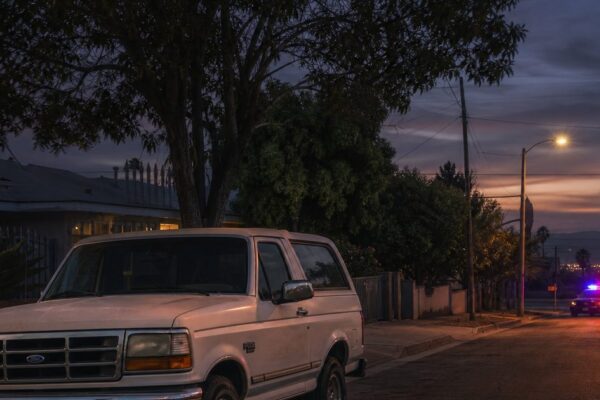
The getaway van was supposed to vanish. Instead, Parnell “Stacks” Edwards, the man assigned to dispose of it, left the black Econoline illegally parked near his girlfriend’s apartment in Brooklyn. On December 13, two days after the heist, police found and impounded it.
That mistake changed the case.
Inside the van, investigators found fingerprints, including Edwards’. They also found the wallet of Lufthansa employee Kerry Whalen. Reports over the years have differed on exactly what other usable prints were recovered, but the van gave the FBI and local investigators what they badly needed: a direct path toward Burke’s circle.
The Lufthansa Heist had been executed with military efficiency at the airport. Outside the airport, it started to come apart almost immediately.
The aftermath turned deadly
The money was gone, but the danger was just beginning for the people around the crew.
On December 18, 1978, one week after the robbery, Edwards was killed. According to later accounts from informants, including Henry Hill, he was murdered for failing to get rid of the van and exposing the operation. Thomas DeSimone and Angelo Sepe were widely identified as the gunmen, though much of that account comes from cooperating witnesses rather than courtroom findings in a Lufthansa prosecution.
Then Martin Krugman disappeared.
Krugman had helped pass along the inside information, but after the robbery he reportedly kept pressing for his share. In January 1979, he vanished and was never seen again. Investigators believed he had been murdered.
Others connected to the heist also turned up dead or disappeared over the next several years. The exact number is hard to pin down with certainty, and some claims come from mob testimony that cannot always be independently verified. But the broad picture is clear enough: people linked to the robbery were being eliminated, and fear was doing the rest.
That fear mattered. Witnesses were reluctant to talk. Potential cooperators had every reason to stay silent. The agencies investigating the airport robbery had a famous case on their hands, but not a clean one.
The one early conviction
For all the scale of the theft, one of the first men held accountable was not one of the gunmen.
In 1979, Louis Werner was convicted for his role in helping plan the robbery. He was sentenced to 15 years in prison. His conviction established what investigators had suspected from the start: this was not simply an outside crew exploiting a random weakness at JFK. The heist had been made possible by inside information.
But Werner’s case solved only part of the puzzle.
The man most often described as the mastermind, Jimmy Burke, was never charged with the Lufthansa Heist itself. That gap would define the case for decades.
Henry Hill starts talking
The next major turn came from outside the robbery investigation.
In April 1980, Henry Hill was arrested on unrelated drug charges. He later became an FBI informant, and his cooperation opened a window into Burke’s world. Hill described the planning, the personalities, and the violence that followed the theft. His account became one of the main reasons the public came to see Burke as the central figure in the Lufthansa robbery.
But testimony is not the same thing as a heist conviction.
Hill helped prosecutors build other cases. In 1982, Burke was convicted in connection with the Boston College basketball point-shaving scandal. In 1985, he was convicted of the unrelated murder of Richard Eaton and sentenced to 20 years to life.
He died in prison on April 13, 1996.
So the central contradiction remained: the man widely believed to have orchestrated the Lufthansa Heist went to prison, but not for the crime that made him notorious.
The missing millions
The stolen cash and jewelry were never recovered.
That absence is one reason the case has held its grip for so long. The robbery was huge, but what followed made it stranger. The money seemed to disappear into the underworld. The people who might have explained where it went were dead, missing, or unwilling to testify. What should have been a straightforward story about an airport robbery became something murkier and harder to close.
The case also had consequences beyond the headlines. Security around high-value cargo shipments tightened. The movement of large amounts of physical currency by air became harder to justify in a world where electronic transfers were safer and less vulnerable.
And then there was popular culture. Nicholas Pileggi’s Wiseguy, published in 1985 and based on Henry Hill’s life, brought the story to a wider audience. Martin Scorsese’s Goodfellas turned the Lufthansa robbery and its bloody aftermath into one of the film’s most memorable threads. For many people, that movie became the version they knew.
The real case was less tidy, and more haunting.
One last try in court
Decades later, federal prosecutors made another attempt to tie someone to the heist.
On January 23, 2014, Vincent Asaro, a Bonanno crime family captain, was arrested and charged in a racketeering case that included allegations tied to the Lufthansa robbery, along with murder and extortion counts. The government relied heavily on cooperating witnesses and recorded conversations, including a 2011 recording in which Asaro appeared to complain about not receiving his share.
It was, in public at least, the closest the case had come in years to placing another alleged participant before a jury.
But old cases come with old problems. Memories fade. witnesses die. Cooperators contradict one another. Some testimony in the Asaro case, including parts involving former Bonanno boss Joseph Massino, drew serious scrutiny.
On November 12, 2015, Asaro was acquitted.
That verdict did not prove the robbery solved or unsolved. It simply underlined what had been true since the first morning at JFK: the Lufthansa Heist was heavily investigated, endlessly discussed, and still resistant to final answers.
Why the Lufthansa Heist still lingers
What makes this case endure is not only the money.
It is the shape of the story: the insider tip, the disciplined robbery, the van that should have disappeared, the men who began dying one by one, the missing millions, and the fact that the crime at the center of it all never produced the kind of courtroom ending people expect.
For the workers inside that cargo building, it was a night of fear. For investigators, it became a lesson in how organized crime protects itself. And for everyone who has followed the case since, the Lufthansa Heist remains one of those rare crimes that feels both famous and unfinished.
FAQ
How much was stolen in the Lufthansa Heist?
About $5.875 million was taken: roughly $5 million in cash and $875,000 in jewelry.
Was anyone convicted in the Lufthansa robbery?
Yes. Lufthansa employee Louis Werner was convicted in 1979 for helping plan the heist and was sentenced to 15 years in prison.
Who was believed to be behind the Lufthansa Heist?
James “Jimmy the Gent” Burke was widely believed by investigators to have orchestrated it, but he was never charged with the heist itself.
Was the stolen money ever found?
No. Most of the cash and jewelry from the airport robbery were never recovered.
How many people were killed after the heist?
Multiple people connected to the case were murdered or disappeared. Exact totals vary by source, but estimates often range from around 10 to 14.