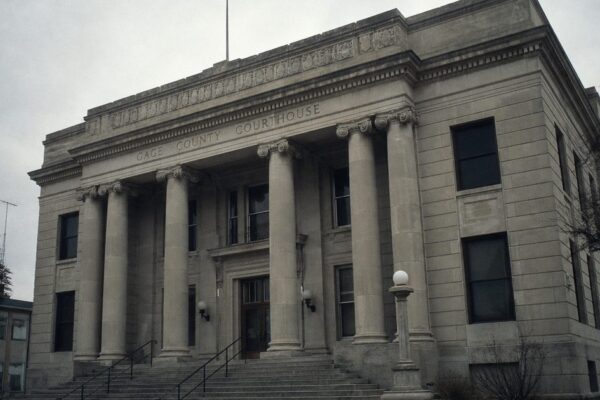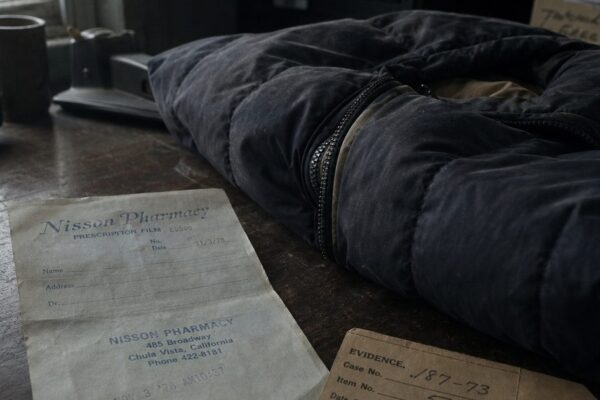
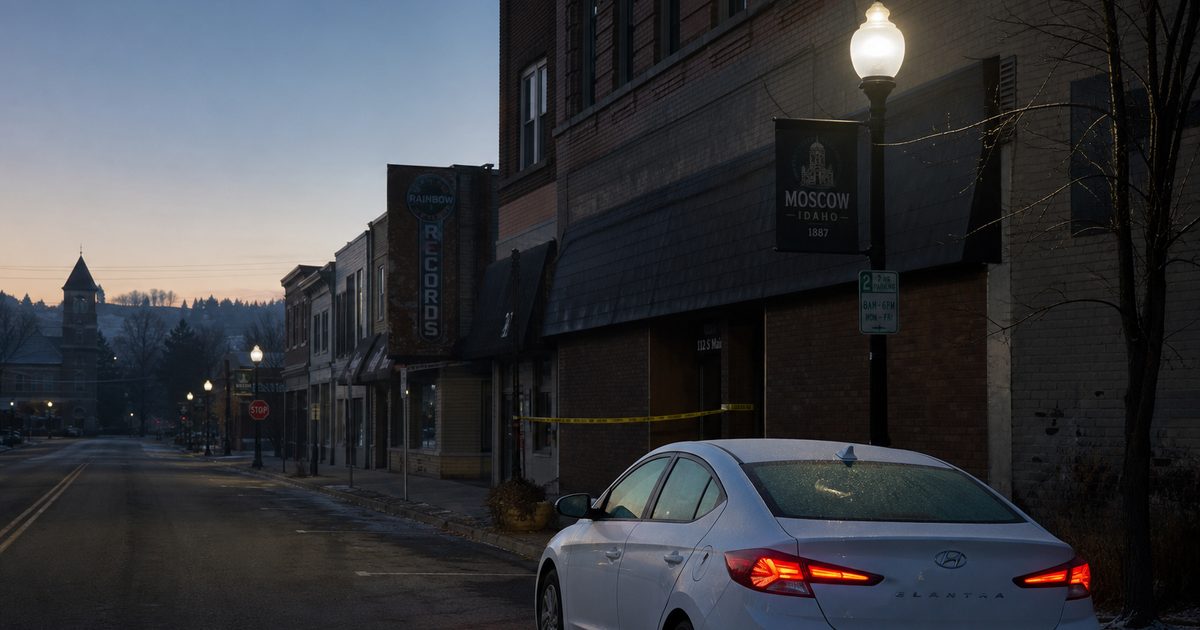
At 11:58 a.m., the call came in as an unconscious-person report.
By the time Moscow police reached the rental house on King Road, the truth inside was far worse. Four University of Idaho students had been killed in the early hours of November 13, 2022, inside a home they shared with friends. In the days that followed, the house became the center of one of the most closely watched homicide investigations in the country-not because of rumor or spectacle, but because nearly every answer in the case had to be pulled, slowly, from what happened there.
The last ordinary night on King Road
The house stood in a student neighborhood near campus, the kind of place where people came and went late, lights stayed on, and weekends blurred into early mornings.
Inside that orbit were Madison Mogen, 21; Kaylee Goncalves, 21; Xana Kernodle, 20; and Ethan Chapin, 20. Madison and Kaylee had spent part of the evening in downtown Moscow and were later seen at a food truck. Xana and Ethan had been at a Sigma Chi fraternity party. By about 2 a.m., all four were back at the King Road house.
Nothing about those hours looked unusual from the outside. That would become one of the most haunting parts of the case. The last evening of their lives looked, at first glance, like a normal college Saturday night.
Investigators later built a tighter timeline from surveillance footage, phone records, app activity, and statements from the surviving roommates.
Madison and Kaylee were dropped off at the house at 1:56 a.m. Xana received a DoorDash order around 4:00 a.m. At 4:12 a.m., she was still using TikTok on her phone. Somewhere in that narrow stretch of time, the night broke apart.
A few minutes of violence
Police said the killings likely happened between about 4:00 a.m. and 4:25 a.m.
A nearby security camera helped anchor that estimate. At 4:17 a.m., it captured audio that investigators described as voices or a whimper, followed by a loud thud and a dog barking. Around the same period, surviving roommate Dylan Mortensen later told investigators she saw a man dressed in black walking past her inside the house. What she remembered most clearly, according to the probable cause affidavit, were his “bushy eyebrows.”
That account would become one of the most discussed details in the Idaho student murders case. On its own, it did not identify anyone. But it placed an intruder inside the home during the same brief window supported by digital evidence.
Outside, cameras were also catching movement.
Investigators said a white Hyundai Elantra was seen near the house beginning at 3:29 a.m., making several passes through the area before speeding away at about 4:20 a.m. That car, and the timing of its movements, would soon matter enormously.
The crime scene that gave detectives their first real lead
When officers entered the house, they found a scene that answered some questions and raised many more.
The four victims had been stabbed to death. Authorities later said an edged weapon, likely a knife, had been used. There was no public indication of forced entry. Two other roommates, Dylan Mortensen and Bethany Funke, were in the home and survived.
Then there was the item found near Madison Mogen’s body: a tan Ka-Bar knife sheath bearing a U.S. Marine Corps insignia.
It was not the murder weapon. But it may have been the most important object in the entire investigation.
On the button snap of the sheath, investigators found DNA from a single male. That detail gave detectives something they desperately needed in the first days after the University of Idaho murders: a physical clue that could be tested, compared, and followed.
Autopsies later documented stab wounds, including some defensive injuries. The public did not need every grim detail to understand what the scene showed. There had been resistance. There had been terror. And the attack had unfolded with shocking speed.
Fear, confusion, and a town waiting for answers
Moscow was not used to this kind of case.
In the first days, public messaging from authorities drew scrutiny. Early statements suggested there was no ongoing threat, then later acknowledged the killings were targeted while the suspect remained unknown. As that confusion spread, so did rumor. Online speculation filled the silence left by the investigation.
But behind the scenes, detectives were building something more solid than theory.
On November 25, police publicly asked for help identifying a white 2011-2013 Hyundai Elantra seen near the crime scene. At the time, the request sounded simple. In reality, investigators had already begun tying that vehicle to a larger pattern.
The white Elantra and the phone that went dark
The man later charged in the killings was Bryan Kohberger, a 28-year-old Ph.D. student in criminology at Washington State University in Pullman, just across the state line from Moscow.
According to investigators, surveillance footage placed a white Hyundai Elantra associated with Kohberger near the King Road residence in the hours before the murders and leaving the area afterward. Cell phone records, they said, also showed his phone had been near the house on multiple occasions before November 13.
Then came one of the most important gaps in the timeline.
Investigators said Kohberger’s phone stopped reporting to the cellular network at 2:47 a.m. on the morning of the killings. It did not reconnect until 4:48 a.m., by which point it was south of Moscow. Prosecutors argued that the phone had likely been turned off or put in airplane mode during the murder window. That was an inference, not something a phone record can prove by itself, but it fit the rest of the timeline they were building.
One of the unnerving features of the case was that no confirmed relationship between Kohberger and the victims was publicly established. The victims appeared to have been living ordinary lives in a familiar college routine. The man accused of killing them seemed, at least from the public record, to have moved on the edges of that world.
How DNA carried the case across the country
The sheath found at the scene did not produce a name immediately. It produced a profile.
Investigators used investigative genetic genealogy to develop leads from the male DNA recovered from the snap. Court records later showed that law enforcement also collected trash from the Kohberger family home in Pennsylvania after he returned there for the holidays.
DNA from the trash was tested. According to the probable cause affidavit, it showed that the father of the person who left the DNA on the sheath was the biological father of Bryan Kohberger, with an extremely high statistical probability.
That did not end the investigation, but it sharply narrowed it.
On December 30, 2022, authorities arrested Kohberger at his parents’ home in Monroe County, Pennsylvania. He was extradited to Idaho on January 4, 2023. The next day, he appeared in court in Latah County, where he was charged with four counts of first-degree murder and one count of felony burglary.
The case that kept getting stronger
As the prosecution moved forward, more evidence emerged through court filings and hearings.
Investigators said Kohberger had purchased a Ka-Bar knife, sheath, and sharpener through Amazon months before the killings. Later records indicated he had searched for ways to delete or hide parts of his Amazon purchase history after the murders. Authorities also pointed to later searches involving Ka-Bar knives and sheaths.
None of that, by itself, proved murder. But criminal cases are often built exactly this way: one piece supports another, and then another.
The witness statement.
The white sedan.
The phone data.
The DNA on the sheath.
The timing of the car leaving at speed.
The absence of any innocent explanation for why a sheath carrying his DNA would be left beside one of the victims.
That was the force of the case. Not one dramatic reveal, but accumulation.
No trial, no public motive, and a guilty plea
For a long time, the case seemed headed for a full trial. A preliminary hearing was set, then canceled after a grand jury indicted Kohberger on May 17, 2023. At his arraignment on May 22, 2023, he stood silent, and the judge entered not guilty pleas on his behalf. Prosecutors later announced they would seek the death penalty.
The trial never happened.
In a major turn, Kohberger agreed to plead guilty to all counts in exchange for life sentences, avoiding a possible death sentence. He formally entered the plea on July 2, 2025.
Later that month, on July 23, 2025, he was sentenced to four consecutive life sentences without parole, plus 10 years for burglary. He was also ordered to pay financial penalties and restitution.
The plea ended the question of legal responsibility. It did not answer everything else.
Most notably, no clear motive was established in court. For many people following the Idaho murders, that absence remains one of the hardest parts to accept. Four young people were killed in their home, and the public record still does not fully explain why they were chosen.
Why the King Road house still matters
Some murder cases turn on a confession. This one turned on a scene.
A surviving roommate’s glimpse of a stranger in black.
A sheath left behind near Madison Mogen.
A camera picking up sound at 4:17 a.m.
A white Hyundai Elantra moving through the neighborhood in the dark.
A phone that went silent just before the killings and reappeared afterward.
That is how the case against Bryan Kohberger took shape: not all at once, but piece by piece, from a house where four students never got the chance to walk out.
The King Road home was later demolished, but its role in the case did not disappear with the building. It remained the place where the evidence began, where the timeline tightened, and where the lives of Madison Mogen, Kaylee Goncalves, Xana Kernodle, and Ethan Chapin were violently cut short.
FAQ
When did the University of Idaho murders happen?
The killings took place in the early morning of November 13, 2022. Investigators said the attack likely happened between about 4:00 a.m. and 4:25 a.m.
Who were the victims?
The victims were Madison Mogen, Kaylee Goncalves, Xana Kernodle, and Ethan Chapin, all University of Idaho students.
What was the key evidence in the case?
One of the most important pieces of evidence was a Ka-Bar knife sheath found near Madison Mogen’s body. DNA from a single male was recovered from the button snap, and investigators used that, along with surveillance and phone data, to build the case.
How was Bryan Kohberger identified?
Authorities used DNA analysis and investigative genetic genealogy to develop leads, then compared that work with DNA taken from trash outside the Kohberger family home in Pennsylvania. Surveillance footage and cell phone records also supported the identification.
Did Bryan Kohberger go to trial?
No. He pleaded guilty on July 2, 2025, before the case reached trial.
What sentence did he receive?
He was sentenced on July 23, 2025, to four consecutive life sentences without parole, plus 10 years for burglary.