The apartment on South 22nd Street held the kind of silence that makes a town uneasy. On February 5, 1985, Helen Wilson, a 68-year-old widow living alone in Beatrice, Nebraska, was found raped and murdered inside her home. Investigators moved quickly. They collected semen, blood, fingerprints, and other forensic evidence. At first, the case looked as if it might be solved by the physical evidence left behind.
Instead, it would become one of the clearest examples of how a murder investigation can go terribly wrong.
For years, the killing of Helen Wilson was treated as a case with six guilty people. In the end, DNA showed something very different: one dead victim, one real killer, and six innocent people pulled into a confession-driven prosecution that never matched the evidence.
The first suspect was there from the beginning
In the early days of the investigation, the FBI concluded the crime had likely been committed by a single attacker. One of the names that surfaced early was Bruce Allen Smith.
That mattered. So did what happened next.
Smith was considered a suspect in 1985, but serology testing appeared to exclude him. That testing involved Joyce Gilchrist, an Oklahoma City police chemist whose forensic work was later widely discredited in other cases. With Smith seemingly ruled out, the investigation drifted away from the man who would later be identified through DNA as Helen Wilson’s killer.
The evidence from the apartment did not disappear. It simply sat there, waiting for science to catch up and for the system to admit it had taken a wrong turn.
Four years later, the case changed shape
By 1989, investigators still had no arrest that fit the forensic picture. What they had instead were vulnerable suspects, long interviews, and a theory that kept expanding.
Joseph White, Thomas Winslow, Ada JoAnn Taylor, Debra Shelden, James Dean, and Kathy Gonzalez were charged in connection with Helen Wilson’s murder. They would become known as the Beatrice Six.
The prosecution’s case did not rest on fingerprints or DNA. It rested on confessions.
That sounds straightforward until you look at how those statements were obtained. Some of the defendants said they were threatened with the death penalty. A police psychologist, Wayne Price, used the idea of repressed memory to persuade some of them that they had taken part in the crime even if they could not remember it. In practice, that gave investigators a way to explain away contradictions, uncertainty, and stories that changed from interview to interview.
The more the accounts failed to line up, the more the theory bent to accommodate them.
And yet the central problem never went away: the physical evidence from Helen Wilson’s apartment pointed to one assailant, not six.
Convictions built on stories, not science
Joseph White went to trial in 1989. He was convicted of first-degree murder and sentenced to life in prison.
The others did not all follow the same path. Thomas Winslow, Ada JoAnn Taylor, Debra Shelden, James Dean, and Kathy Gonzalez entered guilty or no-contest pleas to various charges tied to the killing. Pleas can look like proof from a distance. In this case, they were part of the same pressure-filled process that had already produced unreliable confessions.
Years were lost quickly after that.
White spent about 18 years behind bars. Winslow and Taylor each served lengthy prison terms. Dean, Gonzalez, and Shelden also served years before release. By then, the official story had hardened: Helen Wilson’s murder had been solved, and the Beatrice Six were responsible.
Meanwhile, Bruce Allen Smith died in 1992.
The man first suspected in the case was gone. The six convictions remained.
The break came from a law, not a witness
Cold cases are often described as if they turn on one dramatic revelation. This one turned on procedure.
In 2001, Nebraska passed the DNA Testing Act, giving prisoners a way to seek testing of old biological evidence. That law opened a door that had been shut to Joseph White and Thomas Winslow for years. In late 2007, they obtained access to DNA evidence from the Helen Wilson case.
The result arrived in 2008, and it cut straight through nearly everything that had been said in court.
The DNA from the crime scene matched Bruce Allen Smith.
Not White. Not Winslow. Not Taylor, Shelden, Dean, or Gonzalez.
The same case that had once been stretched to include six defendants now snapped back to what the evidence had suggested from the start: a single perpetrator. Smith, the early suspect who had been set aside after faulty serology, was identified posthumously as the man who raped and killed Helen Wilson.
Joseph White was exonerated in 2008. In 2009, the convictions of all six were overturned. The Beatrice Six were officially exonerated.
What the DNA really exposed
The exonerations did more than free innocent people. They revealed the anatomy of a wrongful conviction.
The forensic evidence had been available from the beginning. Early suspicion had fallen on the right man. But once flawed testing appeared to eliminate him, the investigation shifted toward confession evidence that should have raised alarms. The suspects’ statements conflicted with one another. They conflicted with the timeline. Most importantly, they conflicted with the physical evidence.
Still, the case moved forward.
That is one reason the Beatrice Six case remains so unsettling. It was not a mystery solved by a brilliant late discovery. It was a case in which the truth was present early, then buried under bad forensics, coercive pressure, and a theory investigators became too committed to abandon.
For Helen Wilson’s family, that meant years without a truthful answer. For the six defendants and the people who loved them, it meant prison, stigma, and damage that did not end when the convictions did.
The civil case against Gage County
Exoneration did not close the story. It opened another chapter.
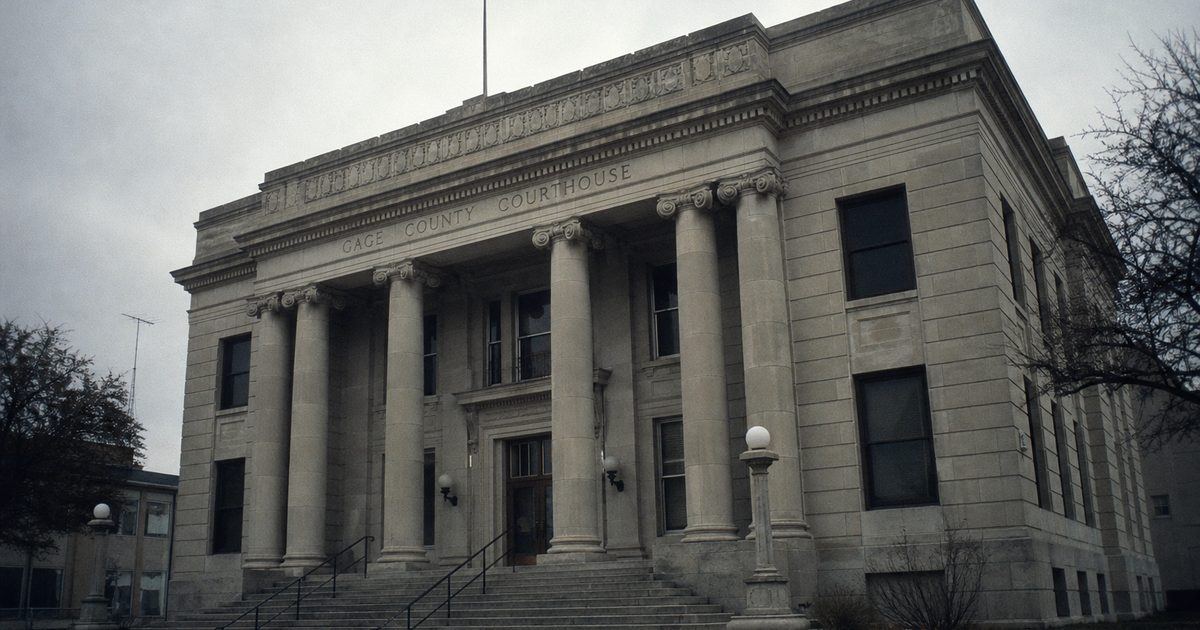
Joseph White’s estate and the other five exonerees filed a federal civil rights lawsuit against Gage County, the sheriff’s office, Deputy Burt Searcey, Wayne Price, and former Sheriff Jerry DeWitt. The case went to trial in January 2014.
The allegations were severe: that officials had coerced false confessions and helped build a case detached from the evidence. In July 2016, a federal jury awarded the Beatrice Six $28.1 million in damages. The jury found, among other things, that Gage County officials had acted with reckless disregard and had fabricated evidence.
The county challenged the verdict, but the award stood. On March 4, 2019, the U.S. Supreme Court declined to hear Gage County’s appeal, leaving the judgment in place. Payments followed over time, with the final payment made in March 2023.
The financial cost to the county was enormous. The human cost had been obvious for years.
Joseph White did not live to see the verdict
If one person carried the second half of this story, it was Joseph White.
He never stopped insisting he was innocent. He pushed for the testing that finally broke the case open. After spending roughly 18 years in prison for a murder he did not commit, he was exonerated in 2008.
He died in a workplace accident in 2011, before the civil trial ended and before the jury’s verdict confirmed, in dollars and in law, how badly the system had failed him and the others.
So when people speak about the Beatrice Six today, they are talking about more than a notorious Nebraska wrongful conviction. They are talking about Helen Wilson, whose murder was mishandled for decades, and about six lives bent around a lie that should never have survived contact with the evidence.
Why the Beatrice Six case still endures
Some cases stay in public memory because the crime itself was shocking. Others endure because they expose something deeper.
The murder of Helen Wilson is one of those cases. It shows how easily an investigation can drift once officials start treating confessions as more important than facts. It shows the danger of junk science and the damage done when psychological pressure is used to fill holes in a case. And it shows why DNA testing, especially in old cases, has changed the history of American criminal justice.
The Beatrice Six were not freed because sympathy finally arrived. They were freed because the evidence, preserved for years, was tested properly at last.
That is the hard center of the story. Helen Wilson was killed by Bruce Allen Smith. Six other people were convicted anyway. And it took more than two decades for the record to be forced back into line with the truth.
FAQ
Who were the Beatrice Six?
They were Joseph White, Thomas Winslow, Ada JoAnn Taylor, Debra Shelden, James Dean, and Kathy Gonzalez, six people wrongfully convicted in the Helen Wilson murder case.
What happened to Helen Wilson?
Helen Wilson was raped and murdered in her Beatrice, Nebraska, apartment on February 5, 1985.
Who killed Helen Wilson?
DNA testing in 2008 identified Bruce Allen Smith as the killer. He had died in 1992.
How were the Beatrice Six convicted?
The case was built largely on confessions and pleas, not on physical evidence. Some statements were obtained after intense pressure, and repressed-memory tactics were used during the investigation.
When were the Beatrice Six exonerated?
Joseph White was exonerated in 2008. In 2009, the convictions of all six were overturned.