A dog led the way.
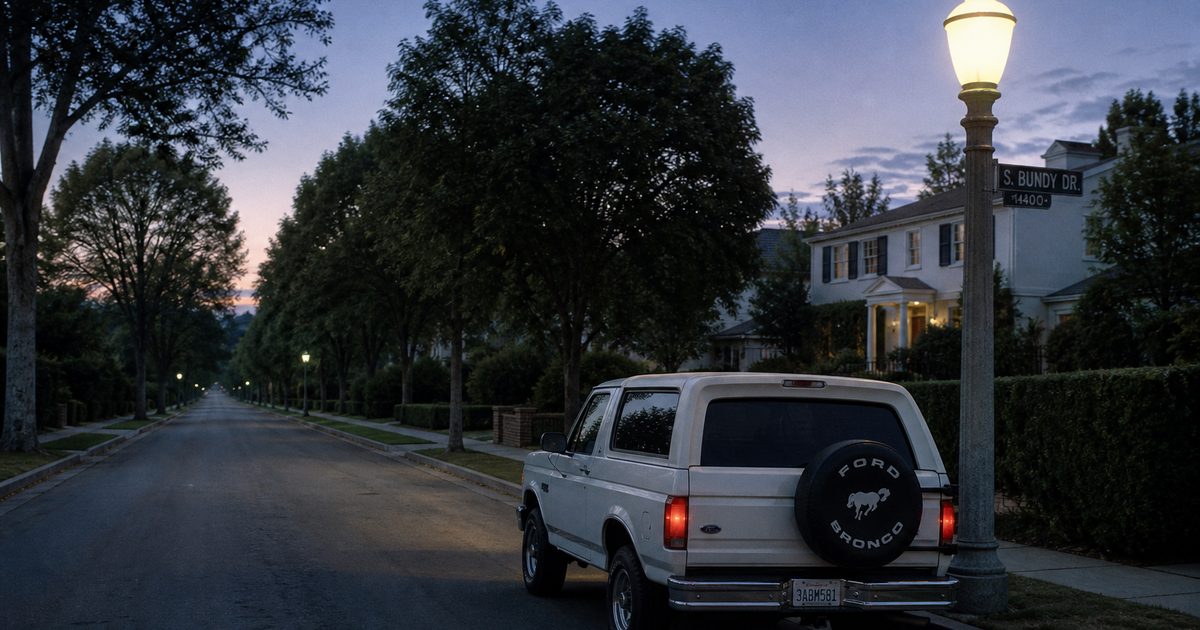
Just after midnight in Brentwood, it wandered ahead of its walker, tugging toward the entrance of 875 South Bundy Drive. What waited there, in the dim light outside Nicole Brown Simpson’s condominium, would become one of the most scrutinized crime scenes in American history. Nicole Brown Simpson, 35, and Ronald Lyle Goldman, 25, had been killed late on June 12, 1994. By morning, grief had already collided with celebrity, and a private act of violence had turned into a national obsession.
Bundy Drive: the night everything changed
The known outline of that evening is painfully ordinary at first.
Nicole had dinner with friends and her children at Mezzaluna, the Brentwood restaurant where Ron Goldman worked. Goldman, a waiter there, clocked out at 9:33 p.m. Nicole’s mother had accidentally left her glasses at the restaurant, and Goldman agreed to return them. He left Mezzaluna around 9:45 p.m.
Sometime later, investigators concluded, both he and Nicole were attacked outside her home. The killings are generally placed between about 10:15 p.m. and 10:40 p.m., based on witness timelines and the condition of the scene, though no one saw the murders happen.
A little after midnight on June 13, the bodies were discovered.
From that moment on, the case moved with terrifying speed. Nicole was not only a mother of two and a woman known to friends as warm and social. She was also the former wife of O.J. Simpson, one of the most recognizable men in the country: football star, actor, pitchman, broadcaster. The murders of Nicole Brown Simpson and Ron Goldman were immediately personal for two devastated families. They were also, almost instantly, public.
The history investigators could not ignore
Long before the cameras arrived, there had been warning signs.
Nicole Brown met Simpson in the late 1970s while working as a waitress. They married on February 2, 1985, and had two children together. But the marriage was marked by violence. In 1989, police responded to a domestic disturbance at the couple’s home and found Nicole injured. Simpson later pleaded no contest to spousal abuse.
When Nicole filed for divorce on February 25, 1992, that history did not disappear. It became crucial context.
So when detectives began building the O.J. Simpson case, they were not looking at Bundy Drive in isolation. They were looking at a homicide scene through the lens of domestic abuse. Prosecutors would later argue that the killings fit a pattern of control, rage, and escalation. The defense, in turn, would challenge not just that theory but the integrity of the entire investigation.
The evidence begins to point in one direction
In the first hours, detectives worked outward from Bundy Drive to Simpson’s estate on Rockingham Avenue. What they found there would shape the entire case.
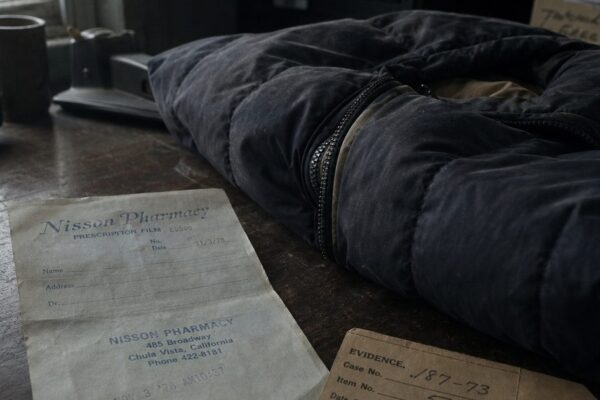
At the murder scene, investigators recovered a bloody glove. Another glove was later found at Rockingham. Prosecutors said the two matched. Blood evidence linked Simpson to Bundy Drive, and blood was also found in his white Ford Bronco and inside his home. A pair of socks recovered from the house carried blood identified as Nicole’s. Simpson also had a cut on his left hand when police saw him after the killings.
There were other pieces, too. Shoe impressions at the scene were consistent with a size 12 Bruno Magli shoe, and Simpson wore size 12. Fibers and hairs were also introduced at trial as part of the prosecution’s effort to connect the crime scene, the Bronco, and Rockingham.
Some of this evidence would later be fiercely contested. The defense argued that police contamination, mishandling, and possible misconduct made the physical case unreliable. That challenge became central to the trial. But in the early days, as detectives assembled the timeline, the focus narrowed quickly.
One small detail became important. Limousine driver Allan Park, who had arrived to pick Simpson up for a late-night flight to Chicago, testified that he saw a dark figure near the Rockingham property around 10:55 p.m. Kato Kaelin, a houseguest staying on the estate, also described hearing thumps near the guest house that night. Neither account solved the case on its own. Together, they helped prosecutors argue that Simpson’s movements fit the window of the killings.
By June 13, he had returned from Chicago and was interviewed by police.
The funerals, then the Bronco
Four days after the murders, on June 17, 1994, family and friends gathered for funerals.
That same day, the case veered into something stranger and more public than anyone could have imagined. Simpson had agreed to surrender to police. He did not.
Instead, he rode in the back of a white Ford Bronco driven by his friend Al Cowlings, while police followed across Southern California. The pursuit was slow, almost surreal. Freeways emptied. People stood on overpasses and watched. Television networks carried it live. For many Americans, the white Bronco chase became inseparable from the murders themselves.
By the end of the day, Simpson returned to his Brentwood estate and surrendered. He was arrested and charged with two counts of murder.
At his arraignment on July 22, 1994, he pleaded not guilty.
Inside the O.J. Simpson trial
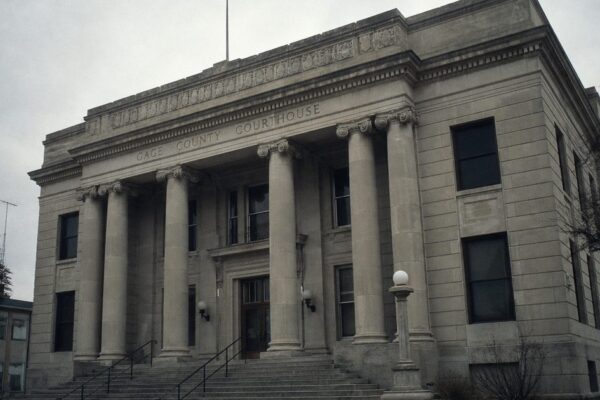
The criminal trial began on January 24, 1995, in Los Angeles County Superior Court before Judge Lance Ito. It would soon be called the “Trial of the Century,” not because that phrase explained much, but because no simpler label could contain the scale of it.
The lawyers became public figures. The prosecution was led by Marcia Clark and Christopher Darden. Simpson’s defense team included Robert Shapiro, Johnnie Cochran, F. Lee Bailey, Alan Dershowitz, and Robert Kardashian, among others. The press called them the Dream Team, a nickname that stuck.
But the real force of the trial came from what it represented.
Prosecutors built their case around forensic evidence, timeline evidence, and Simpson’s history of abuse toward Nicole. They argued that the murders were the end point of a violent pattern.
The defense chose a broader target. Rather than simply deny the prosecution’s theory, Simpson’s lawyers attacked the investigation itself. They argued that evidence had been mishandled, that detectives had made serious errors, and that police bias could not be separated from the case. Those arguments gained enormous traction when Detective Mark Fuhrman, who had found the glove at Rockingham, was confronted with recordings in which he used racist slurs and later invoked the Fifth Amendment when asked whether he had planted evidence.
That mattered deeply in Los Angeles. The city was still living with the aftermath of the Rodney King beating and the unrest that followed. Distrust of police was not abstract. It was immediate and raw.
Then came the moment that would live far beyond the courtroom: Simpson trying on the gloves. The defense turned it into a simple line for the jury: “If it doesn’t fit, you must acquit.” The phrase was memorable. The issue beneath it was not simple at all. Prosecutors argued the gloves had shrunk from blood and handling, and that Simpson had appeared to struggle deliberately. Still, the image landed.
The verdict, and the split it exposed
On October 3, 1995, the jury returned its verdict. O.J. Simpson was found not guilty of the murders of Nicole Brown Simpson and Ron Goldman.
For the Brown and Goldman families, the acquittal was devastating. For the country, it was polarizing. Reactions broke sharply across racial lines, shaped by very different views of policing, celebrity, and the justice system. The O.J. Simpson verdict did not settle those arguments. It intensified them.
Legally, though, the story was not over.
In October 1996, a civil wrongful death trial began in Santa Monica. This time, the burden of proof was lower. The question was not guilt beyond a reasonable doubt, but liability by a preponderance of the evidence.
On February 4, 1997, the civil jury found Simpson liable for the wrongful deaths of Nicole Brown Simpson and Ron Goldman. He was ordered to pay $33.5 million in damages to the victims’ families.
That split result remains one of the most striking features of the O.J. Simpson case timeline: acquitted in criminal court, held liable in civil court.
What remains unresolved
The legal record is clear, even if the public memory often blurs it.
Simpson was never convicted of the murders. No other person has been charged or convicted for killing Nicole Brown Simpson and Ron Goldman. In that narrow criminal sense, the case remains unsolved.
But the broader story never belonged only to legal categories. At its center were two lives cut short, two families forced to keep speaking their names, and a history of domestic violence that many people felt the country was too willing to sideline once the courtroom drama took over.
For years afterward, Ron Goldman’s family continued trying to collect on the civil judgment. Fred Goldman remained especially persistent, refusing to let the case fade into nostalgia or spectacle. That persistence was part of the aftermath too: not the televised version, but the long one, where grief keeps going after the cameras leave.
And that may be the truest way to understand what happened after Bundy Drive. The trial became mythology. The victims should not.
FAQ
When were Nicole Brown Simpson and Ron Goldman killed?
They were killed on the night of June 12, 1994, and their bodies were discovered shortly after midnight on June 13.
Was O.J. Simpson convicted of murder?
No. He was acquitted in the criminal trial on October 3, 1995.
Was O.J. Simpson found liable in civil court?
Yes. On February 4, 1997, a civil jury found him liable for the wrongful deaths of Nicole Brown Simpson and Ron Goldman.
What was the white Bronco chase?
It was the televised low-speed police pursuit on June 17, 1994, after Simpson failed to surrender as agreed. He was in a white Ford Bronco driven by Al Cowlings.
Is the case officially solved?
No one was convicted in criminal court for the murders, and no other person has been convicted in the case.