
At 5:30 in the morning, the house was still dressed for Christmas.
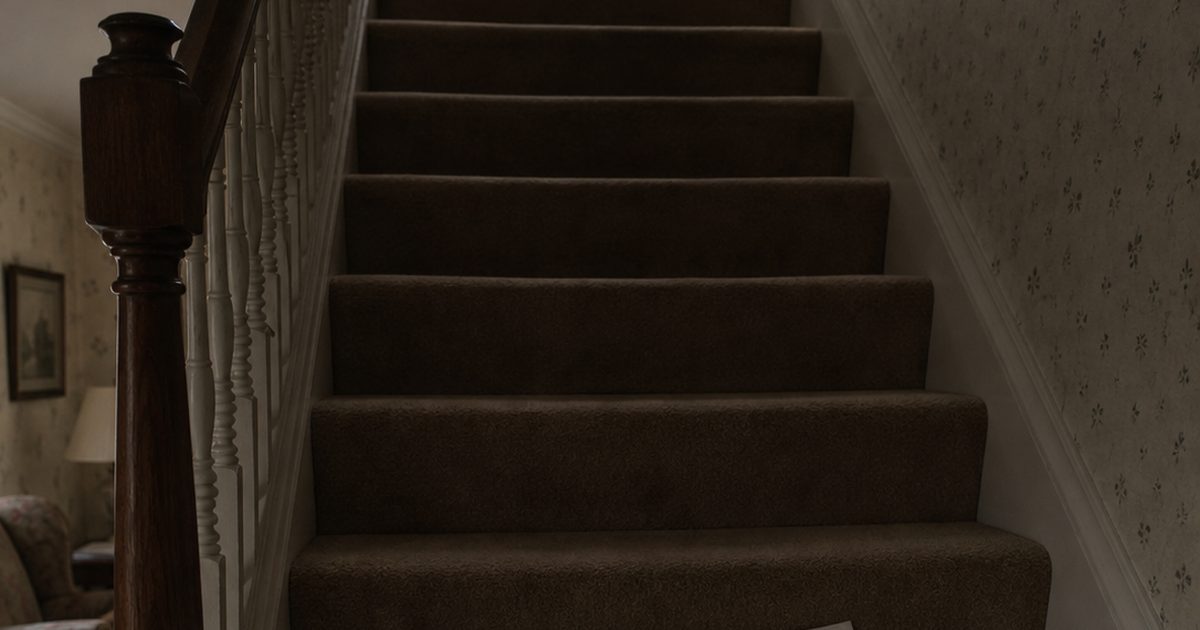
Patsy Ramsey came down the spiral staircase in the family’s Boulder home and saw three pages lying on the steps. The note was handwritten, unusually long, and demanding: $118,000 for the safe return of her 6-year-old daughter, JonBenét Ramsey. The amount was oddly specific. It matched John Ramsey’s recent bonus.
Within minutes, panic overtook the house. Patsy called 911 at 5:52 a.m. to report a kidnapping. Friends were called almost immediately after. Before sunrise, police, family friends, and confusion were all moving through the same rooms.
By early afternoon, the case had changed from a reported abduction to the killing of a child inside her own home.
The last known hours
JonBenét Patricia Ramsey had spent Christmas Day with her family. That evening, the Ramseys went to a party at a friend’s home and returned to their house at about 9 p.m. John later said he carried his daughter upstairs to bed because she was asleep.
That should have been the end of the night.
Instead, the timeline narrowed into a handful of disputed and heavily examined hours. One detail that drew lasting attention came from the autopsy: pineapple was found in JonBenét’s digestive tract, suggesting she may have eaten some not long before her death. Investigators later focused on a bowl of pineapple found in the home, though exactly when she ate it was never established with certainty.
At 5:59 a.m., Officer Rick French arrived. He searched parts of the house but did not find JonBenét. There were no clear signs of a forced entry in those first observations. That mattered, because from the beginning the case seemed to point in two directions at once. Either someone had entered the house and taken the child, or the answer was already inside.
A ransom note that changed everything
The note on the staircase did not read like a typical ransom demand. It stretched to roughly 370 words over two and a half pages. Investigators determined it had been written with paper and a pen from inside the Ramsey home.
That fact alone did not solve anything, but it immediately raised hard questions.
Why would a kidnapper stay in the house long enough to write such a long message? Why ask for $118,000, a figure tied so closely to John Ramsey? And why leave the note on the staircase instead of taking the child and making contact later?
The language of the note became one of the most analyzed pieces of evidence in the case. So did the house itself. A broken basement window, an unlocked door, and other entry points were all discussed over the years by those who believed an intruder had come in during the night. Others saw the note and parts of the scene as signs of staging.
The problem was that the house was never preserved as tightly as it should have been. Friends moved through it. Rooms were not fully sealed off. In a case that would depend on tiny details, the scene was compromised early.
The search that turned a kidnapping into a homicide
Detective Linda Arndt arrived that morning as the hours dragged on and no kidnapper called.
Then, shortly after 1 p.m., she asked John Ramsey and a family friend to search the house again, top to bottom. John went to the basement. At about 1:05 p.m., he opened the door to a small room often described as a wine cellar.
JonBenét was there.
He carried her upstairs. In that moment, whatever hope had remained in the house collapsed. The kidnapping report was over. This was now a murder investigation, and the child had been inside the home the entire time.
That discovery also deepened criticism of the police response. A thorough search earlier in the day might have found her sooner. Instead, one of the most important crime scenes in America had already been disturbed again and again.
What the autopsy found
An autopsy was performed on December 27, 1996. The official cause of death was asphyxia by strangulation associated with craniocerebral trauma.
Investigators found that JonBenét had suffered a severe skull fracture. A cord had been tied around her neck with part of a broken paintbrush handle. That paintbrush came from Patsy Ramsey’s art supplies in the home.
There were also findings that suggested prior vaginal injury and sexual assault, though the interpretation of some of those injuries has been debated over the years. In a case so publicly argued, that distinction matters: some facts were established, while others became the subject of competing expert opinions.
DNA added another layer of uncertainty rather than clarity. Male DNA not matching John, Patsy, or Burke Ramsey was found in JonBenét’s underwear, mixed with blood, and DNA testing also identified foreign male DNA under her fingernails. Supporters of the intruder theory have long pointed to that evidence. Critics have argued that the material could have come from innocent transfer or contamination and does not, by itself, identify a killer.
That tension has never gone away. Even the forensic evidence seemed to resist a simple story.
Suspicion fell first on the family
As the murder of JonBenét Ramsey became national news, public attention locked onto the family. The pageants, the wealth, the strange ransom note, the house on a quiet Boulder street, all of it made the case irresistible to tabloids and television.
Police focused early on the Ramseys. Investigators publicly denied that the family had been cleared and pursued the possibility that the crime scene had been staged. For years, suspicion hung over John and Patsy Ramsey, even though neither was ever charged with murder.
That pressure did not stay inside the investigation. It spilled into interviews, leaks, televised debates, and endless amateur theories. The case became one of the first modern examples of a true-crime story being argued in public almost in real time, with every scrap of evidence turned into a side.
Lost in much of that noise was the simplest fact: a little girl had been killed, and the investigation was drifting under the weight of its own notoriety.
The grand jury’s secret vote
In September 1998, a grand jury was convened to hear evidence in the case. More than a year later, on October 13, 1999, Boulder County District Attorney Alex Hunter announced that no charges would be filed, saying the evidence was insufficient to prosecute anyone successfully.
For a long time, that seemed to close the matter.
It did not.
In 2013, previously sealed records revealed that the grand jury had in fact voted in 1999 to indict John and Patsy Ramsey on charges of child abuse resulting in death and being accessories to a crime. Hunter chose not to sign the indictment, so the charges were never filed.
That revelation reopened one of the oldest wounds in the case. To some, it showed that the evidence against the parents had been stronger than the public knew. To others, Hunter’s refusal to proceed showed exactly the opposite: suspicion was not the same as proof, and he did not believe he could make the case in court.
Both things can be true at once. The grand jury saw enough to accuse. The district attorney did not see enough to prosecute.
A confession that collapsed
Nearly a decade later, the case lurched in a different direction.
In August 2006, a man named John Mark Karr was arrested in Thailand after claiming he had killed JonBenét. For a brief moment, it looked as if one of the country’s most famous unsolved murders might finally have an answer.
It fell apart quickly.
Karr’s DNA did not match the genetic material recovered in the case, and authorities concluded there was no credible evidence tying him to the killing. He was never charged in JonBenét’s death.
The false confession was a reminder of what the case had become: so famous, so mythologized, that even an apparent breakthrough had to be treated with caution.
The DNA shift, and the argument it started
Just weeks before Karr’s arrest, Patsy Ramsey had died of ovarian cancer on June 24, 2006.
Two years later, on July 9, 2008, Boulder District Attorney Mary Lacy issued a public letter effectively clearing the Ramsey family based on touch DNA from an unidentified male. That announcement was widely described as an exoneration.
It was also controversial.
Lacy treated the DNA as powerful evidence of an outside attacker. Others in law enforcement and forensic science questioned how much weight the sample could bear. Touch DNA can be useful, but it can also be difficult to interpret, especially in a case where the scene was compromised and where transfer from manufacturing or handling cannot always be ruled out.
So the JonBenét Ramsey case did what it had done from the beginning: it generated a major development and then refused to settle.
Why the case still remains open
No one has ever been convicted of killing JonBenét Ramsey. No trial has ever answered the central question. The case remains unsolved.
Boulder authorities have said the investigation is still active, and the evidence has been revisited as forensic methods have improved. In recent years, officials have discussed further DNA testing and review of preserved evidence.
That is where the story stands now. A child went to bed after Christmas. A ransom note appeared inside her home. By afternoon, she was found dead in the basement. The scene suggested too many possibilities and proved too little with certainty.
For decades, the case has been pulled between two competing ideas: that someone inside the house was responsible, or that an intruder came in and left behind just enough evidence to keep the argument alive. Neither theory has ever been proved in court.
What remains is not just mystery, but damage, to the investigation, to the people publicly accused, and above all to the memory of a 6-year-old girl whose death was turned into spectacle long before it was solved.
FAQ
Who killed JonBenét Ramsey?
No one knows for certain. The murder remains unsolved, and no one has been convicted.
Was the Ramsey family charged?
No. A grand jury voted to indict John and Patsy Ramsey in 1999, but the district attorney did not sign the indictment, so no charges were filed.
What did the JonBenét Ramsey autopsy show?
The autopsy found that she died from strangulation associated with head trauma. It also documented injuries that led investigators to examine the possibility of sexual assault.
Did DNA clear the Ramsey family?
In 2008, District Attorney Mary Lacy publicly cleared the family based on touch DNA from an unidentified male. That decision remains disputed by some investigators and forensic experts.
Is the JonBenét Ramsey case still open?
Yes. The JonBenét Ramsey case remains an active homicide investigation.