At 5:52 on the morning after Christmas, Patsy Ramsey dialed 911 from the family’s home at 755 15th Street in Boulder, Colorado. Her voice was frantic. She said her 6-year-old daughter, JonBenet Ramsey, was missing.
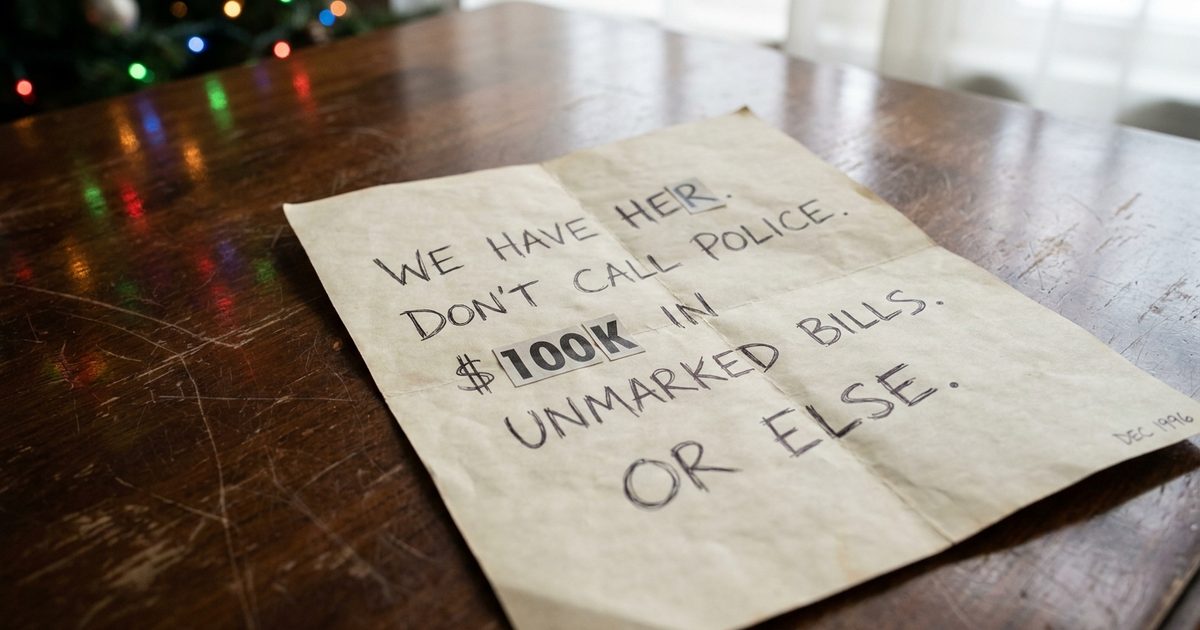
On a back staircase, she had found a ransom note.
It was an odd, unnerving thing to discover inside your own house: two and a half handwritten pages demanding $118,000 for the safe return of a child who, only hours earlier, had been carried upstairs asleep after a Christmas party. John Ramsey later said the family had returned home around 9:15 p.m. on December 25, 1996, and that he had put JonBenet to bed.
By sunrise, the Ramseys’ large house was no longer a family home. It was the center of what would become one of the most debated unsolved killings in America.
JonBenet was a kindergartener, known publicly because of child beauty pageants. Her father, John Ramsey, was president and CEO of Access Graphics. Her mother, Patsy, had once been Miss West Virginia. Her older brother, Burke, was 9. They were a prominent family in Boulder, and within hours their names were moving far beyond Colorado.
But before the television trucks, before the theories and lawsuits and documentaries, there was a simple fact: a little girl was gone, and the first crucial hours were slipping away.
A kidnapping scene that was not secured
Officer Rick French arrived at 5:59 a.m. Police initially treated the house as a kidnapping scene.
That decision mattered.
The note itself was immediately strange. It asked for the exact amount of John Ramsey’s recent bonus, $118,000. Investigators later concluded it had been written on paper from a pad inside the house, using a pen from the home. To many, that suggested staging. To others, it did not rule out someone inside the house writing it under pressure, or an intruder lingering longer than expected. The JonBenet Ramsey case would become a maze of details like that: every clue seeming to point in two directions at once.
The house was not locked down the way a homicide scene would later need to be. Friends came over. Family moved through rooms. People cleaned, talked, waited, prayed. Potential evidence was exposed almost immediately.
Detective Linda Arndt arrived at about 8:10 a.m. By then, the scene was crowded. She was trying to manage a possible child abduction in a house full of people, with no clear sign of forced entry and no child in sight.
That morning’s mistakes would shadow the investigation for decades.
The basement door
Hours passed.
Then, shortly after 1 p.m., Arndt asked John Ramsey and family friend Fleet White to search the house again, top to bottom, to see if anything looked out of place. John Ramsey went to the basement. He opened the door to a small room sometimes described as a wine cellar.
Inside, he found JonBenet.
She was covered with a white blanket. Duct tape had been placed over her mouth. A cord and broken paintbrush handle had been used as a ligature around her neck.
In a moment that investigators would later revisit again and again, John Ramsey picked up his daughter and carried her upstairs.
It was an act that made emotional sense to a father who had just found his child. It was also disastrous for the crime scene. Whatever had been preserved around her body, on the blanket, on the floor, at the doorway, was now further disturbed.
The kidnapping case was over. The JonBenet Ramsey murder investigation had begun, inside the family home.
What the autopsy established
An autopsy was performed on December 27, 1996.
The official cause of death was asphyxia by strangulation associated with craniocerebral trauma. JonBenet had suffered a significant skull fracture. The autopsy also documented injury to her vaginal area. Investigators and medical experts have long debated aspects of what those findings meant, including whether there had been prior abuse, but sexual assault could not be ruled out. No semen was found.
Those findings made the case harder, not easier, to understand.
The ransom note suggested a kidnapping plot. The body in the basement suggested something very different. The injuries raised still more questions about sequence, motive, and who had been in that room with her.
JonBenet Ramsey was buried on December 31, 1996, in Marietta, Georgia.
Evidence that never told one clean story
The case against an intruder was obvious to many investigators from the start. The ransom note was unusually long. It appeared to have been written inside the house. There were no clear signs of a violent break-in. Suspicion quickly settled on the family.
But the evidence never formed a single, tidy narrative.
There was a basement window that John Ramsey had previously said he had broken months earlier after being locked out, though some believed it could have been used by an intruder. There was rope found in a guest bedroom that was reported not to belong to the family. There was a palm print on the wine cellar door later identified as belonging to a family friend’s housekeeper, not an unknown killer, which is one example of how rumors and partial facts complicated public understanding of the case. There was also a Hi-Tec boot print near the body area that, for years, fueled debate because it was not matched publicly to a family member.
Then there was the DNA.
Testing over the years found unidentified male DNA associated with JonBenet’s clothing, including DNA from her underwear that was central to later arguments about the case. The Ramseys were excluded from that profile. Supporters of the intruder theory saw that as powerful evidence that someone outside the home killed her. Others argued the sample was tiny, possibly mixed, and not necessarily proof of the killer’s identity. In other words, even one of the most important forensic findings in the JonBenet Ramsey case did not end the argument.
Police, prosecutors, and a family under suspicion
As 1997 unfolded, the investigation turned inward.
John and Patsy Ramsey were formally interviewed by investigators on April 30, 1997, months after the killing. By then, public suspicion was intense. A theory took hold that JonBenet had died inside the house and that the kidnapping story had been staged afterward. Police and prosecutors did not always agree on how strongly the evidence supported that view, but the pressure on the family was enormous.
At the same time, others pushed back. Lou Smit, a veteran homicide detective brought into the case by the district attorney’s office, became one of the strongest advocates of the intruder theory. He believed the physical evidence pointed away from the Ramseys.
That split, family involvement or outside intruder, became the fault line in the case and has never really disappeared.
In September 1998, a grand jury was convened. On October 13, 1999, Boulder County District Attorney Alex Hunter announced that no one would be charged, saying there was insufficient evidence to prosecute.
For years, that sounded like the end of the grand jury story.
It was not.
In 2013, previously sealed documents showed that the grand jury had in fact voted to indict John and Patsy Ramsey on charges related to child abuse resulting in death and being accessories to a crime. Hunter had declined to sign the indictment. The documents did not mean the Ramseys were found guilty of murder, and they did not identify who killed JonBenet. But the revelation made clear that jurors believed there was enough evidence to move forward on limited charges.
False confessions, public exoneration, and more doubt
The case kept attracting attention, and with attention came noise.
In August 2006, a man named John Mark Karr was arrested in Thailand after claiming he had killed JonBenet. For a brief moment, it looked as if the case might finally be solved. It quickly fell apart. He was never charged in Boulder, and authorities said DNA did not match him.
Just weeks earlier, on June 24, 2006, Patsy Ramsey had died of ovarian cancer at age 49.
Then came another dramatic turn. On July 9, 2008, Boulder County District Attorney Mary Lacy issued a public letter exonerating the Ramsey family based on DNA evidence. It was a major moment in the public story of the case, but it did not settle the matter. The Boulder Police Department did not treat the case as closed, and many investigators remained unconvinced that the DNA resolved the central questions.
In 2009, Boulder police formally took over the investigation again.
Years later, the case surged back into headlines when the 2016 CBS docuseries The Case of: JonBenet Ramsey advanced the theory that Burke Ramsey had accidentally killed his sister and that the parents covered it up. Burke Ramsey denied that claim and later reached a settlement in a defamation lawsuit against CBS.
So even after two decades, the case was still doing what it had done from the beginning: pulling people toward certainty, then refusing to give it to them.
Why the JonBenet Ramsey case still isn’t solved
A child was reported kidnapped. A body was found in the basement. A ransom note appeared to have been written inside the house. The crime scene was compromised in the first hours. Physical evidence pointed in conflicting directions. Prosecutors and police split. DNA raised hope and then more argument.
That is why the JonBenet Ramsey murder remains open.
No one has ever been charged with killing her. No one has been convicted. The Boulder Police Department has said the investigation is still active, and in 2022 officials said evidence would be reviewed again with advances in DNA and forensic technology, working with the Colorado Cold Case Review Team.
Nearly everything about the case has been examined, challenged, re-examined, and argued over. But the most important fact has never changed. A 6-year-old girl died in her own home on Christmas night, and the truth of what happened to JonBenet Ramsey has never been fully established in court.
FAQ
When was JonBenet Ramsey found?
JonBenet Ramsey was found on December 26, 1996, in a basement room of her family’s home in Boulder, Colorado.
What was JonBenet Ramsey’s cause of death?
Her autopsy listed the cause of death as asphyxia by strangulation associated with craniocerebral trauma.
Was there really a ransom note in the JonBenet Ramsey case?
Yes. A handwritten ransom note, about two and a half pages long, was found inside the Ramsey home on the morning she was reported missing.
Were John and Patsy Ramsey ever charged?
No. A grand jury voted in 1999 to indict them on limited charges, but District Attorney Alex Hunter did not sign the indictment, so no prosecution followed.
Is the JonBenet Ramsey murder still unsolved?
Yes. The case remains an open homicide investigation, and no one has been convicted of JonBenet Ramsey’s murder.