
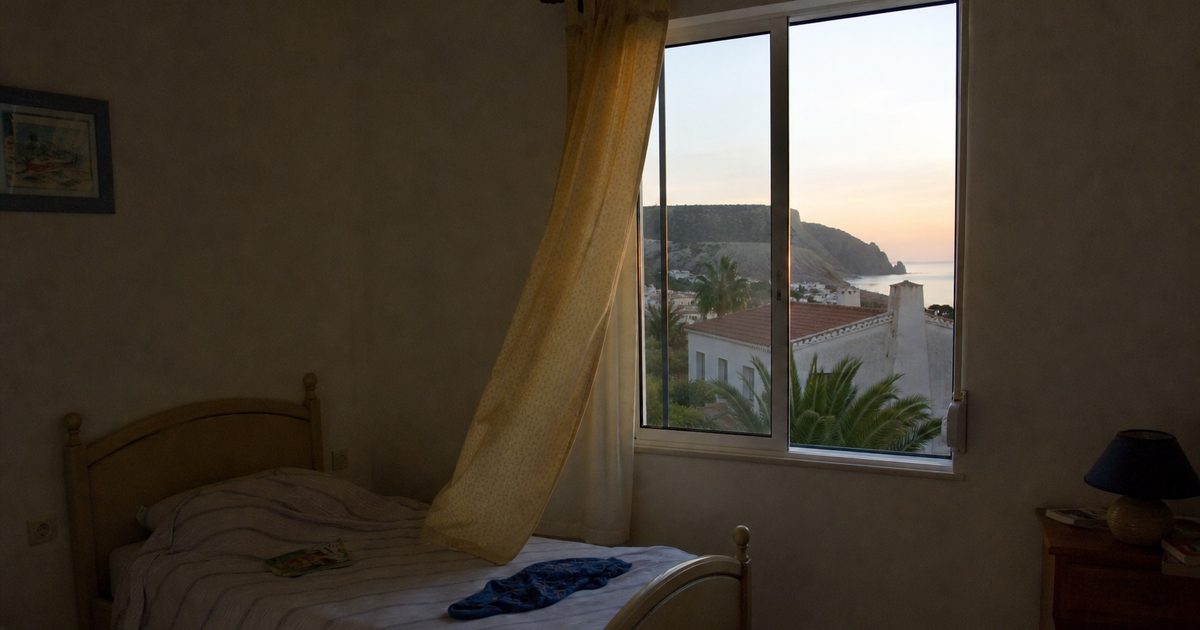
A mother opened the bedroom door just after 10 p.m. and felt, at once, that something was wrong.
The shutters in apartment 5A were up. The window was open. Two small children were still inside, asleep. But three-year-old Madeleine McCann was gone.
What happened at the Ocean Club resort in Praia da Luz, Portugal, on the night of May 3, 2007, has been argued over for years in police files, documentaries and headlines. Yet the core of the case is brutally simple: a child vanished from a holiday apartment, and despite one of the most publicized searches in modern criminal history, no court has established what happened to her.
The last ordinary evening in Praia da Luz
The McCann family had arrived in Praia da Luz on April 28 for a week-long holiday. They were staying in a ground-floor apartment at the Ocean Club resort, along with Madeleine and her younger twin siblings.
That ground-floor detail would matter almost immediately.
Apartment 5A sat close enough to the resort’s tapas restaurant that the adults in the group believed they could eat there and keep an eye on the sleeping children by checking on them at intervals. The restaurant was roughly 55 meters away, near enough to feel manageable, far enough that those checks would later be picked apart minute by minute.
That evening began like many holiday evenings do. Dinner plans. Tired children. A sense of routine. Around 8:30 p.m., Kate and Gerry McCann joined friends at the restaurant, leaving the children asleep in the apartment.
At 9:05 p.m., according to the commonly cited timeline, Gerry McCann checked on the children and saw nothing unusual. Not long after, one of the friends, Jane Tanner, reported seeing a man carrying a child near the apartment. At the time, the sighting seemed crucial. Years later, British investigators said they believed that man was most likely an unrelated holidaymaker carrying his own daughter.
That left the timeline with a hole at its center.
The moment the Madeleine McCann case changed forever
At about 10 p.m., Kate McCann went to check on the children.
Madeleine was no longer in the room.
She ran back toward the restaurant in panic, shouting that her daughter had been taken. In the first minutes after that, confusion spread across the resort. Friends and staff began searching. Reception was alerted. Before long, guests and employees were moving through the area, calling Madeleine’s name into the dark.
By around 10:30 p.m., the resort had activated its missing-child procedure. Portuguese police were contacted that night. Officers from the Guarda Nacional Republicana arrived first, followed later by detectives from the Polícia Judiciária in the early hours of May 4.
Those first hours mattered enormously. They would also become one of the most criticized parts of the entire inquiry.
A crime scene that did not stay a crime scene
In any disappearance, the earliest window is often the most important. Here, it was muddied almost at once.
Numerous people entered and moved through apartment 5A before the scene was tightly controlled. Family friends, staff, officers, searchers. In the chaos of a missing child emergency, that may have felt unavoidable. Investigatively, it was disastrous. Potential traces could have been disturbed or lost before specialists had the chance to assess them properly.
Searches continued through the night and into the following days. Dogs were later used. So were road checks, interviews and appeals. But as the hours became days, the case did not narrow. It widened.
And with every day that passed, the disappearance of Madeleine McCann became less a local emergency than a global story.
Suspicion turns, then turns again
The first months of the investigation were marked by pressure, leaks and sudden shifts in focus.
On May 14, 2007, Robert Murat, an Anglo-Portuguese man who lived near Praia da Luz, was named an arguido, a formal suspect under Portuguese law. The move intensified media attention, but it did not lead to charges over Madeleine’s disappearance.
Then the case took a more painful turn.
On September 7, 2007, Portuguese authorities made both Kate and Gerry McCann arguidos as well. For the parents of a missing child, already under relentless scrutiny, it was a devastating development. Public debate became even harsher. Innocent details were treated as clues. Speculation hardened into accusation in some corners of the press.
But suspicion is not proof. On July 21, 2008, Portuguese prosecutors archived the case and lifted the arguido status of the McCanns and Murat. No one had been charged. The investigation had generated noise, but not a prosecutable answer.
The evidence that seemed important, and the evidence that held up
This is where the Madeleine McCann case has often become distorted. Certain details were presented for years as if they solved the mystery. They did not.
Cadaver and blood dogs used during the investigation gave alerts in locations linked to the apartment and to items associated with the family. Those alerts drew enormous attention. But dog alerts are intelligence tools, not proof on their own, and they did not produce forensic evidence capable of establishing what happened in court.
The same was true of many reported sightings. Some looked promising at first, then fell apart. The Tanner sighting, once central to the public understanding of the case, was later discounted by investigators.
That does not mean nothing happened. It means the fragments never formed a complete, legally reliable picture.
Over time, investigators considered several possibilities, including an opportunistic abduction and a burglary interrupted by a child waking up. German prosecutors would later say they were working on the assumption that Madeleine was dead and that a sexual motive was possible. But theories, however plausible they may appear, are not the same as charges proved in court.
Operation Grange reopens the search
The case might have remained frozen there, in a haze of missed chances and unresolved suspicion. It did not.
In May 2011, the Metropolitan Police in London launched a review known as Operation Grange. British detectives went back through the material, reassessing witness statements, timelines and leads. Their involvement gave the inquiry new momentum and, just as importantly, a second look at assumptions that had hardened too early.
Then, on October 24, 2013, Portuguese authorities formally reopened their own investigation.
By then, years had passed since Madeleine disappeared from the holiday apartment in Praia da Luz. The public knew the broad outlines by heart. A family dinner. A child left sleeping. A check that found nothing. Another that found an empty bed. Yet the central question remained untouched by repetition: who took her, and where did she go?
Christian Brueckner and the strongest public lead yet
A significant shift came on June 4, 2020, when German prosecutors publicly identified Christian Brueckner as a suspect in the case.
Brueckner, a German national, had lived in the Algarve around the time Madeleine vanished. He also had a serious criminal record, including convictions for sexual offenses and other crimes. German investigators said cellphone data placed a phone attributed to him in the Praia da Luz area on the night Madeleine disappeared. They later stated that they believed Madeleine was dead.
That announcement was one of the biggest developments in the case in years. It also came with an important limit: Brueckner was not charged with Madeleine McCann’s disappearance.
In April 2022, Portuguese prosecutors named him an arguido. In May 2023, investigators carried out fresh searches near the Barragem do Arade reservoir, an area reportedly linked to him. Those searches showed that authorities were still trying to build a case from evidence, not inference.
As things stand, Christian Brueckner remains the most prominent suspect publicly identified by investigators in the Madeleine McCann case. But suspicion, even strong suspicion, is not a conviction. No court has found him responsible for her disappearance.
The family at the center of the storm
It is easy, after so many years, to talk about this case as a timeline or a media phenomenon. That flattens what it was.
A family went on holiday. One child did not come home.
Kate and Gerry McCann have continued to appeal for information and to mark the date of their daughter’s disappearance publicly. They have also lived under a level of attention few families could imagine: tabloid suspicion, conspiracy theories, repeated false hope, and the strange cruelty that comes when private grief becomes public property.
The case has inspired books, documentaries and endless commentary. None of that has answered the only question that mattered on the first night and still matters now.
Madeleine McCann disappeared from apartment 5A at the Ocean Club in Praia da Luz on May 3, 2007. That much is certain. What happened after she was taken from that room remains unproven.
FAQ
Where did Madeleine McCann disappear from?
She disappeared from her family’s ground-floor holiday apartment, 5A, at the Ocean Club resort in Praia da Luz, Lagos, Portugal.
When did Madeleine McCann go missing?
Madeleine was discovered missing on the evening of May 3, 2007.
Were Kate and Gerry McCann charged?
No. They were named arguidos by Portuguese police in September 2007, but that status was lifted in July 2008. They were not charged over their daughter’s disappearance.
Who is Christian Brueckner?
He is a German man identified by German prosecutors in 2020 as a suspect in the case. He has not been charged in connection with Madeleine McCann’s disappearance.
Is the Madeleine McCann case solved?
No. The case remains unsolved, and no one has been convicted over what happened to her.