
At 10:14 p.m., police were told that a 3-year-old British girl had vanished from a holiday apartment in Praia da Luz.
Everything that followed, the searches, the accusations, the false leads, the years of headlines, began in the short stretch between bedtime and that call.
Madeleine McCann had been on holiday with her family at the Ocean Club resort in Portugal’s Algarve. The McCanns arrived on April 28, 2007, for what was meant to be a week in the sun. Kate and Gerry McCann, both doctors, were there with their three children: 3-year-old Madeleine and 2-year-old twins Sean and Amelie.
On the evening of May 3, the children were put to bed in apartment 5A, a ground-floor unit near the resort’s pool area. Later, Kate and Gerry joined friends for dinner at a tapas restaurant roughly 55 meters away. The adults checked on the children at intervals, a detail that would be examined over and over once the Madeleine McCann case exploded into one of the most famous missing-child investigations in the world.
The last ordinary hour
For a while, nothing seemed wrong.
Gerry McCann checked the apartment shortly after 9 p.m. and later said the children were asleep. Around that same period, family friend Jane Tanner reported seeing a man carrying a child near the apartment complex. At the time, that sighting seemed crucial. Years later, British investigators would conclude it was likely unrelated, one more example of how the case kept producing detail without certainty.
Then came the moment that fixed itself in public memory.
At about 10 p.m., Kate McCann went to check on the children. Madeleine was gone.
The window and shutters became an immediate point of dispute. So did the exact sequence of checks, who saw what, and when. But the central fact did not change: a little girl who had been put to bed was no longer in the room.
Within minutes, staff and guests were searching the resort. At 10:14 p.m., authorities were alerted. The disappearance of Madeleine McCann had begun.
The first hours that never stopped mattering
In many cases, the opening hours shape everything that comes after. Here, they became a source of lasting criticism.
Portuguese police began investigating on May 4, 2007. Early responding officers from the GNR reportedly treated the situation at first as a child who may have wandered off. The Polícia Judiciária, Portugal’s criminal investigation police, arrived later.
By then, apartment 5A had not been sealed immediately. Reports later said around 20 people had entered before the scene was properly secured. In a case that depended on tiny traces and precise timelines, that mattered enormously. The apartment was the last confirmed place Madeleine had been seen. If evidence was there, the opportunity to preserve it cleanly may have been lost in those first chaotic hours.
That early confusion fed years of argument.
There were reports of DNA from an unidentified person in the apartment, but because so many people had moved through the scene, its value was limited. Cadaver and blood-sniffer dogs later indicated areas of interest in the apartment and in a car the McCanns rented 25 days after the disappearance. Those alerts would fuel suspicion for years. But the DNA analysis linked to those findings was heavily disputed and never produced a conclusive case against the parents.
From the start, the investigation was pulled in different directions: abduction, accident, burglary, trafficking. Each theory brought attention. None brought Madeleine home.
When suspicion turned toward the parents
As the search widened, the story became global. Alleged sightings came in from different countries. None were confirmed as Madeleine.
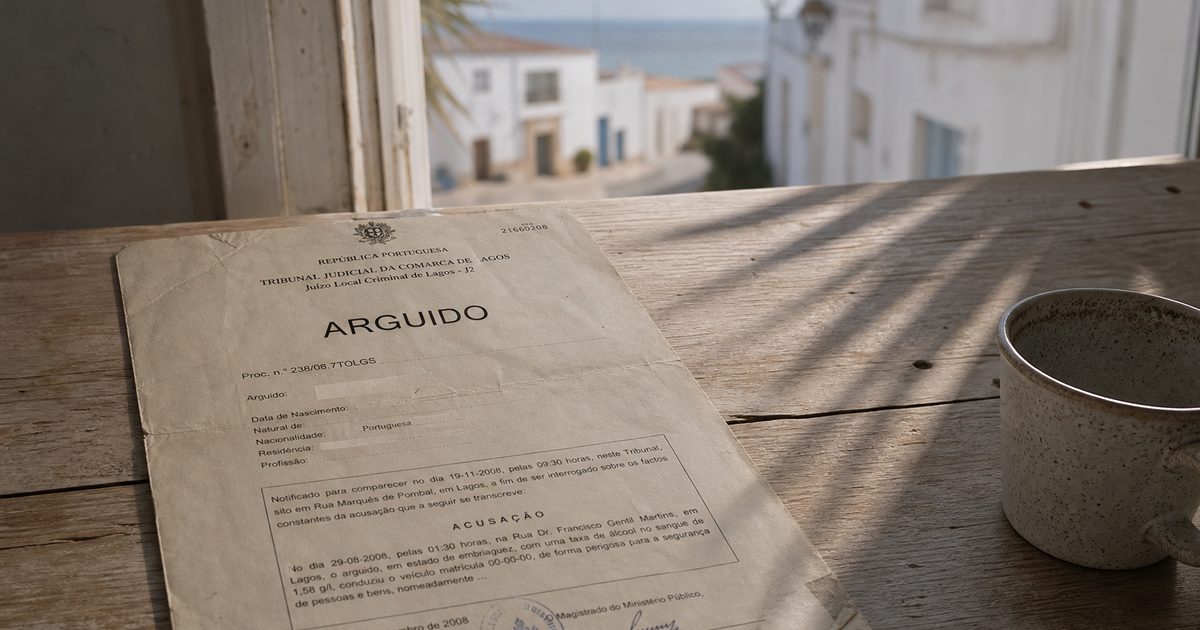
On May 14, 2007, Robert Murat, an Anglo-Portuguese man living near Praia da Luz, was named an arguido, a formal suspect under Portuguese law. It was a major development at the time. It led nowhere. His suspect status was later lifted.
By August 11, 2007, a hundred days after Madeleine vanished, Portuguese police publicly acknowledged that she might be dead. It was a devastating shift for the family, and it set the stage for the most controversial chapter of the case.
On September 7, 2007, Kate McCann was declared an arguido. Gerry McCann was named an arguido on September 8. The theory being explored was that Madeleine had died accidentally in the apartment and that her parents had concealed what happened.
That theory was never proved. But once it entered public view, it changed the case.
The McCanns returned to England on September 9 with their twins under intense suspicion. For them, the loss of their daughter had become entangled with another ordeal: defending themselves against allegations that dominated front pages and television coverage.
Former lead investigator Gonçalo Amaral later deepened that suspicion in the public mind. He was removed from the investigation and went on to publish a book, The Truth of the Lie, alleging parental involvement. The McCanns sued him. They initially won, but that ruling was later overturned on appeal in April 2016.
The legal battles kept the case alive in public. They did not resolve it.
The investigation goes cold
On July 21, 2008, Portuguese authorities archived the case. The arguido status of Kate and Gerry McCann, and of Robert Murat, was lifted for lack of evidence.
For a time, it looked as if the official inquiry had simply run out of road.
But the disappearance of Madeleine McCann never fully receded. In Britain, pressure remained intense. Public interest never really broke. And in May 2011, the Metropolitan Police launched Operation Grange, a formal review that became a full investigation.
That mattered for two reasons. First, it kept the case active at an institutional level when it might otherwise have faded. Second, it brought fresh scrutiny to old assumptions.
Portuguese authorities reopened their own investigation on October 24, 2013, after new lines of inquiry emerged. Around that period, British investigators publicly downplayed Jane Tanner’s famous sighting, concluding it was likely a father carrying his own child from a nearby crèche. One of the most discussed moments in the Madeleine McCann timeline was suddenly far less important than many had believed.
That pattern had defined the case for years: a detail surges forward, captures attention, then weakens under closer examination.
A new suspect, years later
The biggest turn in the story came not from Portugal or Britain, but from Germany.
On June 3, 2020, German prosecutors announced that they believed Madeleine was dead and identified Christian Brückner as a prime suspect. He was a German national with convictions for sexual offenses and other crimes, and he had spent time in the Algarve between 1995 and 2007, including near Praia da Luz.
Brückner was already in prison in Germany for unrelated offenses when he was publicly linked to the case. Prosecutors said phone data placed his mobile phone in the Praia da Luz area around the time Madeleine disappeared. They also said information from a former acquaintance helped point investigators toward him.
Even so, a crucial limit remained: no public evidence directly tied him to Madeleine’s disappearance.
That distinction matters. Christian Brückner became the central suspect in the eyes of German investigators, and on April 21, 2022, Portuguese authorities formally named him an arguido. But he has not been charged over Madeleine McCann.
So the case shifted again, away from the parents, away from old theories, toward a stranger-abduction theory backed most strongly by German prosecutors. Yet the final step, the one that would turn suspicion into a criminal case, still has not happened.
Searches without an ending
Long after the night in apartment 5A, police were still searching ground in Portugal.
From May 23 to May 25, 2023, investigators searched around the Barragem do Arade reservoir, about 30 miles from Praia da Luz. The operation drew worldwide attention, not because it solved the case, but because it showed that authorities still believed physical evidence might exist.
Meanwhile, Brückner faced trial in Germany in February 2024 over unrelated sexual offense allegations connected to Portugal. Those proceedings were separate from the Madeleine McCann investigation. He was acquitted of those unrelated allegations later that year. That outcome did not resolve anything about Madeleine’s disappearance, but it underlined how complicated the legal landscape had become.
British police have continued to keep Operation Grange open as a missing-person investigation. German prosecutors have continued to say they believe Madeleine is dead. Yet they have not publicly released forensic evidence proving what happened to her, and no one has been charged with her disappearance.
That is why the case still feels unfinished in such a raw way. There is no courtroom ending. No agreed account. No body found. No definitive answer to the question that has hung over Praia da Luz since that spring night: what happened between bedtime and 10:14 p.m.?
Why the Madeleine McCann case still endures
Some crimes stay in the public mind because they were solved dramatically. Others remain because they were not solved at all.
This one endures because the facts are so stark and so ordinary at first. A family holiday. Children asleep. Dinner a short walk away. Then a room that should have contained a child and did not.
The failures in the first hours never stopped haunting the investigation. The focus on the parents consumed years. Publicity produced noise as often as it produced leads. And when a serious suspect finally emerged, it still did not bring charges.
For Kate and Gerry McCann, the story has never been a mystery in the abstract. It is the loss of their daughter, lived out under relentless scrutiny. For investigators across three countries, it remains an open question with pieces that still do not fit cleanly together.
And for everyone else, the case remains difficult to shake for one reason above all: it began with a simple check on sleeping children, and ended with a child gone.
FAQ
What happened to Madeleine McCann?
Madeleine McCann disappeared from her family’s holiday apartment in Praia da Luz, Portugal, on May 3, 2007. Her whereabouts remain unknown.
Is the Madeleine McCann case solved?
No. The case is still unsolved. German prosecutors say they believe she is dead, but no one has been charged with her disappearance.
Who is Christian Brückner?
Christian Brückner is the main suspect identified by German authorities in 2020. Portuguese authorities named him a formal suspect in 2022, but he has not been charged in the case.
Were Kate and Gerry McCann suspects?
Yes. Kate McCann was named an arguido on September 7, 2007, and Gerry McCann on September 8, 2007. Their suspect status was lifted on July 21, 2008, because there was not enough evidence.
Where did Madeleine McCann disappear from?
She disappeared from apartment 5A at the Ocean Club resort in Praia da Luz, in Portugal’s Algarve region.