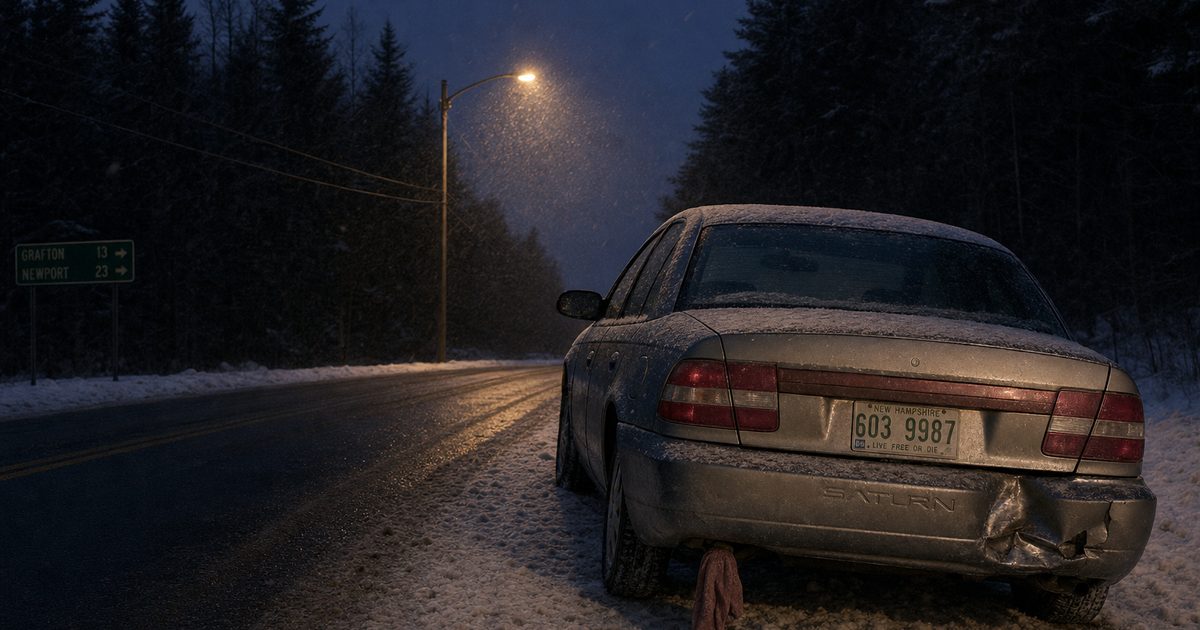
By the time police reached Route 112 that night, the Saturn was sitting crooked in the snow, its front end damaged, the cold pressing in from all sides.
A school bus driver who lived nearby had already stopped. He had spoken to the young woman at the car. She appeared shaken but conscious. He offered to call for help. She told him not to bother, she had already called AAA.
That detail would linger, because there was little or no cell service there.
A few minutes later, on 9 February 2004, Maura Murray was gone.
Her disappearance has become one of the best-known unsolved missing person cases in the United States, not because anyone can say with confidence what happened to her, but because the last confirmed pieces are so stark and so ordinary. A 21-year-old nursing student leaves campus. She drives north. Her car crashes on a dark New Hampshire road. Help is offered, refused, and then she vanishes before officers arrive.
More than two decades later, the Maura Murray disappearance still resists a clean explanation.
The day she left Amherst
Earlier that Monday, Maura Murray had been in Amherst, Massachusetts, where she was studying nursing at the University of Massachusetts Amherst after transferring from West Point.
What happened next did not look impulsive.
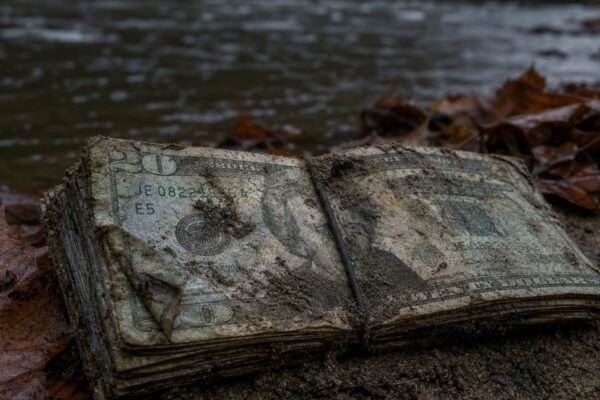
Security footage and records helped establish parts of her day. She withdrew nearly all the money in her bank account, about $280. She bought alcohol. She emailed professors and her supervisor, saying there had been a death in the family and she would be away for a week.
That was not true.
She also packed belongings into her black 1996 Saturn, including school materials and personal items. Investigators later said the scene suggested she intended to be away for at least a few days. What it did not show was why.
That uncertainty has shaped the Maura Murray case timeline from the start. Her actions on 9 February 2004 looked deliberate. Their purpose has never been proven.
Strain in the days before the crash
To people trying to understand what happened, the days before Maura disappeared have always mattered.
In the early hours of 8 February, the day before she vanished, Maura crashed her father Fred Murray’s Toyota Corolla near the UMass campus after attending a party. No one was seriously hurt. The accident was reported, and the car was towed.
There were also signs that she had been under pressure. At West Point, she had faced trouble over a credit-card-related incident before transferring. At UMass, friends and family later described a young woman who could seem capable and focused, but who was also dealing with stress in her personal life.
That does not explain what happened on Route 112. But it is part of the reason the case has never felt simple. The road in Haverhill was not the beginning of the story. It was the point where the story broke open.
Route 112
Sometime that evening, Maura drove into northern New Hampshire. Investigators later traced directions she had looked up to Burlington, Vermont, though it has never been established that Burlington was her destination.
At about 7:27 p.m., according to the timeline generally cited by investigators, a neighbor reported a single-car crash on Wild Ammonoosuc Road, part of Route 112, in Haverhill.
The Saturn had gone off the road near a sharp bend known locally as Weathered Barn Corner.
Not long after, local bus driver Butch Atwood stopped to check on the driver. He later said Maura appeared cold and shaken but did not seem badly injured. He offered to call police. She declined and repeated that she had already called roadside assistance.
Atwood drove home and called 911 himself.
When police arrived just minutes later, Maura was no longer there.
That narrow window, only a few minutes, by most accounts, is what keeps drawing people back to the question of what happened to Maura Murray. She was seen at the crash scene. Then she was not. No witness has ever been confirmed to have seen where she went next.
What was left behind
Inside and around the Saturn were details that have been discussed for years because they are real, documented, and difficult to place neatly.
Investigators found alcohol in the car, including a box of Franzia wine with red liquid stains reportedly visible inside the vehicle. Reports have also long mentioned a rag or cloth in the tailpipe. Fred Murray later said he had advised Maura to do that with the Saturn to reduce smoke from the exhaust, though police noted it as part of the strange scene.
Those details matter, but only up to a point. They suggest she may have been worried about the car drawing attention. They may also suggest she had been drinking. What they do not do is answer the central question.
The Maura Murray Route 112 crash is one of those cases where the physical evidence gives shape to the final minutes without telling the full story.
The search that found nothing
Once it became clear Maura had not simply turned up somewhere safe, search efforts began in earnest.
Police, volunteers, dogs, helicopters and later ground-penetrating radar were used over the years. Early searches focused heavily on the area around the crash site. One theory was that she had left the road on foot and succumbed to the cold. February in New Hampshire is unforgiving, and the woods around Route 112 are dense.
But the case never settled there.
Searchers did not find clear evidence that she had walked deep into the woods from the crash scene. Investigators have also considered whether she accepted a ride from someone after leaving the Saturn. That possibility has never been proved, but it remains one of the central scenarios in the case because of how quickly she disappeared.
This is where factual caution matters. There have been many theories in the Maura Murray missing person case, voluntary disappearance, exposure, abduction, suicide, foul play after leaving the scene. None has been conclusively established.
What is proven is much smaller: Maura crashed her car on 9 February 2004, spoke briefly to a witness, and vanished before police arrived.
Why the case never let go of people
Some disappearances fade from public memory. This one did not.
Part of that is the image at its center: a wrecked car on a winter road and a young woman missing in the minutes after. Part of it is the uneasy sequence before she left Amherst, the cash withdrawal, the alcohol purchase, the false email about a death in the family, the packed car.
And part of it is the vacuum that followed.
The Maura Murray case has been dissected in books, online forums, documentaries and podcasts for years. The Oxygen documentary series The Disappearance of Maura Murray brought renewed national attention in 2017. The podcast Missing Maura Murray kept the case in circulation. In 2024, her family launched the podcast Media Pressure, with Maura’s sister Julie Murray taking a leading role in telling the story from the family’s side.
That last point matters. Cases like this can easily become public puzzles, with the victim reduced to a timeline and a list of clues. Julie Murray and other family members have pushed back against that, reminding people that this is not just an internet mystery. It is a daughter and sister who never came home.
Later developments in the investigation
The case remains open.
In 2022, the FBI added Maura Murray to its ViCAP system, a database used to analyze violent crimes and missing persons cases with possible links to criminal activity. That did not mean investigators had solved the case or publicly confirmed foul play. It did mean the disappearance was still being actively circulated and reviewed.
In February 2024, authorities released an updated age-progressed image showing what Maura might look like now.
It was a simple but painful reminder of time. Maura was 21 when she disappeared. Her family has had to imagine birthdays, holidays and entire decades without answers.
That is the hardest truth in this story. Not the theories. Not the internet debates. The waiting.
A case still suspended in one winter night
There is no ending here, at least not yet.
No confirmed sighting after the crash. No verified explanation for why she left Amherst. No public evidence that settles whether she ran from the scene to avoid trouble, got into another vehicle, or met with harm nearby or farther away.
The road on Route 112 offers the last fixed scene. Everything after that is uncertainty.
And that is why the Maura Murray disappearance still grips people. Not because it needs embellishment. It does not. The true facts are enough: a young woman in trouble or distress, a damaged car in the snow, a brief refusal of help, and then an absence that has lasted since 2004.
FAQ
When did Maura Murray disappear?
Maura Murray disappeared on 9 February 2004 after crashing her car on Route 112 in Haverhill, New Hampshire.
Who was Maura Murray?
She was a 21-year-old UMass Amherst nursing student who had previously attended West Point before transferring.
What happened on Route 112?
Maura’s Saturn crashed on Wild Ammonoosuc Road, part of Route 112. Bus driver Butch Atwood stopped to help, but when police arrived a short time later, Maura was gone.
What was found in Maura Murray’s car?
Investigators found alcohol in the vehicle, including wine, and noted a rag or cloth in the tailpipe. Those details have never fully explained what happened.
Is the Maura Murray case solved?
No. The case remains unsolved, and no definitive public explanation has been established for her disappearance.