By the time guests at the Cecil Hotel started complaining about the water, Elisa Lam had been missing for nearly three weeks.
Some said the pressure was low. Others said the water looked strange, tasted strange. On February 19, 2013, a maintenance worker named Santiago Lopez climbed to the roof to check the hotel’s water tanks. Inside one of them, he found the body of the 21-year-old Canadian traveler who had vanished from the hotel at the end of January.
That discovery turned an already troubling missing-person case into one of the most discussed deaths of the internet era. But long before the theories, the slowed-down clips, and the endless arguments over what happened at the Cecil Hotel, there was a young woman traveling alone through California, calling home every day, and expected back by her family.
She never made it out of Los Angeles.
A young traveler arrives in downtown LA
Elisa Lam, born Lam Ho-yi, was the daughter of Hong Kong immigrants and grew up in Vancouver, Canada. She had attended the University of British Columbia, though she was not enrolled there at the time of her trip. Online, she wrote openly about her struggles with mental health, including bipolar disorder and depression.
In January 2013, she was traveling on the West Coast on her own. On January 26, she checked into the Cecil Hotel in downtown Los Angeles, a place that was then also operating in part under the name Stay on Main.
The building already had a reputation. Over the years, the Cecil had been linked to suicides, violent deaths, and notorious guests. That history would later loom over the Elisa Lam case, giving it a darker aura than it may otherwise have had. But when she arrived, she was simply another guest with a room key and a travel plan.
At some point during her stay, she was moved from a shared room to a private one after roommates complained about behavior the hotel considered unusual. Reports differ on exactly when that happened, but it appears to have been within the first few days of her stay.
Then the trip went off course.
January 31, 2013
Elisa Lam was supposed to check out of the hotel on January 31, 2013. She was also supposed to stay in touch with her parents, David and Yinna Lam, as she traveled. That regular contact mattered. When it stopped, they noticed.
Hotel staff are believed to have seen her that day. One of the last confirmed sightings came from a nearby bookstore, where the manager later recalled Elisa being lively and outgoing while buying gifts for her family. After that, the trail ended.
When she failed to check in with her parents, concern quickly hardened into fear. On February 6, according to police timelines, the LAPD announced that Canadian tourist Elisa Lam was missing. Her parents had traveled to Los Angeles to help search for her.
Officers searched the hotel. They went through common areas, checked her room, and brought in dogs. The roof was looked at, too. But the search did not uncover her.
Not then.
The elevator video that changed everything
On February 13, 2013, the LAPD released surveillance footage from one of the hotel elevators. It was the last known video of Elisa Lam alive, recorded in the early hours of February 1.
The clip was silent. Elisa steps into the elevator, presses several buttons, then moves to the corner. She leans out into the hallway. She steps in and out again. At one point she appears to gesture with her hands, as if speaking to someone just outside the frame or reacting to something only she could see.
The elevator doors remain open for an unusually long time.
That short video did what few pieces of evidence ever do: it escaped the case file and entered popular culture. Viewers watched it over and over, trying to decode each movement. Was she hiding? Was she frightened? Was she confused? Was someone there, just beyond the camera’s view?
The footage answered none of those questions. It only deepened them.
It also helped turn the Elisa Lam elevator video into the center of the public’s understanding of the case, even though it showed only a few minutes from a much larger and still incomplete timeline.
Found on the roof
Six days after the video was released, the case took its grim turn.
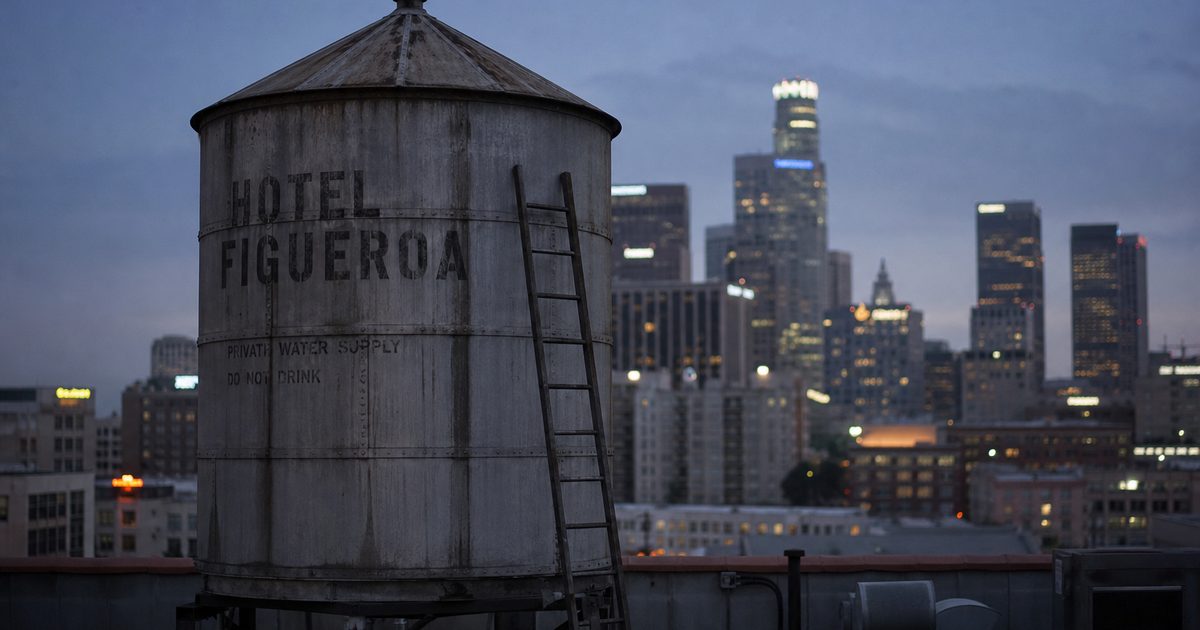
On February 19, hotel worker Santiago Lopez checked the rooftop water tanks after guests complained about the water supply. There were four tanks on the roof, each holding about 1,000 gallons. Elisa Lam was found inside one of them.
Her clothing, watch, and room key were also recovered. Reports at the time often made the circumstances sound even more mysterious than they were. One recurring claim was that the tank lid had been closed when she was found. But later court filings indicated the hatch was open when Lopez discovered her. That detail matters, because it undercuts one of the most repeated arguments that someone else must have sealed her inside.
Even so, the basic facts remained difficult to absorb. How had she gotten onto the roof? Why had earlier searches not found her? And how had a missing guest ended up in the hotel’s water system at all?
On February 21, the Los Angeles County Department of Public Health issued a do-not-drink order for the hotel water. The same day, a preliminary autopsy was reported as inconclusive pending further investigation.
What the autopsy found
The final ruling came months later.
On June 21, 2013, the Los Angeles County coroner ruled Elisa Lam’s death an accidental drowning. Her bipolar disorder was listed as a significant contributing factor.
Toxicology showed that she had taken several prescribed medications, including bupropion, venlafaxine, lamotrigine, quetiapine, and dextroamphetamine. Some were present in lower amounts than expected, which the coroner said suggested she may not have been taking them as prescribed. No alcohol was found. No recreational drugs were found.
The autopsy did not find evidence of major physical trauma, sexual assault, or injuries that clearly pointed to an attack. That did not erase public suspicion, but it shaped the official conclusion: there was no homicide finding in the Elisa Lam investigation.
That conclusion has often been flattened online into a simpler story than the record supports. The coroner did not explain every step Elisa took in her final hours. The ruling explained the cause and manner of death based on the evidence available. It did not settle every question people had about the path that led there.
Why the case never let go of the public imagination
Part of the reason this case endured is that the unanswered questions are easy to picture.
The roof was not a place guests were supposed to access. Reports over the years have described locked doors, alarms, and fire escapes, though not every account matches perfectly. A 2015 court ruling noted that there were ways to reach the roof, including fire escapes, and that parts of the area were not as inaccessible as many people assumed after the fact.
That matters, too.
The mystery around the Cecil Hotel death grew in the gap between what was proven and what people felt must have happened. The hotel’s history fed that feeling. So did the eerie elevator footage. So did the internet’s habit of treating uncertainty as an invitation.
Soon there were theories everywhere: foul play, cover-ups, paranormal explanations, even links to horror films. None of those theories were proven. What is supported by the official record is narrower and sadder. Elisa Lam was a young woman with a documented history of mental illness, traveling alone, who died in circumstances the coroner concluded were accidental.
That is not a tidy ending. It is simply the one the evidence supports.
The lawsuit against the Cecil Hotel
Elisa Lam’s parents later took the case to civil court. In September 2013, they filed a wrongful death lawsuit against the hotel’s operators, arguing that the property had failed to keep guests safe and had not properly secured hazardous areas.
The defense argued that her death was not something the hotel could reasonably have foreseen, especially if she had entered an area off-limits to guests.
In 2015, a judge agreed. Los Angeles Superior Court Judge Howard Halm dismissed the suit, finding that the hotel could not reasonably have anticipated the events that led to her death. The ruling did not answer every public question about the Elisa Lam case, but it did close the civil action.
What remains
More than a decade later, people still return to the same images: the elevator doors, the hallway outside, the rooftop tanks above one of Los Angeles’s most infamous hotels.
But behind all of that is a simpler truth that can get lost in the mythology. Elisa Lam was not a symbol, not a meme, not a puzzle designed for strangers to solve. She was a 21-year-old daughter on a trip, expected home, then gone.
The official record says her death at the Cecil Hotel was an accidental drowning, with bipolar disorder as a significant factor. The internet never fully accepted that. The case remains famous because it feels unresolved, even though legally and medically it is closed.
That tension is what keeps the story alive.
FAQ
What happened to Elisa Lam?
Elisa Lam disappeared from the Cecil Hotel in Los Angeles in late January 2013. On February 19, 2013, she was found dead in a rooftop water tank. Her death was later ruled an accidental drowning.
What is the Elisa Lam elevator video?
It is hotel surveillance footage released by the LAPD on February 13, 2013, showing Elisa Lam in an elevator during the early hours of February 1, shortly before she disappeared.
Was the Elisa Lam case solved?
Officially, yes. The coroner ruled her death an accidental drowning on June 21, 2013. But questions about how she reached the roof have kept public debate alive.
Where was Elisa Lam found?
She was found inside one of the Cecil Hotel’s rooftop water tanks in downtown Los Angeles.
Did police rule Elisa Lam’s death a homicide?
No. The official finding was accidental drowning, and no one was charged in connection with her death.