On Sunday, June 9, 1912, the Moore family did what they had done so many times before. They went to the Presbyterian church in Villisca, Iowa, for the Children’s Day program. It was the kind of evening small towns are built on: familiar faces, children in their best clothes, parents lingering to talk before heading home.
Josiah B. Moore, 43, was there with his wife, Sarah, 39, and their four children, Herman, 11, Mary Katherine, 10, Arthur, 7, and Paul, 5. Mary Katherine had invited two friends to spend the night, sisters Lena Stillinger, 12, and Ina Stillinger, 8. After the program ended around 9:30 p.m., the group made the short walk home, likely sometime between 9:45 and 10:00.
By sunrise, every one of them was dead.
What happened inside the Moore house that night turned the town of about 2,500 people into the center of one of the most enduring mysteries in American true crime. More than a century later, the Villisca Axe Murders still resist a clean answer.
A Monday morning that felt wrong
The first sign was not dramatic. It was simply odd.
On the morning of June 10, neighbor Mary Peckham noticed the house was too quiet. The family had not come out for their usual chores. She knocked. No one answered.
Peckham contacted Ross Moore, Josiah’s brother. When he arrived, he used a key to get inside. What he found stopped him almost immediately. In the downstairs guest room were the bodies of Lena and Ina Stillinger. Ross told Peckham to summon the town marshal, Henry “Hank” Horton.
When Horton searched the rest of the house, the scale of the crime came into view. Upstairs were Josiah and Sarah Moore and their four children, all killed during the night.
Eight people. Six of them children.
The killings are generally believed to have happened after midnight, in the early hours of June 10, 1912. The murderer had used Josiah Moore’s own axe, which was later found in the guest room.
Inside the Moore house
The scene inside the home was strange in ways that investigators never fully explained.
All eight victims had suffered fatal head injuries. Contemporary accounts and later retellings differ on some details, and not every claim can be proved with certainty now. It is often reported that Josiah Moore suffered especially severe blows and that a gouge mark was found in the ceiling above his bed. Those details became part of the case’s lore, though the surviving record is uneven.
Other details are better established. Bedclothes had been pulled over several victims’ faces. Mirrors in the house had been covered. A lamp was found at the foot of a bed, and there were signs the killer had spent time moving through the house after the murders.
One detail has drawn attention for decades: Lena Stillinger’s body was found in a position that led some investigators to suspect a sexual motive or assault. But because the crime scene was so badly mishandled, and because later accounts often blurred fact with rumor, that part of the case remains uncertain. It is more accurate to say the scene raised questions than to claim a sexual assault was proved.
And then came the mistake that haunted the investigation from the start.
People were allowed into the house.
In modern terms, the crime scene was destroyed almost as soon as it was discovered. Neighbors, townspeople, and the simply curious walked through rooms that should have been sealed. Potential evidence was touched, moved, and contaminated. In 1912, especially in a small Iowa town, murder investigations were nothing like they are now. But even by the standards of the day, the handling of the Villisca Axe Murder House was a disaster.
Suspicion spread faster than evidence
In a place like Villisca, a crime like this did not stay inside one house. It spilled into churches, businesses, front porches, and newspapers. People wanted a name. They wanted a reason. Instead, they got years of accusation.
One of the earliest names drawn into the case was Frank F. Jones, a wealthy local businessman and Iowa state senator. Jones had once employed Josiah Moore, and stories of business rivalry and personal bitterness swirled around them. Some believed Jones had reason to hate Moore. But suspicion is not proof, and no court ever established that Jones had any role in the murders.
Another figure who drew intense scrutiny was Reverend George Kelly, an itinerant minister who had been in Villisca around the time of the killings. Kelly had a history of troubling behavior, including voyeurism, and investigators found him unsettling. In 1917, five years after the murders, he was arrested and charged.
Then there was William “Blackie” Mansfield, a man linked by some investigators to other axe killings. Detective James Newton Wilkerson of the Burns Detective Agency pushed the theory that Mansfield had committed the Villisca murders, possibly as a hired killer. But Mansfield had a strong alibi supported by employment records, and the case against him collapsed.
Other names floated through the years too: Andrew Sawyer, a transient later ruled out by alibi; Henry Lee Moore, an unrelated convicted murderer whose surname and crimes invited speculation; and, much later, Paul Mueller, or Miller, the suspect proposed in The Man from the Train by Bill James and Rachel McCarthy James. That theory connected the Villisca Axe Murders to a wider pattern of unsolved family murders across the Midwest.
It is a compelling theory. It is not a solved case.
The one man who stood trial
Of all the suspects, George Kelly came closest to being held responsible for the Villisca murders.
He was arrested in 1917 and eventually confessed, but the confession was troubled from the start. Accounts of it suggested inconsistency, and Kelly’s mental state became part of the question. A confession alone was not enough, especially in a case where the physical evidence had been compromised years earlier.
Kelly went to trial twice.
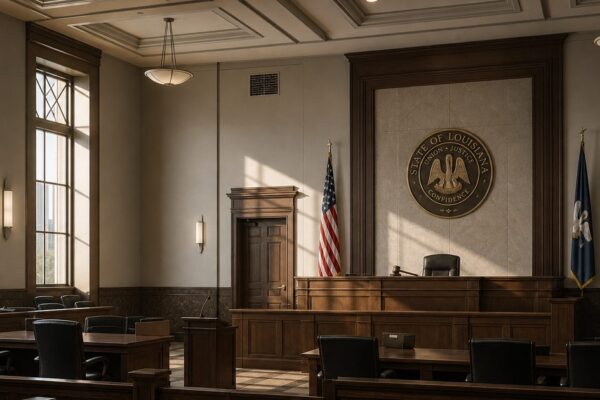
The first trial, in 1917, ended in a hung jury. The second, in 1918, ended in acquittal.
That outcome said as much about the investigation as it did about Kelly. Prosecutors could raise suspicion. They could not remove reasonable doubt. After all the headlines and all the theories, the courtroom delivered the same answer the town had been living with since June 1912: nobody could be proved guilty.
The fallout did not end there. Mansfield later sued detective Wilkerson for libel and won damages. Frank Jones also sued Wilkerson for libel, though Jones did not win. By then, the case had become a tangle of ruined reputations, private vendettas, and public speculation.
Why the Villisca Axe Murders were never solved
The Villisca Axe Murders remain unsolved for a few plain reasons, and they all begin in those first hours.
The crime scene was contaminated. Too many people entered the house. Too much was handled. Too much was lost.
The investigation also suffered from the limits of the era. There was no modern forensic testing, no DNA analysis, and no reliable way to sort later rumor from original fact once the case began to grow in legend. Witness memories shifted. Newspaper coverage amplified the strangest details. Suspects multiplied.
And the case had another problem common to famous unsolved crimes: once enough theories exist, each new one can seem almost plausible. A local enemy. A disturbed preacher. A hired killer. A roaming murderer moving from town to town. The Villisca Axe Murders offered just enough evidence for suspicion, never enough for certainty.
There was even another confession years later, from a man named George Meyers in 1931, but like so much else in this case, it led nowhere.
That is what makes the story endure. Not just the horror of what happened, but the gap that was never closed. Someone entered that house after the family came home from church on June 9, 1912. Someone moved room to room in the dark. And then that person disappeared, leaving behind a town that would spend generations arguing over the same unanswered question.
The long afterlife of the Villisca Axe Murder House
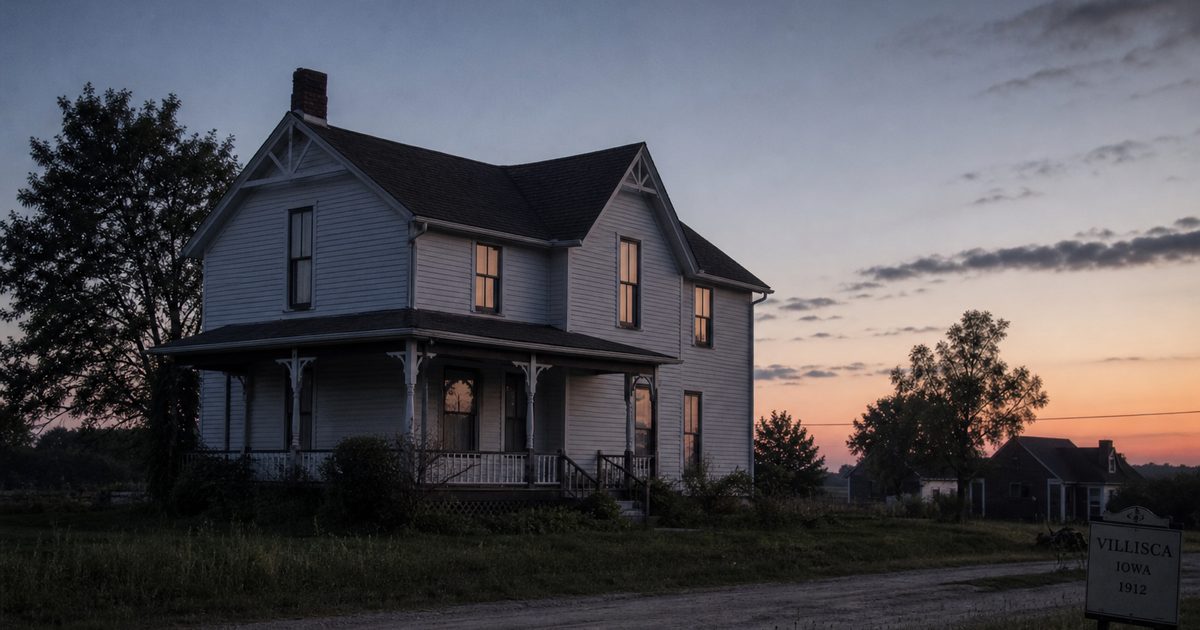
The house still stands in Villisca.
In 1994, Darwin and Martha Linn purchased and restored it. Today, the Villisca Axe Murder House operates as a museum and tourist site, and it has also become known for later claims of paranormal activity. Those ghost stories are part of the house’s modern reputation, but they are not the heart of the case.
The real story is older and sadder than that.
It is the story of a family that spent a Sunday evening at church, brought two young guests home for the night, and never saw morning. It is the story of a town that woke up to a crime it could not explain. And it is the story of how an investigation can fail so badly, so early, that the truth slips out of reach for good.
That is why the Villisca Axe Murders still hold people. Not because of legend, and not because of the house’s haunted reputation, but because the central wound never healed. Eight people were killed in one of the most infamous unsolved murders in Iowa history, and no one was ever convicted.
FAQ
What happened in the Villisca Axe Murders?
During the night of June 9-10, 1912, eight people were killed inside the Moore home in Villisca, Iowa: Josiah and Sarah Moore, their four children, and visiting sisters Lena and Ina Stillinger.
Was the Villisca Axe Murders case ever solved?
No. The Villisca Axe Murders remain unsolved, and no one was ever convicted.
Who was tried for the Villisca murders?
Reverend George Kelly was charged and tried. His first trial ended with a hung jury in 1917, and he was acquitted at a second trial in 1918.
Who were the main suspects in the Villisca Axe Murders?
Over the years, suspects included George Kelly, Frank F. Jones, William “Blackie” Mansfield, Henry Lee Moore, and others. None was proved guilty in court.
Is the Villisca Axe Murder House still standing?
Yes. The house still stands in Villisca, Iowa, and now operates as a museum and tourist attraction.