Florence Schaffner thought the man in the dark suit was trying to flirt with her.
Northwest Orient Flight 305 had left Portland on the afternoon of November 24, 1971, bound for Seattle on what should have been a routine hop before Thanksgiving. The passenger had boarded under the name Dan Cooper, paid cash for a one-way ticket, and taken seat 18C. He was polite, middle-aged, and forgettable in the way some people seem to intend.
Then he handed Schaffner a note.
At first, she slipped it into her purse without reading it. He leaned toward her and spoke quietly. She should look at it, he said. He had a bomb.
When she unfolded the paper, the short flight changed instantly. Cooper wanted $200,000 and four parachutes. To make sure she understood he was not bluffing, he opened his briefcase and showed her what looked like red cylinders, wires, and a battery. Whether it was a working bomb has never been proved. In that moment, though, the crew had no reason to doubt him.
That was the start of the D.B. Cooper hijacking, though the name the world remembers came from a reporting error. The man called himself Dan Cooper. “D.B. Cooper” stuck anyway, and with time it became one of the most famous names in American true crime.
A calm hijacker and 42 people trapped with him
There were 36 passengers and 6 crew members aboard Flight 305. Most had no idea what was unfolding a few rows away.
Cooper did not rant. He did not wave a gun through the cabin. He sat, smoked, ordered a bourbon and soda, and gave instructions in a low, controlled voice. That calmness became one of the strangest features of the case. Inside the aircraft, it did not feel legendary. It felt practical, tense, and frighteningly fragile.
Schaffner relayed the demand to the cockpit. Captain William A. Scott, First Officer William Rataczak, and Flight Engineer Harold E. Anderson were suddenly flying under the orders of a hijacker. Another flight attendant, Tina Mucklow, would spend hours beside Cooper, carrying messages and trying to keep the situation from tipping into panic.
On the ground, the FBI was alerted while the plane was still in the air. The bureau opened what became known as NORJAK, short for Northwest Hijacking. In Seattle, authorities scrambled to gather the ransom and the parachutes before the aircraft arrived.
Seattle: money for lives
At 5:46 p.m. PST, Flight 305 landed at Seattle-Tacoma International Airport.
The plane sat on the tarmac while the exchange was arranged. Cooper’s demands were met: $200,000 in cash and four parachutes. The money had been assembled in 10,000 twenty-dollar bills, and the serial numbers had been recorded by investigators, a detail that would matter years later. Northwest employee Al Lee delivered the ransom.
Then came the first release of pressure.
Cooper let the passengers go.
One by one, the 36 people who had boarded for a short trip to Seattle stepped off the plane and into the terminal, alive. That decision has always shaped how the case is remembered. He had committed a serious federal crime and held a plane hostage, but he did not harm the passengers. The danger, however, was not over. Cooper kept several crew members aboard and ordered the aircraft back into the air.
He wanted to head toward Mexico City, though the Boeing 727 did not have the range to make that trip nonstop. He gave specific instructions: fly low, fly slow, and keep the landing gear configured in a particular way. At 7:40 p.m. PST, Flight 305 took off again, this time into darkness.
Military aircraft followed from a distance: two F-106 fighters and a T-33 trainer. None could see what mattered most.
The jump into the dark
The Boeing 727 had one feature that made this crime possible: an aft airstair built into the rear of the plane, which could be lowered in flight.
Somewhere over southwest Washington, that stairway became Cooper’s exit.
Not long after 8 p.m., he ordered Tina Mucklow into the cockpit and told the crew to stay there with the door closed. At 8:13 p.m., the aircraft experienced a sudden pressure change, a jolt strong enough to register in the cockpit. Investigators later treated that moment as the most likely point when Cooper jumped.
The weather was bad. It was night. Rain and wind swept over rough, wooded country below. Wherever he went out, he went alone, carrying the ransom strapped to his body.
That is the last confirmed moment in the story of the man known as D.B. Cooper.
When Flight 305 landed safely in Reno, Nevada, at 10:15 p.m. PST, Cooper was gone. So were two parachutes and the money.
No one on the plane had seen him leave.
What he left behind
For a man who vanished so completely, Cooper left behind a surprising amount, and not enough.
Investigators recovered a black clip-on tie and tie clip from his seat. They also found latent fingerprints aboard the plane, though exactly which prints belonged to Cooper and whether they could ever identify him became a matter of frustration. Contemporary accounts also mention cigarette butts, but they were not preserved in a way that later helped the case. Decades afterward, DNA testing on the tie was discussed, but the sample was limited and has never produced a conclusive identification.
The parachutes added another layer of confusion. Cooper had asked for four, perhaps to make authorities think he might force a hostage to jump with him, discouraging them from sabotaging the gear. In the end, he took two parachutes with him. One of the remaining reserve parachutes left on the plane had been opened, and some shroud lines had been cut from it.
That detail fed years of argument. Was he experienced enough to know exactly what he needed? Or did some of his choices suggest the opposite?
Early on, many assumed the hijacker had military or parachuting experience. Later, the FBI became less certain. Some of his actions did not fit neatly with the idea of an expert skydiver making a precise jump into stormy wilderness at night.
The search that kept widening
The search began almost immediately, but the landscape was working against everyone.
The likely jump zone covered remote stretches of southwest Washington. Dense forest, rivers, steep terrain, and bad weather made the area hard to search and harder to interpret. In 1978, a hunter found a small placard from a Boeing 727 stair mechanism near Castle Rock, Washington, a clue that seemed promising but solved nothing on its own.
The FBI chased leads for years. Hundreds of suspects were examined. Some were serious possibilities; many were not. The public fascination with the DB Cooper hijacking only made the job harder. Every new theory brought more noise. Books, documentaries, and amateur investigators kept the case alive, but they also buried the facts under layers of speculation.
One thing remained stubbornly true: no body was found, no arrest was made, and no suspect was ever definitively tied to the crime.
The money on the riverbank
Nearly nine years after the hijacking, the case lurched back to life because of a child digging in the sand.
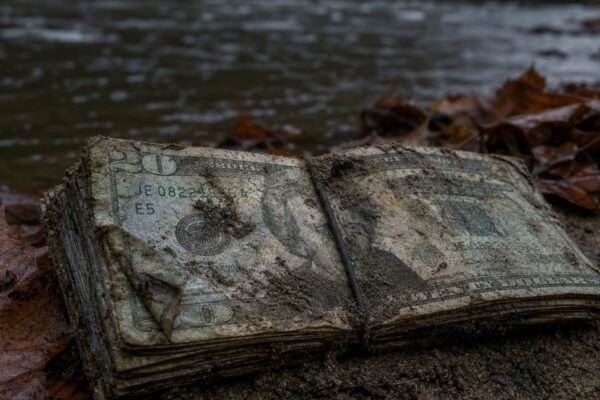
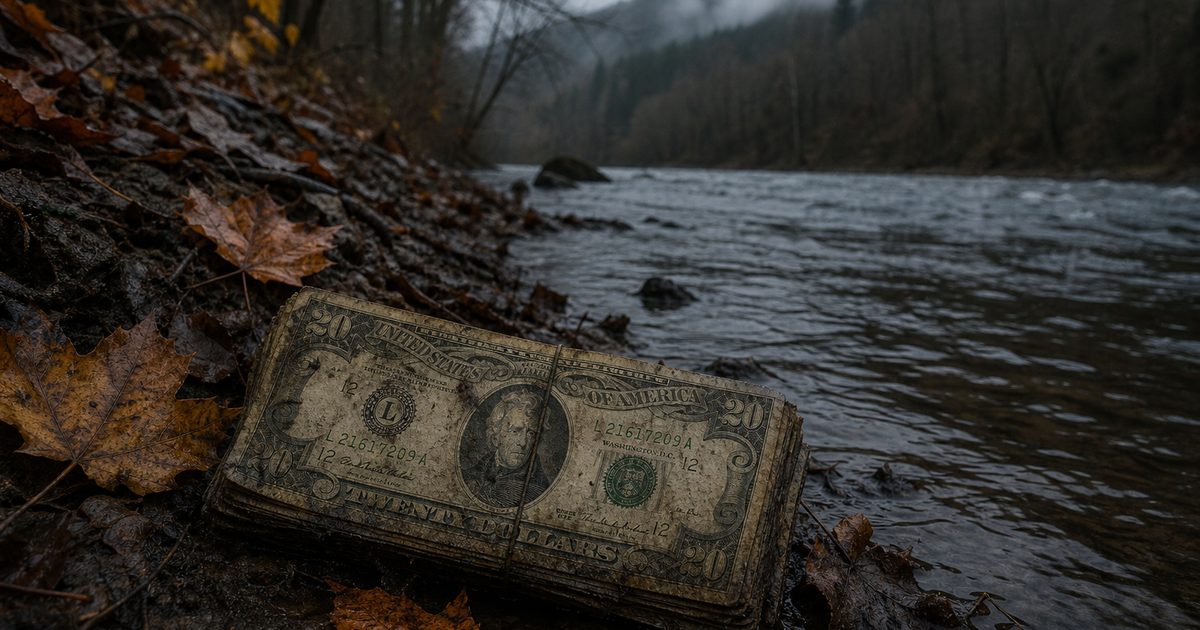
On February 10, 1980, 8-year-old Brian Ingram was with his family on the Columbia River at a place called Tena Bar, near Vancouver, Washington. He uncovered three packets of decaying twenty-dollar bills. The total was $5,800.
The serial numbers matched the ransom money from Flight 305.
It was one of the few hard links between the hijacking and a real place on the ground, and it should have been a breakthrough. Instead, it deepened the mystery. How had the money ended up there? Had Cooper landed nearby? Had the bills washed downstream from somewhere else? Had they been buried by natural forces, or by a person?
Investigators could not answer those questions with confidence. Most of the ransom money was never found.
Why the D.B. Cooper case was never solved
Part of the reason this became the most famous unsolved skyjacking in American history was simple timing.
In 1971, airline security was nothing like it is now. A man could buy a ticket with cash and walk onto a commercial flight without showing identification or passing through modern screening. That gave Cooper his opening.
The aircraft helped too. The Boeing 727’s rear stairway offered an escape route almost no other airliner could. After the hijacking, the plane was modified with a device called the Cooper vane, which prevented the aft stairs from being lowered in flight.
Then there was the jump itself. Night. Rain. Wind. Forest. Even with military aircraft shadowing the 727, nobody could pinpoint exactly where Cooper left the plane or where he came down. If he survived, he had a head start into difficult country. If he did not, the terrain may have hidden that fact for good.
And finally, there was the legend. The question who was D.B. Cooper became so culturally sticky that it threatened to swallow the evidence. The more famous the mystery grew, the easier it became for bad leads and wishful theories to crowd out what investigators could actually prove.
On July 8, 2016, the FBI announced it was suspending active investigation of the case, though physical evidence related to the parachutes or ransom money could still be reviewed.
So the central question remains where it has always been: not in the books or the movies, but in the dark space between the plane and the ground.
What the hijacking changed
The people on Flight 305 carried the immediate fear. The consequences spread much farther.
The case helped drive major changes in American aviation security. Airports adopted metal detectors and baggage screening. Airlines paid closer attention to suspicious ticket purchases, including cash one-way fares bought at the last minute. And Boeing 727 aircraft were altered so no one could repeat Cooper’s escape in the same way.
The man vanished. The system he exploited did not survive him.
FAQ
Who was D.B. Cooper?
“D.B. Cooper” is the name attached to an unidentified hijacker who used the alias Dan Cooper on Northwest Orient Flight 305 on November 24, 1971.
Was D.B. Cooper ever found?
No. He was never identified with certainty or captured.
How much money did D.B. Cooper get?
He received $200,000 in ransom, delivered in twenty-dollar bills.
Was any of the ransom money recovered?
Yes. On February 10, 1980, Brian Ingram found $5,800 of the ransom money at Tena Bar on the Columbia River near Vancouver, Washington.
Is the D.B. Cooper case solved?
No. The FBI suspended active investigation on July 8, 2016, and the case remains unsolved.